
Beyond Skin Color: Enhancing Adult Content Filtering via Semantic Feature Mapping
Semantic Detection of Adult Image Using Semantic Features
This paper introduces a semantic-feature-based approach for adult image detection, specifically targeting the difficult distinction between naked and bikinied images. By utilizing mid-level semantic concepts and a new metric called Accumulated Distance Ratio (ADR), the method achieves a significant performance leap over traditional low-level visual descriptors.
TL;DR
Researchers from KAIST have developed a more precise way to filter adult content by moving beyond simple color and texture analysis. By training models to recognize specific "semantic concepts" (like clothing vs. specific body parts) and introducing a new measurement called Accumulated Distance Ratio (ADR), they improved classification accuracy by 14%, specifically solving the long-standing problem of misidentifying swimwear as nudity.
Context: The "Bikini Problem" in Image Filtering
Most automated adult content filters are built on a fragile foundation: skin-tone detection and edge textures. While effective for obvious cases, these systems notoriously fail when encountering "near-miss" images—specifically women in bikinis. Because the low-level visual signals (color distribution and texture) of a bikinied image are nearly identical to a naked image, traditional SVMs (Support Vector Machines) struggle to find a clear separating line.
The Methodology: From Pixels to Concepts
The authors argue that the solution lies in Semantic Features. Instead of asking the computer "Is this pixel skin-colored?", they break the process into two stages:
- Semantic Concept Generation: The image is segmented into blocks, and individual SVMs are trained to detect seven key concepts: body, breast, genital, bottom, bikini, brassiere, and panty.
- Global Classification: The confidence scores from these seven detectors form a new feature vector. A final "Global SVM" looks at this vector to decide if the image is truly adult content.
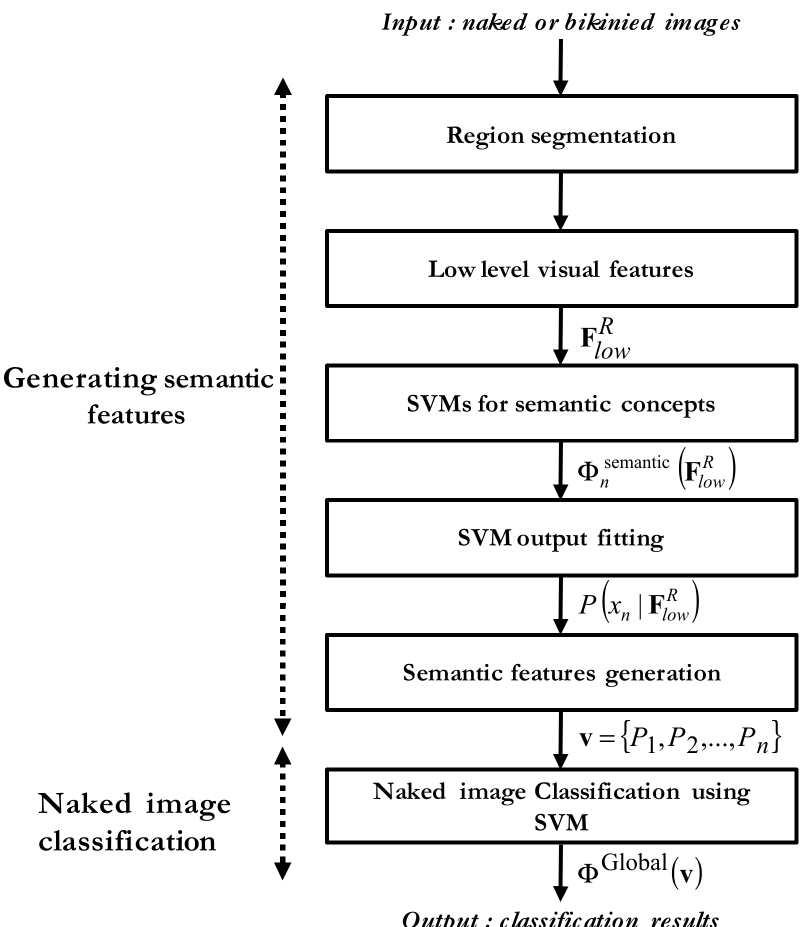 Fig 1: The two-stage pipeline: (1) Fragmenting low-level features into semantic probabilities, and (2) Global classification of the semantic vector.
Measuring "Robustness": The Accumulated Distance Ratio (ADR)
How do we know a model isn't just "getting lucky" on a specific dataset? The authors propose ADR. SVMs work by finding a "hyper-plane" that separates two classes. The ADR measures the ratio of samples that fall far from the decision boundary (correctly and confidently classified) versus those that fall inside the "margin" (risky and potentially misclassified).
- High ADR: Means the features are powerful and the separation is "clean."
- Low ADR: Means the classes are cluttered together, making the model prone to errors on new images.
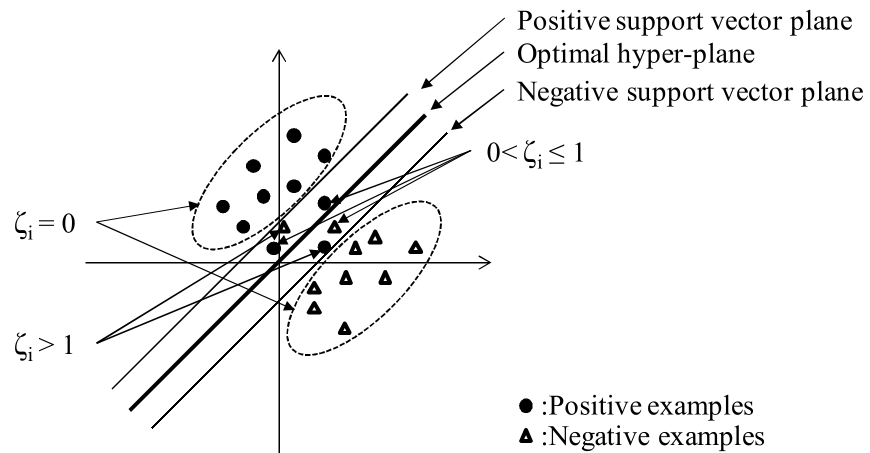 Fig 2: A visualization of the SVM hyper-plane, illustrating how ADR captures the distribution of training samples relative to the decision margin.
Experimental Results & Critical Gains
The team tested their approach against various MPEG-7 standards (the "gold standard" for low-level visual descriptors at the time).
- Accuracy Boost: Semantic features achieved ~83% accuracy, while low-level features topped out at ~74%.
- Stability: When tested on images that the model hadn't seen during training (unseen types), the semantic approach remained stable, whereas low-level models saw significant performance drops.
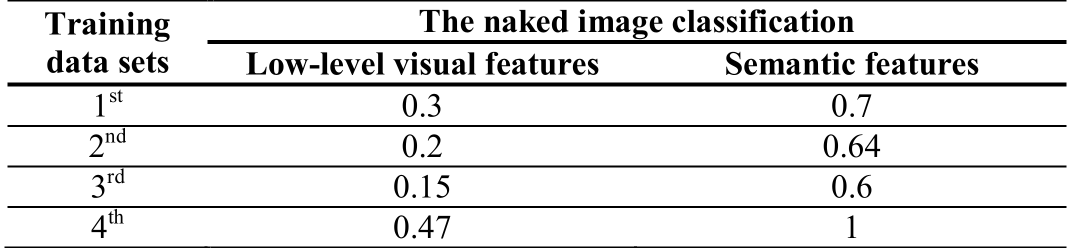 Table 1: The ADR scores for semantic features are consistently higher (up to 1.0) compared to low-level features (as low as 0.15), proving that semantic logic creates a much more robust classification boundary.
Critical Insight & Future Outlook
This work highlights a fundamental truth in Computer Vision: Context is King. By forcing the model to identify "panty" or "brassiere" concepts, the system gains the ability to "understand" that a person is clothed, even if the skin percentage is high.
Limitations: The study relies on manually defined semantic concepts. In the modern era of AI, these concepts are often learned automatically via Deep Learning; however, the author's use of ADR remains a highly relevant way to debug and validate the "confidence" of any safety-filtering system today.