
PRiSMHA: Bridging the Gap Between Dusty Archives and the Semantic Web
Building Semantic Metadata for Historical Archives through an Ontology-driven User Interface
This paper introduces PRiSMHA, a crowdsourcing platform designed to build rich semantic metadata for historical archives using a modular computational ontology called HERO. The core contribution is an ontology-driven User Interface (UI) that enables non-expert users to formalize complex historical events into machine-readable RDF triples.
TL;DR
The PRiSMHA project (Providing Rich Semantic Metadata for Historical Archives) addresses the "dark data" problem of historical archives by introducing an ontology-driven crowdsourcing platform. By using a sophisticated algorithm to filter and rank properties from a massive computational ontology (HERO), the researchers created a user interface that allows enthusiasts and historians to turn old leaflets into high-fidelity, machine-readable semantic networks.
Background: The Digital Humanities Dilemma
Europe’s historical archives are a goldmine of social memory, yet they are largely inaccessible. Digitization (OCR) is only the first step. To truly "understand" history, a system needs to know that a "Strike" involves specific agents (workers), locations (factories), and purposes (better wages). Traditional metadata is too thin, while full-scale Knowledge Engineering is too expensive. PRiSMHA proposes a middle ground: Semantic Crowdsourcing.
The Core Challenge: Semantic Noise
When you use a formal ontology like HERO, which has over 420 classes and 350 properties, a user interface becomes a nightmare. If a user wants to describe an "Earthquake," a raw system might ask them to fill in a hasAgent property—which is logically impossible (unless Mother Nature is a legal agent).
The authors identify two tiers of this problem:
- Compatibility: Which properties can logically be used with this event?
- Relevance: Which properties should be used to make the description meaningful?
Methodology: The HERO Logic and Ranking
The researchers developed a dual-engine approach to clean up the UI.
1. The Optimized Reasoning Algorithm
Checking every possible property against every class using a Description Logic (DL) reasoner is computationally expensive. The authors developed an algorithm based on six formal properties (transitivity of sub-classes, disjointness, etc.) to prune the search space.
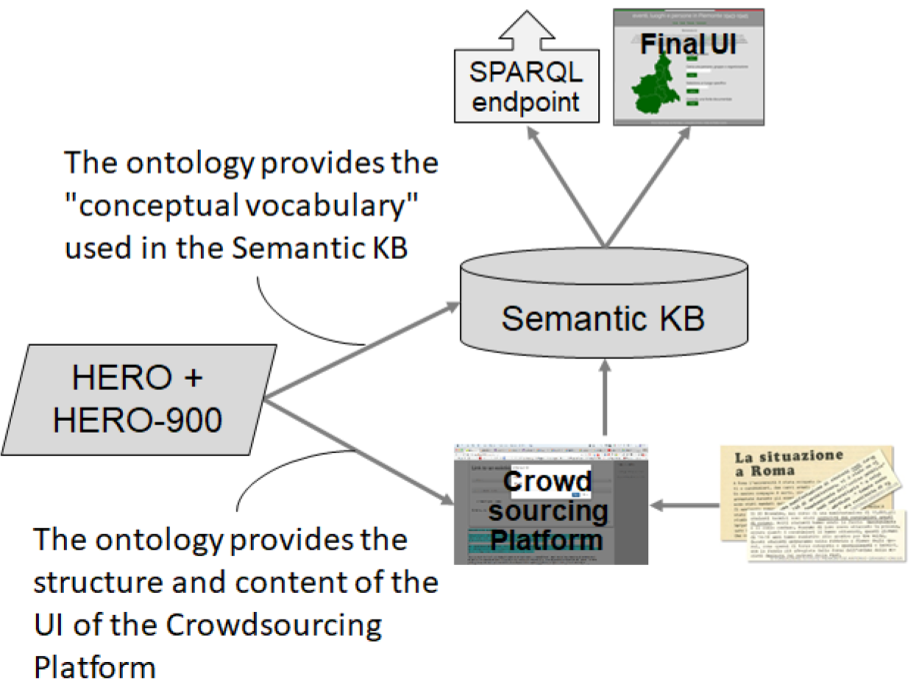 Figure 1: The PRiSMHA architecture showing the interaction between the triplestore, the HERO ontology, and the Crowdsourcing platform.
The algorithm reduced the workload for the "Konclude" reasoner by 92%, turning a task that would have taken days into a one-hour automated process.
2. User-Driven Relevance Ranking
Compatibility isn't enough; usability requires relevance. The team conducted a study with 30 users to rate property importance for three major event groups: Physical Confrontations, Protests, and Life Events.
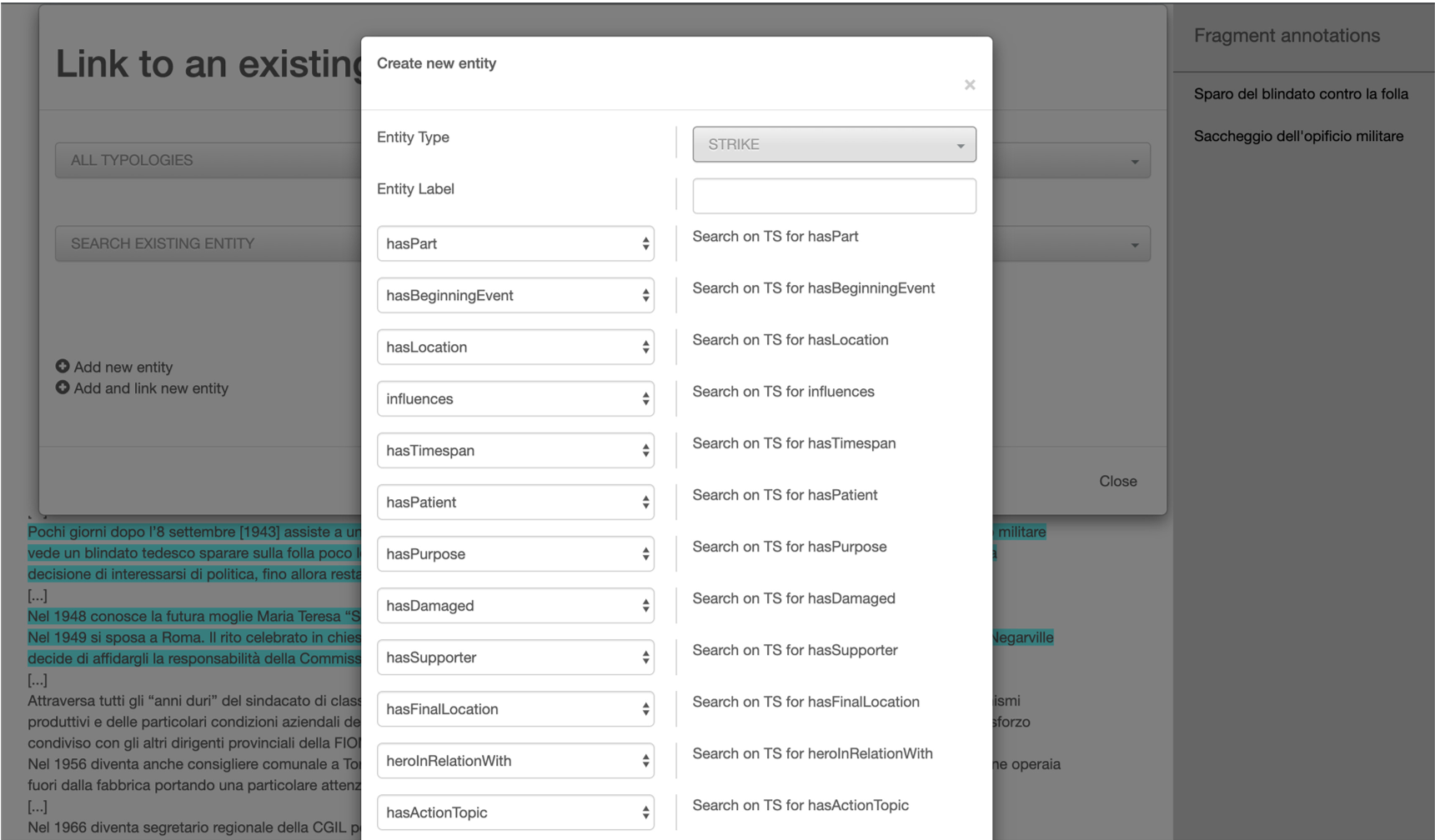 Figure 2: The baseline "flat" interface that presented users with too many choices before the ranking strategies were applied.
Experiential Results: How Users "See" History
The user study revealed fascinating insights:
- Protest Actions: Properties like
hasPurposeandhasActionTopicwere deemed essential. - Life Events: There was high disagreement among users (e.g., is a baby an "agent" of their own birth?). This suggests that "Life Events" (births, deaths) need a different ontological treatment compared to political actions.
The final UI design shifted from a long, confusing list to a tabbed interface:
- Essential: The core "who, where, when."
- Important/Useful: Narrative context (causes, results).
- Other: Technical or rare relations.
Critical Insight: The Value of "Guided" Formalization
The true beauty of PRiSMHA is that it doesn't "dumb down" the data to fit the user. Instead, it "cleans up" the ontology to respect the user's cognitive load. By maintaining the underlying RDF structure, the system remains interoperable with the global Linked Open Data (LOD) cloud, while the interface feels like a simple form.
Limitations and Future Work
The authors acknowledge that "Life Events" remain semantically fuzzy for most users. Future work aims to integrate Named Entity Recognition (NER) to automatically suggest fillers for the forms, further reducing the friction of manual entry.
Takeaway
PRiSMHA proves that we don't have to choose between "simple tags" and "complex ontologies." With the right reasoning algorithms and a user-centric ranking of properties, we can empower the "crowd" to build the high-quality semantic graphs that the future of AI-driven history demands.