
SSNIR: Decoding the Qualitative Strength of Human Relationships in Social Ontologies
Building a Semantic Social Network Based on Interpersonal Relationships
This paper introduces SSNIR (Semantic Social Network based on Interpersonal Relationships), a framework that transforms binary online friendships into a multi-dimensional semantic ontology. By extending FOAF and RELATIONSHIP vocabularies, it leverages newsfeeds, photos, and interactions to compute interaction "closeness" and infer offline social roles.
TL;DR
SSNIR (Semantic Social Network based on Interpersonal Relationships) is an intelligent framework that bridges the gap between binary online "friendships" and complex offline social structures. By analyzing user interactions and photo co-occurrences, it automatically populates a rich ontology that accurately quantifies "closeness" and infers specific roles like mentors, seniors, or family members.
Background Positioning
In the evolution of the Social Web, we have moved from simple profiles to dense interconnected graphs. However, most platforms still use a flat "Friend" vs. "Non-friend" logic. This paper sits at the intersection of Semantic Web Technologies and Social Network Analysis (SNA), aiming to provide a more granular, machine-understandable representation of human intimacy.
Problem & Motivation: The Binary Fallacy
Existing social networks suffer from two main flaws:
- Binary Simplification: They don't distinguish between a best friend and a casual acquaintance.
- Manual Overhead: Users must manually tag and categorize relationships, which is a significant friction point.
The authors realized that online footprints—comments, tags, and photos—contain latent signals that can reveal the true nature of a relationship. Their goal was to build a system that infers these connections automatically using an ontology-driven approach.
Methodology: Quantifying the Ineffable
The core of the paper lies in a mathematical model and a set of inference rules designed to transform raw SNS data into a Directed Semantic Graph.
1. The Closeness Equation
The researchers defined "Closeness" through four distinct lenses:
- Activeness: How frequently you interact with a specific friend compared to your total social activity.
- Loyaltyness: The ratio of your replies to their posts (asymmetric faithfulness).
- Seeness: A symmetric metric based on how often you appear in photos together.
- Mutualness: Derived from the Jaccard coefficient to measure shared social circles.
2. The Ontology (Extended FOAF)
By extending the standard FOAF (Friend of a Friend) and RELATIONSHIP ontologies, the authors created specific classes like ssn:User and properties such as seniorOf or mentorOf.
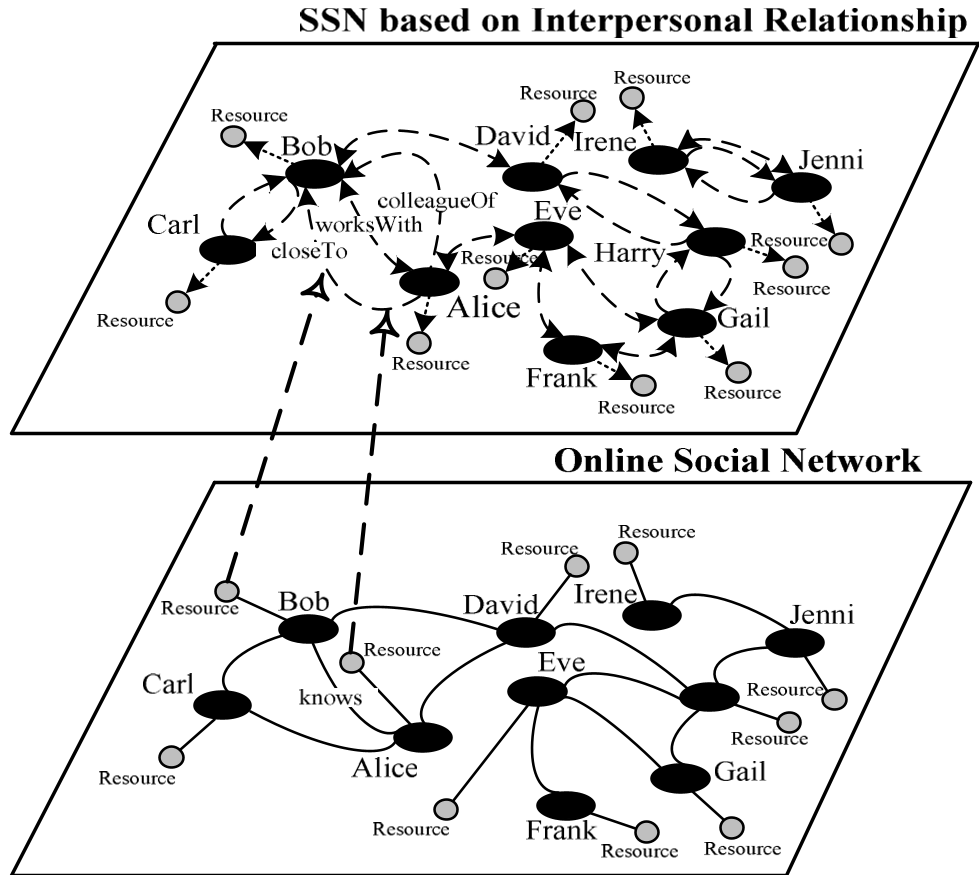 Figure 1: The concept of transforming flat SNS logs into a structured SSNIR model.
3. Inference via SWRL Rules
Using Semantic Web Rule Language (SWRL), the system can infer relationships that aren't explicitly stated. For example, if two people share the same father in the database, the system automatically asserts a siblingOf relationship.
Experiments & Results: Does the Math Match Reality?
The system was tested using Facebook Data from 32 users. The key findings include:
- High Precision: The "closeTo" prediction achieved 85% accuracy when compared to user self-reports.
- Temporal Relevance: Curiously, "closeness" is best predicted using the most recent data (3-month window), whereas other relationships like "acquaintance" benefit from longer historical data (9 months).
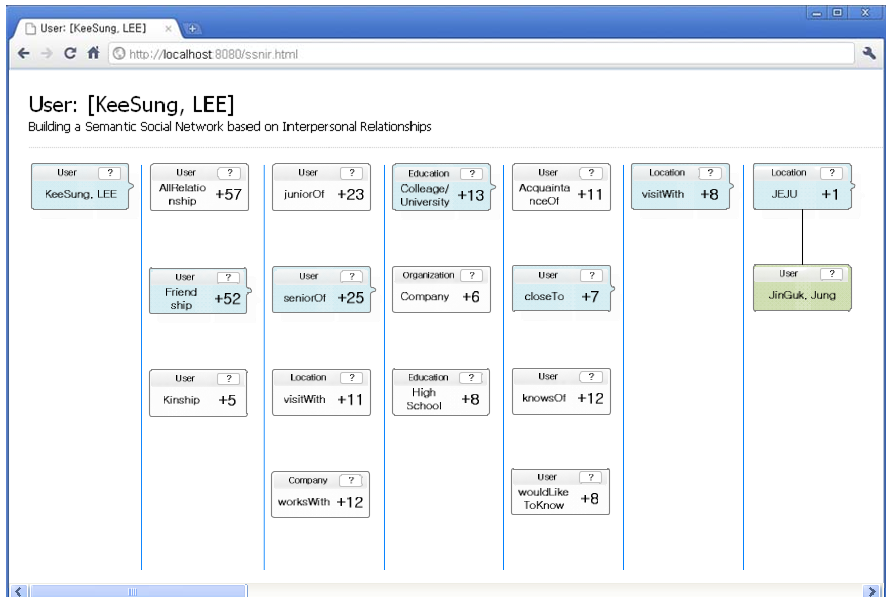 Figure 2: Accuracy of different relationship types over time.
Critical Analysis & Conclusion
Takeaway
SSNIR demonstrates that social intimacy is not a mystery but a pattern of interaction measurable through consistency (loyalty) and physical presence (seeness). This structured data allows for much more powerful search queries, such as "Find a senior from my university who visited Jeju Island with me."
Limitations
- Data Fragmentation: The "SameAs" problem remains; different identifiers for the same entity (e.g., "Inha University" in English vs. Korean) can break the graph.
- Privacy Constraints: The system relies on public access to newsfeeds and photos, which is increasingly restricted by modern API policies.
Future Outlook
This work paves the way for "Intelligent Social Assistants" that can filter newsfeeds not just by "recency," but by the semantic importance of the person to your actual life. Integrating this with modern LLMs for sentiment analysis of the "comments" could further refine the "Loyaltyness" and "Activeness" metrics.