
Semantic Structuring: Bridging the Social Media Organization Gap with Swarm Intelligence
2442_Semantic structuring and retrieval of event chapters in social photo collections.
Summary
Problem
Method
Results
Takeaways
This paper presents a framework for the semantic structuring and retrieval of "event chapters" within social photo collections. It introduces a hybrid clustering approach combining EXIF metadata and visual content analysis optimized by Particle Swarm Optimization (PSO) to improve album organization.
## TL;DR
Managing thousands of vacation photos is a chore no social media user enjoys. This paper explores a framework to automatically segment photo albums into "event chapters" by fusing **EXIF metadata** (time/location) with **visual content analysis**. By leveraging **Particle Swarm Optimization (PSO)** and **Self-Organizing Maps (SOM)**, the system achieves a 20% boost in organization accuracy, making social photo streams easier to navigate and search.
## The Problem: The "Semantic Gap" in Your Photo Feed
We are drowning in User Generated Content (UGC). Platforms like Facebook and Flickr host billions of images, yet the tools to organize them remain primitive—often limited to simple date-based sorting.
The "Semantic Gap"—the distance between low-level pixel data and the high-level human experience—remains a major hurdle. A simple time-based threshold might split a single dinner event into two just because the user took a long break between courses. Conversely, visual-only clustering might group all "mountain" photos together, even if they were taken in different countries.
## Methodology: Swarm Intelligence Meets Photo Albums
The authors propose a dual-layer approach to solve this.
### 1. Temporal Segmentation (The EXIF Layer)
Initially, the system uses the Exchangeable Image File format (EXIF) data to create rough clusters. It defines "event chapters"—collections of images linked by temporal proximity.
### 2. Visual Refinement (The PSO-SOM Layer)
To fix the errors of time-only clustering, the authors introduce a biologically inspired optimization.
* **Self-Organizing Maps (SOM):** A neural network that projects high-dimensional visual features (like MPEG-7 Edge Histogram Descriptors) into a 2D lattice.
* **Particle Swarm Optimization (PSO):** This is the "secret sauce." PSO mimics the behavior of bird flocking or fish schooling to search for optimal solutions in the problem space. It helps the SOM find more accurate cluster centers by remembering "personal bests" and "global bests" of the swarm.
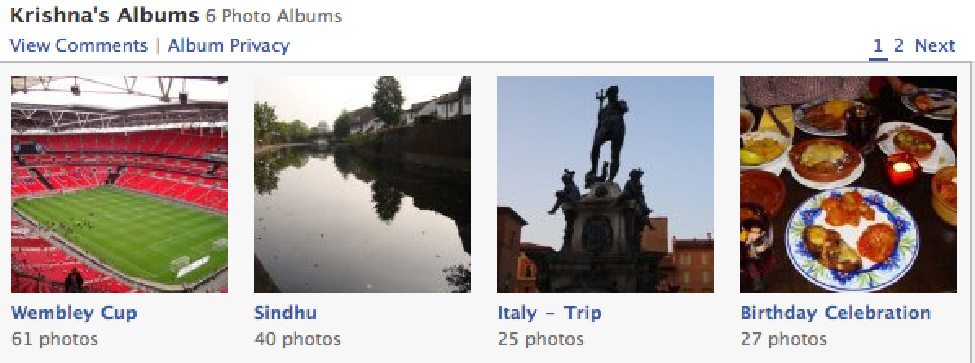
*Figure 1: The proposed framework illustrating the flow from content generation to social context-driven retrieval.*
## Experiments: Proving the Power of Fusion
The researchers tested their approach on three Facebook users' albums covering trips across Europe (London, Paris, Geneva, etc.).
### Key Findings:
* **PSO vs. K-Means:** The PSO-enhanced clustering consistently beat the standard K-Means algorithm. Evolutionary memory allows the system to escape local optima that trap simpler algorithms.
* **The Power of Fusion:** By combining EXIF and visual similarities, the researchers achieved an **accuracy increase of approximately 20%**.

*Figure 2: Statistical evidence showing the performance jump when fusing EXIF and visual data components.*
## Critical Analysis & Conclusion
### Takeaway
The real innovation here isn't just "better clustering," but "socially-aware clustering." By understanding the context of the user (who they are friends with and what events they attend), the system can retrieve more relevant content.
### Limitations & Future Work
The study was conducted on a relatively small dataset (4 albums, 3 users). While the results are promising, the "Friend-of-a-Friend" (FOAF) navigation aspect requires massive scale to prove its true utility in a global network like Facebook. Future research aims to integrate GPS location data more deeply to further refine the "where" of the semantic chapters.
In the era of AI, this work reminds us that biological heuristics—like the simple rules of a bird flock—still offer powerful solutions for organizing our digital lives.