
Bridging Islands: Transforming the Social Web into a Giant Global Graph
Applications of Semantic Web Methodologies and Techniques to Social Networks and Social Websites
This paper explores the integration of Semantic Web methodologies with Social Web platforms to overcome data silos. It details the "Social Semantic Web" framework using core ontologies like FOAF and SIOC to create interoperable, machine-readable "object-centered networks."
Executive Summary
TL;DR: This paper addresses the fragmentation of the "Social Web" (Web 2.0) by applying "Semantic Web" technologies. By utilizing standardized vocabularies like FOAF and SIOC, the authors propose a way to link people and digital objects across platform boundaries, turning isolated data silos into an interconnected, machine-understandable ecosystem.
Positioning: This work serves as a foundational architectural blueprint for the Social Semantic Web. It moves beyond simple social networking to "Object-Centered Networks," where the value lies in the semantically-rich ties between users and the content they create.
The "Data Silo" Problem: Islands in a Sea of Information
Despite the explosion of social networking sites (SNSs) like MySpace, LinkedIn, and Facebook, the authors identify a critical flaw: Isolation.
- Stovepipes: Data is trapped. A discussion on a Flickr photo is invisible to a related conversation on a WordPress blog.
- Identity Fatigue: Users must manually recreate their profiles and friend lists for every new service.
- Surface-Level Search: Current search is limited to keywords, failing to understand the relationships between actors and objects.
Methodology: The Semantic Data "Food Chain"
The authors envision a tripartite flow of information that gives meaning to social interactions:
- Producers: Platforms that export data in RDF (Resource Description Framework) using standard ontologies.
- Collectors: Aggregators and crawlers (e.g., SIOC Crawler) that "smush" or consolidate identities using Inverse Functional Properties (like an encrypted email hash).
- Consumers: Applications and researchers that perform Social Network Analysis (SNA) or complex SPARQL queries to find "the wisdom of the crowds."
Key Ontologies
- FOAF (Friend-of-a-Friend): Used to describe people, their nicknames, and their "knows" relationships.
- SIOC (Semantically-Interlinked Online Communities): The "glue" for content. It describes the structure of forums, posts, and comments, linking them back to FOAF profiles.
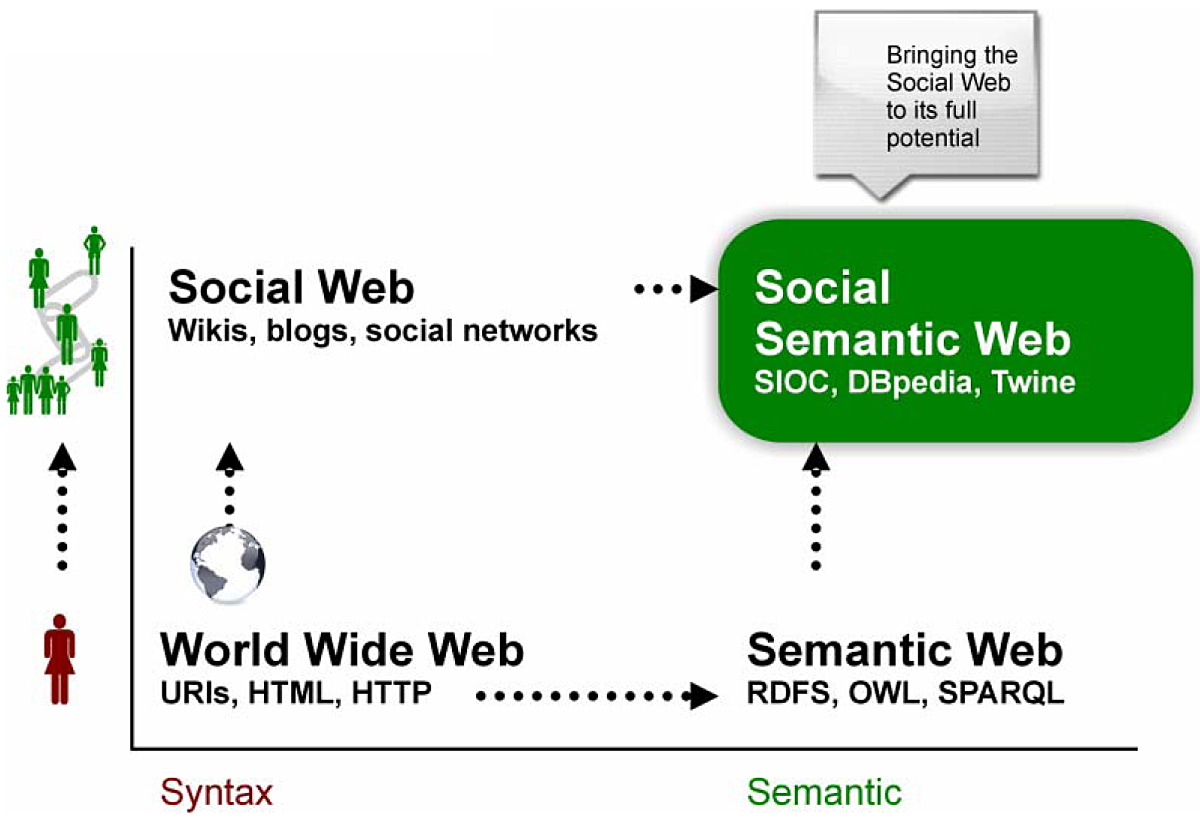 Figure 1: The intersection of Social and Semantic Webs creates a network of interlinked, semantically-rich knowledge.
Object-Centered Sociality: The Secret Sauce
The paper highlights a crucial sociological insight: real-world social networks don't just form randomly; they form around objects (hobbies, jobs, events).
In the Semantic Web, these objects are given URIs. Instead of just a string "Semantic Web," we have http://dbpedia.org/resource/Semantic_Web. This allows for "Intuitive Navigation"—if you and I both comment on the same URI, we are implicitly linked, regardless of which website we used.
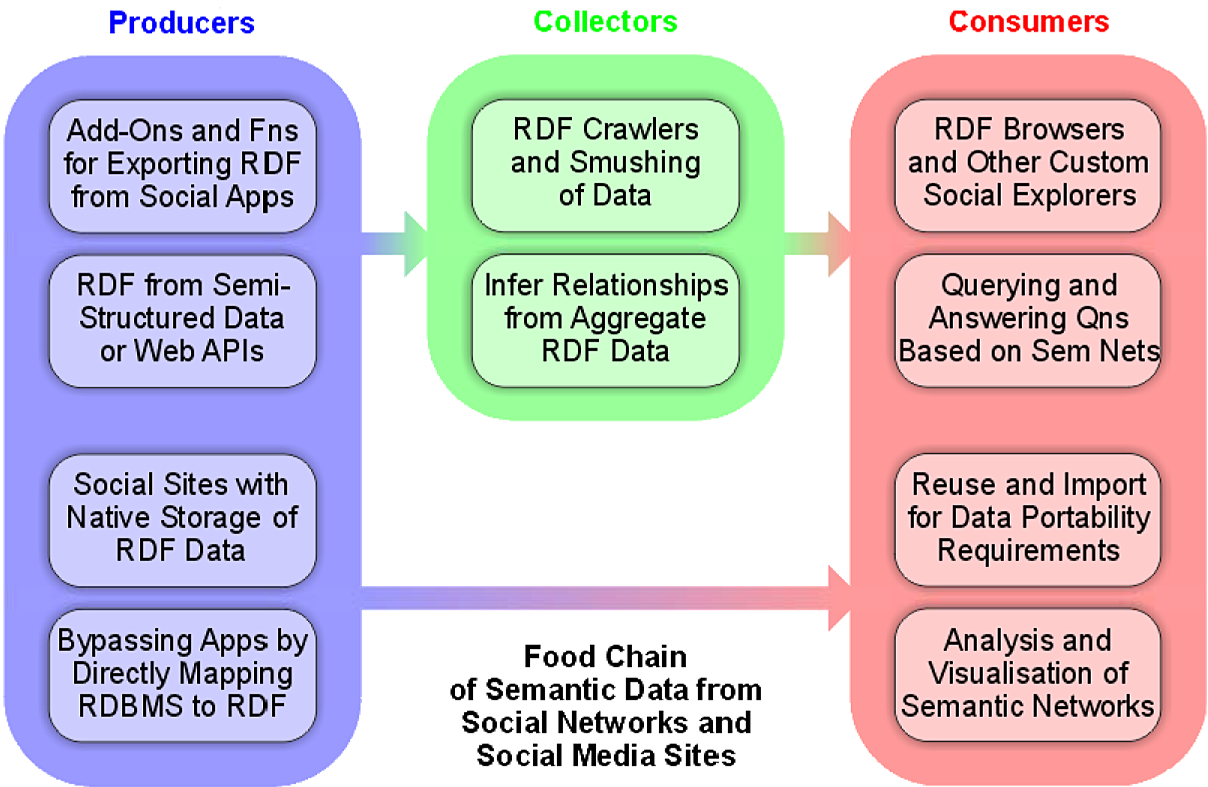 Figure 2: The Semantic Data Food Chain: Producers, Collectors, and Consumers.
Experiments and Logic: Querying the Social Graph
The true power of this method is demonstrated through SPARQL. Unlike SQL, which is bound to a local database schema, SPARQL can traverse the "Giant Global Graph."
Example Case: Finding Implicit Links The authors show how to find potential acquaintances by querying for people who share a workplace, school, or project across different FOAF files. This enables "Expert Finding"—locating a person not just by their name, but by their contributions to specific topics across the entire web.
Quantifiable Impact
- Deployment: SIOC has been integrated into 50+ applications, from WordPress plugins to mailing list exporters, covering 400+ active sites.
- Scale: The approach allows for Social Network Analysis on millions of nodes with much lower acquisition costs than traditional questionnaires or interviews.
Critical Insight & Future Outlook
Takeaway
The shift towards Data Portability is not just a technical luxury; it’s a prerequisite for the next generation of AI and recommendation systems. By providing a "Global Clipboard" where users can drag structured data from a wiki into their personal calendar, we move closer to a truly "intelligent" agent-based Web.
Limitations
- Identity Fragmentation: People want to keep their professional (LinkedIn) and personal (Facebook) identities separate. Forcing "smushing" might violate privacy.
- Heterogeneity: Even with ontologies, users might use different properties (
author_ofvshas_written).
Conclusion
As we move from Web 2.0 to the Semantic Social Web, the focus shifts from "sites" to "data." This paper provides the mathematical and architectural foundations to ensure that as our social networks grow, our ability to navigate and understand them grows at the same pace.