
Predictive Marketing: How Semantic Weather-Enrichment is Transforming Ad ROI
Semantically-Enabled Optimization of Digital Marketing Campaigns
The paper introduces a semantically-enabled end-to-end framework for optimizing digital marketing campaigns by enriching internal performance data with external "event" data (specifically weather). Highlighting a pilot with JOT Internet Media, the authors utilize a scalable toolkit (EW-Shopp) to predict campaign impressions, enabling weather-aware scheduling that identifies optimal launch times within a 7-day window.
Executive Summary
TL;DR: This paper presents a sophisticated pipeline that enriches digital marketing data with external weather events to predict ad performance. By reconciling proprietary Google keywords with global geographic knowledge bases, the authors built a "Weather-Aware Scheduler" that tells marketers exactly when and where to launch a campaign to catch consumer "peaks."
Academic Positioning: This work bridges the gap between Semantic Web technologies (Knowledge Bases, Linked Data) and Big Data Analytics (Machine Learning, NoSQL). It moves beyond theoretical table annotation to a practical, industrial-scale deployment in the "technology-conservative" digital marketing sector.
The Problem: The "Weather Blindness" in Digital Ads
Most digital marketing agencies operate in a vacuum of internal stats. They know what happened (Last week: 10,000 impressions) but rarely why it happened beyond their own bidding strategy.
The authors identify a major missed opportunity: external variables. For instance, a rainy day in Madrid might trigger a massive spike in "burger at home" searches. Current systems fail to capture this because:
- Data Heterogeneity: Marketing data is tabular; weather data is often stored in complex, binary formats (GRIB).
- Identifier Mismatch: Google uses its own "GeoTargets," which don't inherently map to the latitude/longitude needed for weather APIs.
- Scale: Processing billions of rows across 70 countries requires more than just a spreadsheet; it requires a scalable Big Data architecture.
Methodology: The EW-Shopp Toolkit
The researchers developed a multi-layered approach to turn raw data into actionable insights through semantic reconciliation.
1. Semantic Reconciliation (The "Bridge")
The core innovation is using ASIA (Assisted Semantic Interpretation and Annotation). It maps local identifiers to the GeoNames knowledge base. This "Semantic Link" provides the lat/long coordinates required to fetch high-precision weather forecasts from the ECMWF.
2. Scalable Architecture
To handle the 100GB+ datasets, the team deployed a containerized infrastructure using Docker and Rancher.
- Grafterizer: A UI for designing data cleaning steps.
- ArangoDB: A multi-model NoSQL database that stores the enriched data as a graph, reducing redundancy and speeding up joins between campaigns and weather forecasts.
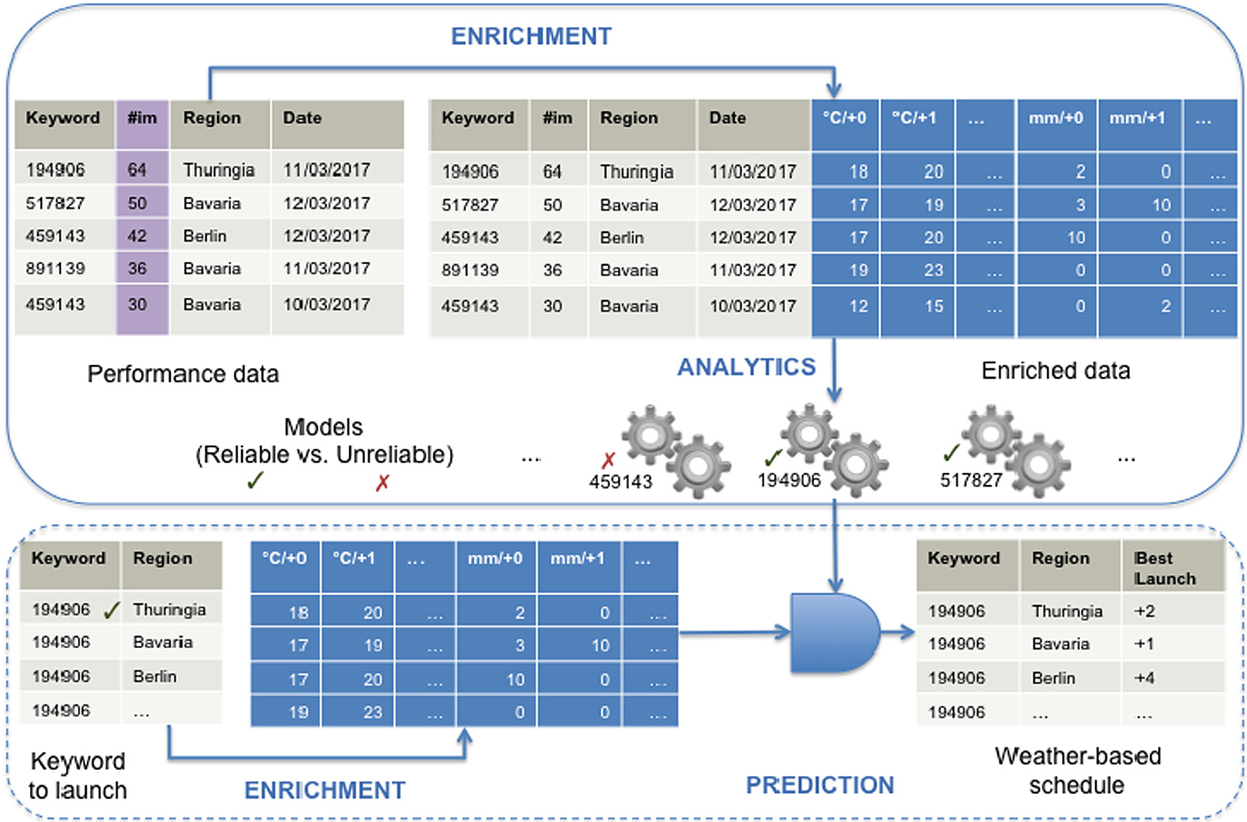 Figure 1: The data processing workflow: From ingestion to predictive scheduling.
Experiments & Results: Catching the Peaks
The pilot focused on 2016-2017 data for keywords in Germany and Spain. Using Random Forest models, the team predicted behavior for high-volume keywords.
Key Performance Metric: For the keyword "deutsche bahn fahrplanauskunft" (German railways timetable), the model achieved an RMSE of 0.87. While no model is perfect, the authors argue that for marketing, you don't need to predict the exact number of clicks—you only need to predict the peaks.
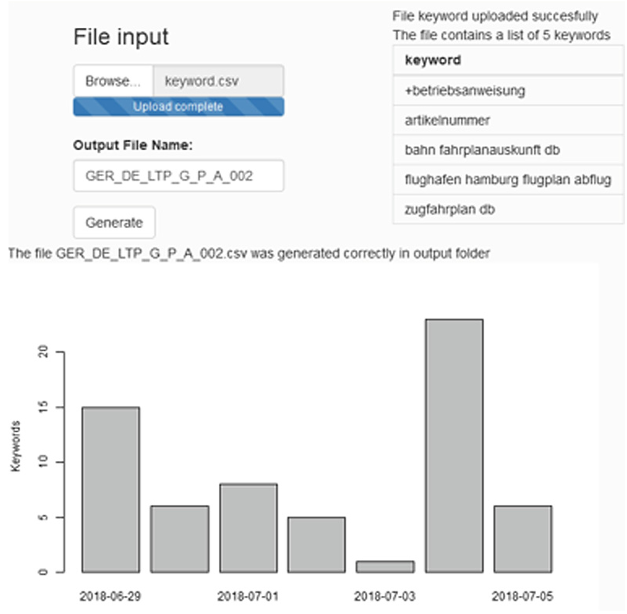 Figure 2: Actual (black) vs. Predicted (blue) impressions. The overlap demonstrates the model's ability to track fluctuations based on weather inputs.
Critical Insight: Why Semantics?
One might ask: "Why not just use a simple lookup table for weather?" The paper argues that Knowledge Bases (LOD - Linked Open Data) offer a replicable and adaptable framework. Today it’s weather; tomorrow it’s local holidays, news events, or sports scores. By building the pipeline on semantic foundations, JOT Internet Media can plug in new "event" sources without rewriting their entire data schema.
Conclusion & Outlook
This paper is a blueprint for Data Monetization. It proves that by adding a "Semantic Layer" to traditional business intelligence, companies can uncover hidden correlations that directly impact the bottom line.
Limitations: The model struggles with "weak signals" (keywords with very few daily impressions). Future work involves using multi-lingual word embeddings to cluster these rare keywords into larger, more predictable categories.
Takeaway for Practitioners: If your predictive models are plateauing, look outside your organization. The next 5% of accuracy likely lives in external event data, and Semantic Web tools are the key to unlocking it.