
Semantics-Enhanced RS: Bridging the Gap in Social Healthcare Recommendations
Semantics-Enhanced Recommendation System for Social Healthcare
This paper introduces a semantics-enhanced recommendation system tailored for social healthcare networks. It integrates semantic web technology with user behavior analysis to provide personalized medical information, effectively outperforming traditional Collaborative Filtering in sparse data environments.
TL;DR
In the sensitive and data-sparse world of digital health, traditional recommendation algorithms often fail. This paper proposes a Semantics-enhanced Social Network-based Recommendation System that leverages medical ontologies and user behavior to provide highly accurate suggestions without requiring a large volume of explicit ratings.
Background: The Healthcare Recommender Dilemma
While Amazon and Netflix have mastered the art of "if you liked this, you'll love that," the healthcare domain presents unique hurdles:
- Data Sparsity: Users rarely rate their medications or symptoms.
- Cold Start: New medical items or users enter the system with zero historical data.
- Complexity: "Cold" and "Flu" are semantically related, but a keyword search might treat them as entirely distinct entities.
The authors argue that the current state-of-the-art must move beyond Collaborative Filtering (CF) and toward an Ontology-Driven approach.
Methodology: Deep Semantic Similarity
The core innovation lies in the dual-factor similarity model. Instead of looking at item IDs, the system looks at what items mean.
1. Social Profile Similarity
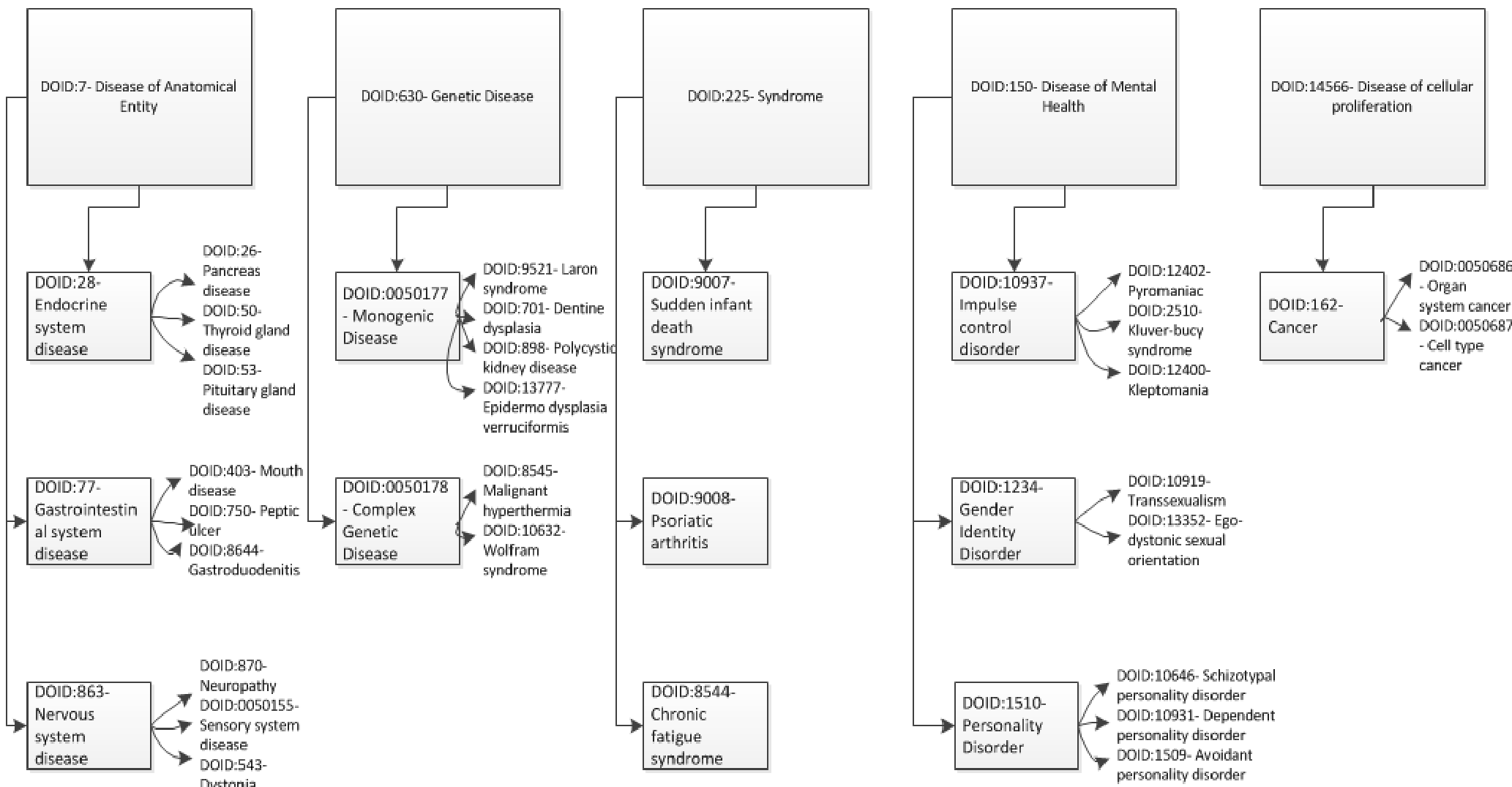
Users are represented as vectors of concepts () pulled from a disease/symptom ontology. The semantic distance between two medical concepts is calculated using a weighted shortest-path algorithm:
This isn't just counting steps in a graph; it incorporates a weighting factor that accounts for the depth of the concept. The deeper the concept (more specific), the less the weight, reflecting the intuition that specific medical sub-categories are closer in meaning than broad categories.
2. Social Behavior Similarity
Beyond what users put in their profiles, the system analyzes their actions—posts liked, groups joined, and messages shared. These are also mapped to ontological concepts, allowing the system to bridge the gap between "stated interests" and "revealed preferences."
3. The Combined Similarity Model
The model fuses these with a hyperparameter :
Experimental Results
The authors validated the system using data extracted from Facebook, WebMD, and Wikipedia.
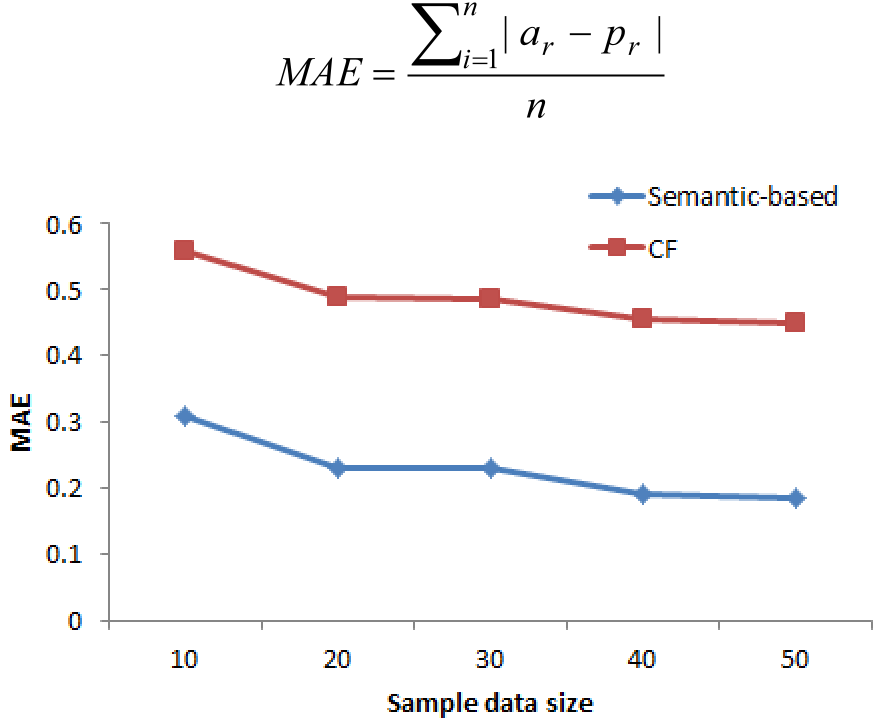
- Superiority Over CF: As shown in the performance charts, the semantic approach drastically reduces the Mean Absolute Error (MAE) compared to standard Collaborative Filtering.
- Sensitivity to : The research found that the optimal balance between profile and behavior often sits near to , though this varies by community.
- Threshold Impact: Setting a higher similarity threshold () for recommendations leads to significantly higher accuracy, albeit potentially lower coverage.
Deep Insights & Conclusion
This work demonstrates that in specialized fields like healthcare, structure is more important than volume. By embedding a medical ontology directly into the similarity calculation, the system gains an inductive bias that allows it to function where traditional LLMs or CF models might hallucinate or struggle with sparsity.
Limitations: The system relies heavily on the quality of the underlying ontology. If the medical taxonomy is outdated, the recommendations will be as well. Furthermore, the sensitive nature of healthcare data suggests that future iterations should look into Differential Privacy to protect user "Social Profiles."
Future Work: Integrating this semantic approach with modern Graph Neural Networks (GNNs) could further enhance the ability to capture complex relationships in social healthcare networks.