
Live Social Semantics: Bridging the Gap Between Physical Handshakes and Digital Footprints
Semantics, sensors, and the social web: The live social semantics experiments
The paper presents "Live Social Semantics" (LSS), an innovative application integrating Semantic Web data, Web 2.0 social networks, and active RFID sensing to enhance researcher networking at conferences. By deploying LSS at ESWC and HyperText 2009, the authors demonstrated a system that automatically generates semantic Profiles of Interest (POI) and maps real-time face-to-face (F2F) interactions.
TL;DR
Live Social Semantics (LSS) is a pioneering framework that fuses real-time RFID face-to-face (F2F) tracking with Semantic Web data and social media activity. Tested on 300 researchers, it creates automated "Profiles of Interest" (POIs) and live social graphs, allowing conference attendees to see not just who they are talking to, but why they should be professional collaborators based on shared online tags and academic history.
The Problem: The "Lost in the Crowd" Researcher
Conference networking is vital but inefficient. Junior researchers often find it daunting to approach seniors, and most attendees lose track of the spontaneous conversations they had during coffee breaks. Existing solutions were either purely digital (LinkedIn) or purely physical (tracking badges). There was no "live" bridge that could tell you, “The person you are talking to right now also tags 'Knowledge Management' on Delicious and attended the same workshop last year.”
Methodology: The Architecture of Interaction
The LSS architecture is split between the Online World and the Physical Space, mediated by a central Triple Store.
1. The Physical Layer (SocioPatterns)
The system uses active RFID badges that exchange low-power signals. A "contact" is only recorded if two people are within 1 meter and facing each other for at least 20 seconds—a robust proxy for actual conversation.
2. The Semantic Layer (Profile Builder)
The core technical challenge was turning messy Web 2.0 tags (like "km" or "apple") into meaningful interests. The LSS Profile Builder follows a multi-step pipeline:
- Harvesting: Scraping tags from Delicious, Flickr, and Last.fm.
- Semantic Matching: Mapping tags to DBpedia URIs using the TAGora Sense Repository.
- Disambiguation: Using cosine similarity between tag contexts to decide if "apple" means the fruit or the computer company.
- Weighting: Applying a time-decay factor so that recent interests carry more weight than older ones.
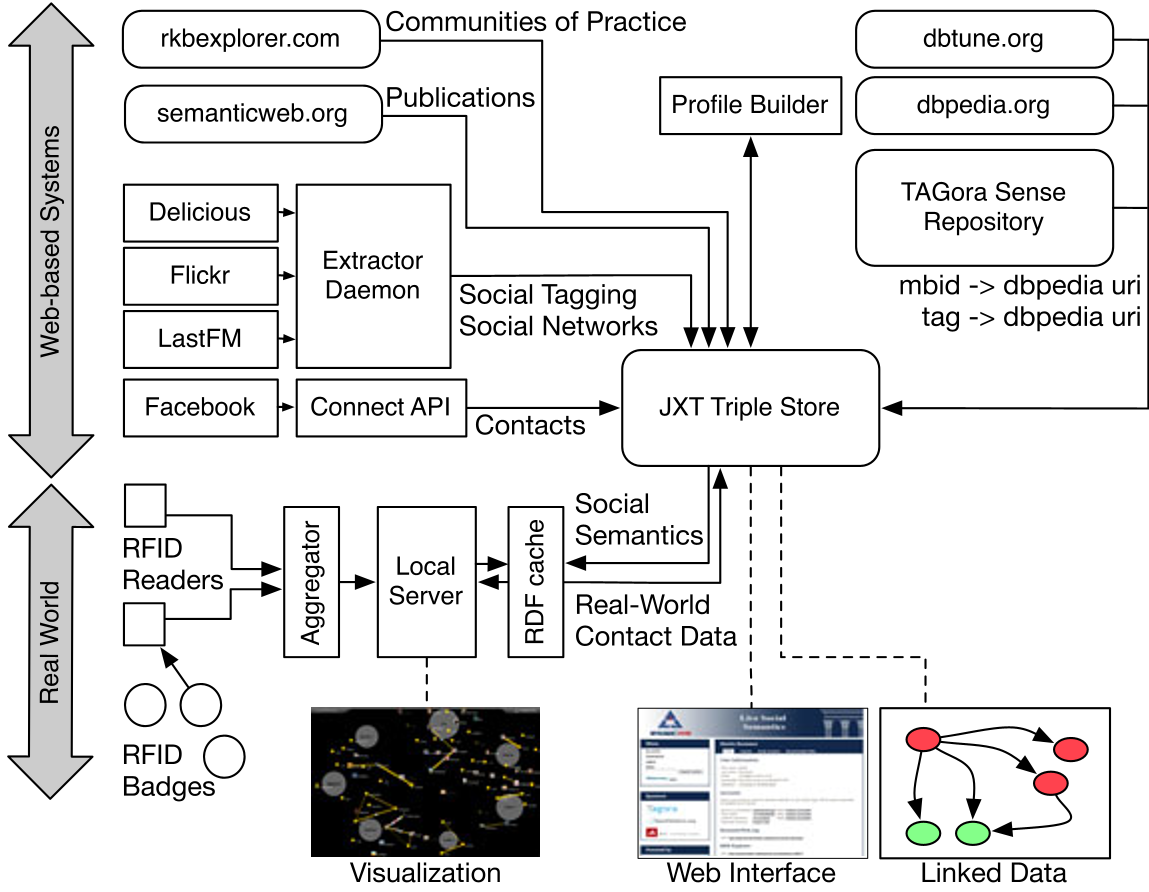 Figure 1: The dual-partition architecture connecting online social data with physical RFID dynamics.
Experimental Results: SOTA in the Wild
The system was deployed at ESWC 2009 and HyperText 2009.
- Participation: Out of 455 attendees, 300 wore the RFID badges.
- Accuracy: Users reviewed their generated POIs. Interestingly, while users removed about 21% of suggested interests, only 15% of those deletions were due to "wrong" technical mapping (e.g., matching "km" to "Kilometre" instead of "Knowledge Management"). The rest were removed because the interests were too broad or private.
- Source Reliability: Delicious proved to be a far better signal for professional interests than Flickr. Flickr tags often included "noise" like years or generic locations (e.g., "2008", "Italy") which users didn't consider "interests."
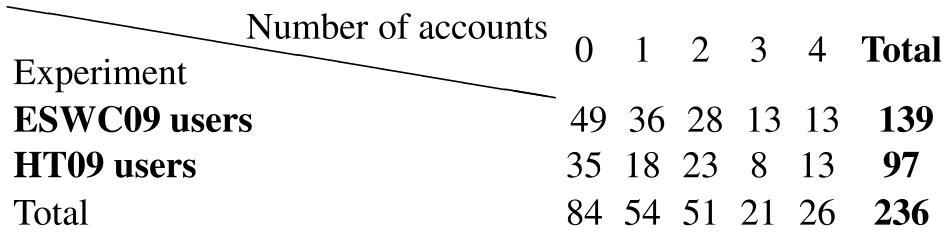 Table 1: User participation and the distribution of social media accounts linked to the LSS platform.
Deep Insights & Critical Analysis
The brilliance of LSS lies in its Inductive Bias toward physical proximity as a social filter. By using RFID body shielding to ensure people are actually facing each other, the system ignores the noise of "passing by" and focuses on high-intent social signals.
Limitations
- Privacy vs. Utility: While only 8% cited privacy as their primary reason for not participating, the manual step of verifying interests remains a bottleneck.
- Tag Ambiguity: The system still struggles with very short tags.
- The "LinkedIn" Gap: Many users requested integration with professional sites like LinkedIn/Xing rather than leisure sites like Flickr.
The Future of Social Semantics
The next frontier for this tech is Proactive Recommendations. Imagine a badge that vibrates or an app that pings you when a person with a 90% interest match enters your 5-meter radius. LSS laid the groundwork for the "Internet of People," where our digital personae navigate physical spaces on our behalf.
Conclusion
LSS successfully demonstrated that "Live Social Semantics" is not just possible but highly valuable for community building. By mashing up the Semantic Web (structured data) with Folksonomies (unstructured tags) and Sensors (real-world physics), the researchers created a prototype for the future of professional human-computer interaction.