
Beyond Manual Labeling: Semi-Supervised Sparse Coding for Emotion Recognition
Semi-Supervised Dictionary Learning of Sparse Representations for Emotion Recognition
This paper introduces a semi-supervised dictionary learning approach specifically for emotion recognition using biophysiological signals. By applying the K-SVD algorithm to Blood Volume Pulse (BVP) data, the method generates sparse representations that serve as robust features for classification via Support Vector Machines (SVM).
TL;DR
Recognizing human emotions from physiological signals (like heart rate) usually requires massive amounts of labeled data, which is rare and expensive. This paper proposes a Semi-Supervised Dictionary Learning approach that uses the K-SVD algorithm to "learn" the structure of Blood Volume Pulse (BVP) signals. By incorporating unlabeled data into the training phase, the model achieves better feature representation and higher classification accuracy without manual feature engineering.
The "Labeling Bottleneck" in Affective Computing
In the world of Affective Computing, we are drowning in data but starving for labels. Sensors can record biophysiological signals (Skin Conductance, BVP, Respiration) for days, but asking a human to pinpoint the exact second an emotion shifts is nearly impossible.
Existing methods often rely on:
- Manual Feature Extraction: Choosing "peaks" or "intervals" based on domain knowledge, which might miss subtle patterns.
- Fully Supervised Learning: Which ignores the vast amounts of unlabeled data we collect every day.
The authors argue that signals like BVP are inherently sparse. Your heart's rhythm follows a specific structure; instead of looking at the raw signal, we should look at a small set of "base behaviors" (atoms) that combine to form that signal.
Methodology: Dictionary Learning & K-SVD
The core of the paper is the transition from raw BVP signals to a Sparse Representation.
1. The Sparse Paradigm
A signal is represented as , where is a dictionary of "atoms" and is a sparse vector (most elements are zero). The goal is to find a that accurately reconstructs the signal using very few atoms.
2. The K-SVD Algorithm
The authors use K-SVD, a generalization of K-means. While K-means assigns a signal to one cluster, K-SVD describes it as a linear combination of multiple prototypes.
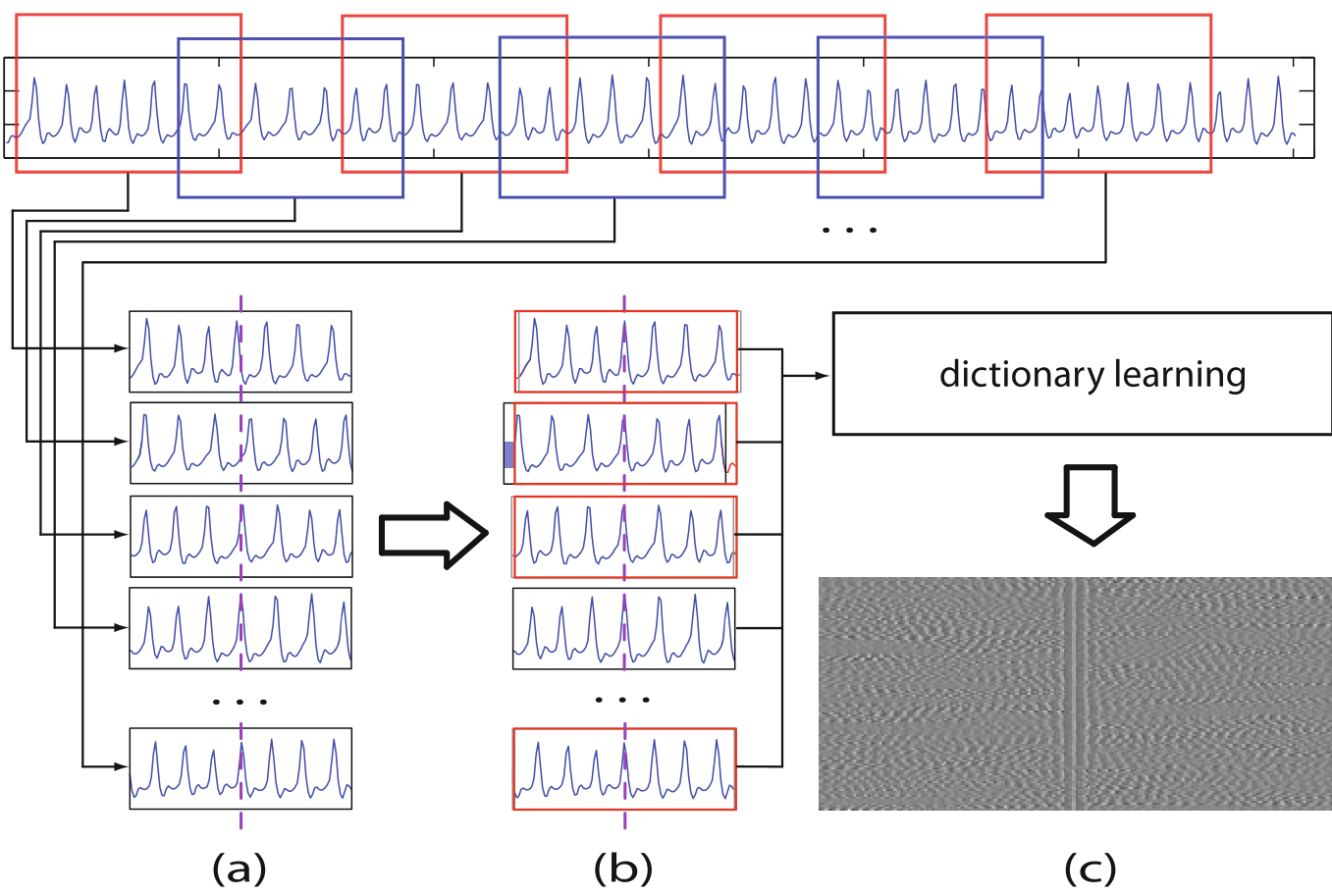 Figure 1: The proposed pipeline, from signal preprocessing to sparse classification.
3. The Semi-Supervised Twist
The "Aha!" moment comes in the training phase. To build a robust dictionary , you don't just use the data you have labels for (e.g., "Anger" vs. "Love"). You toss in all the recorded data. Even if you don't know the emotion, the signal still informs the dictionary about the "vocabulary" of human heart activity.
Experimental Insights
The Power of Sparsity
One might think "more data is better," but the authors found that extreme sparsity actually performed best.
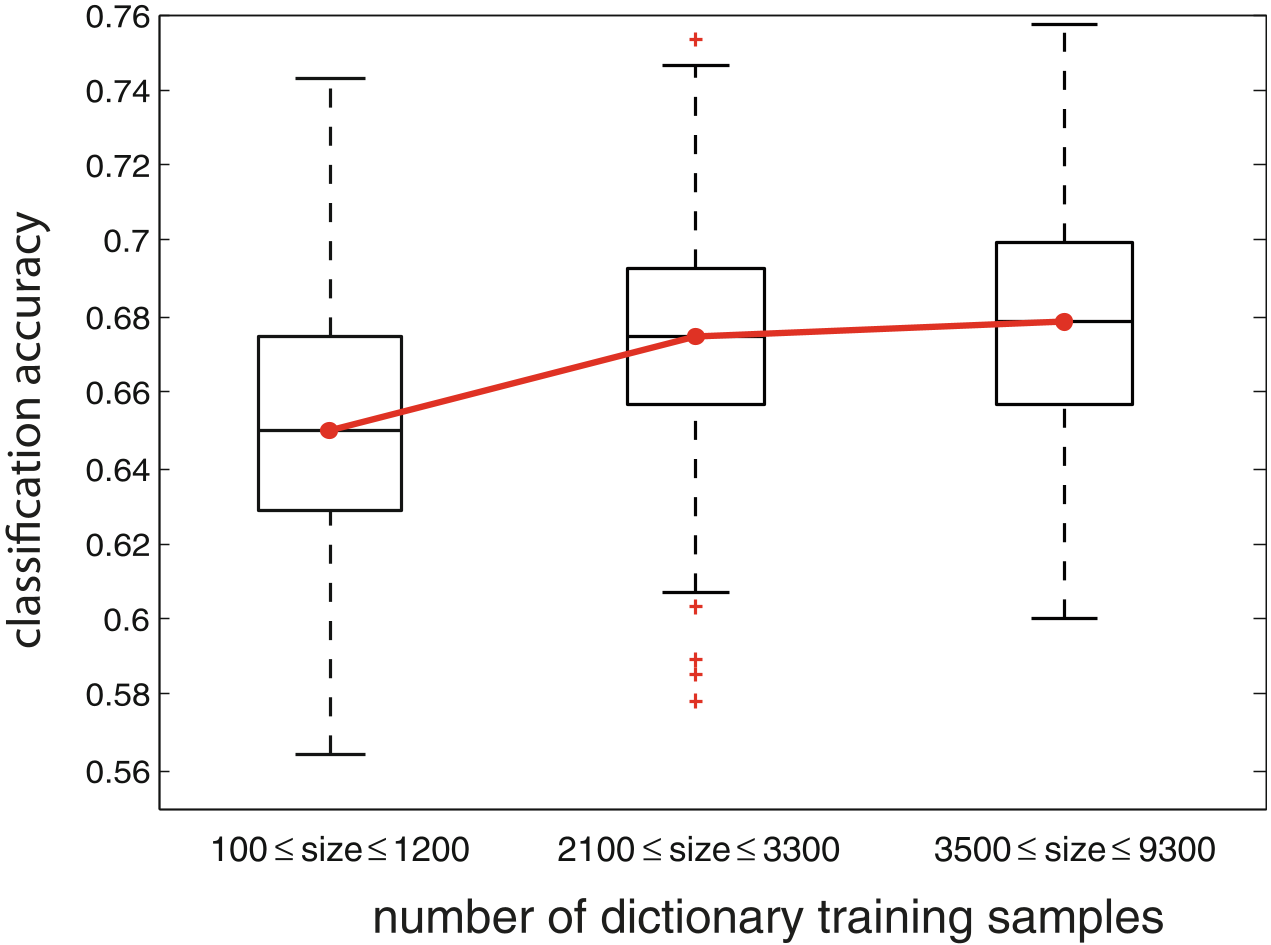 Figure 2: Classification accuracy peaks when the representation is most sparse ().
This suggests that the dictionary atoms are so well-learned that a single atom is often enough to distinguish between broad emotional categories like "Anger" and "Platonic Love."
The Unlabeled Data Boost
By adding "unlabeled" samples from other emotions into the dictionary training, the classification rate on the target emotions improved consistently.
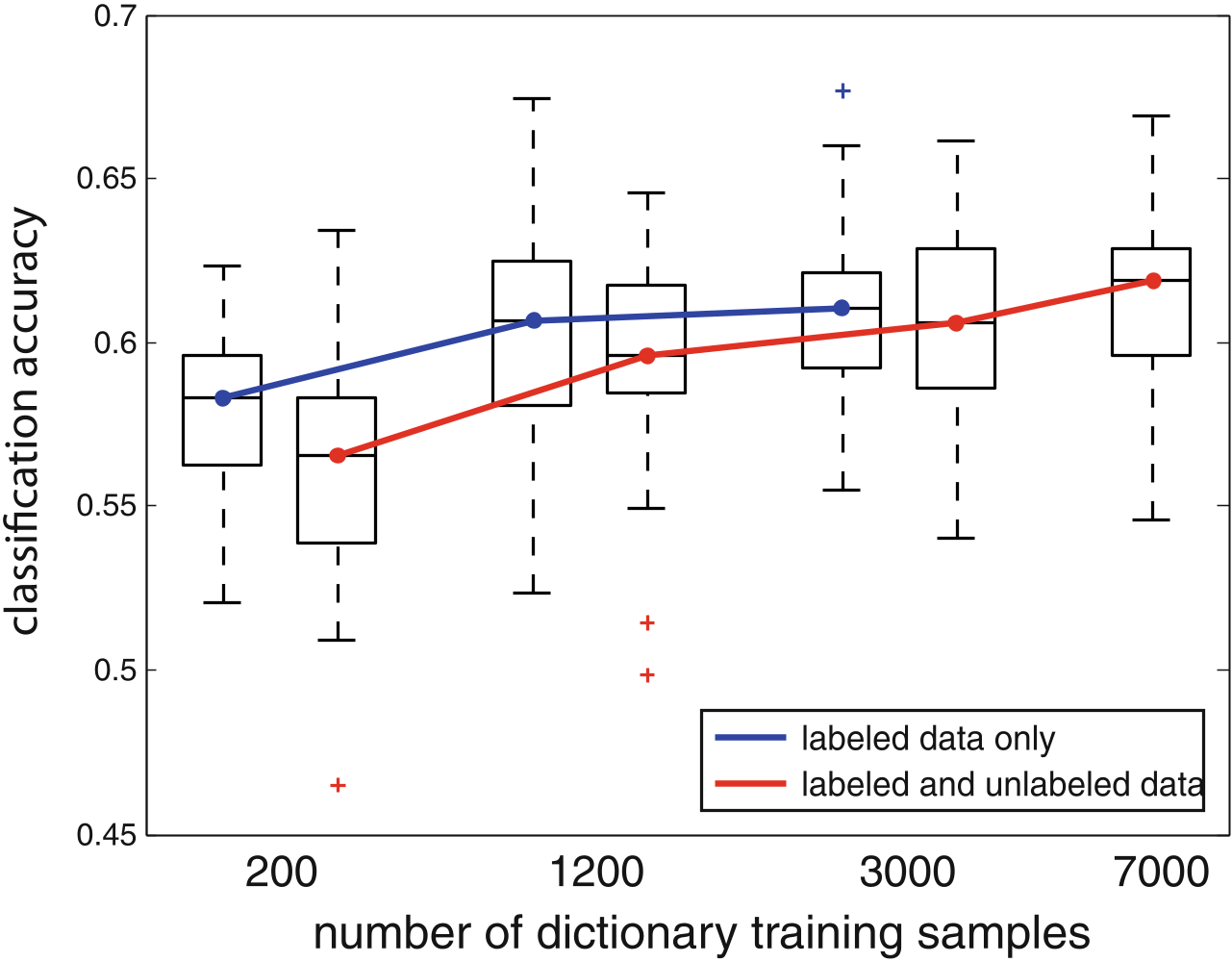 Figure 3: Red line (augmented with unlabeled data) consistently outperforms the blue line (only labeled data).
Critical Analysis & Takeaways
Why does this work? The BVP signal is periodic. The "QRS complexes" (the spikes in your heart rate) are remarkably similar but vary in timing and intensity during different emotional states. Dictionary learning captures these "base beats." By using unlabeled data, the dictionary becomes a "universal language" for heart activity, making it easier for an SVM to spot the subtle dialect of "Anger."
Limitations:
- Computational Complexity: As the dictionary grows, projecting signals into the sparse space using Orthogonal Matching Pursuit (OMP) becomes expensive.
- Alignment Sensitivity: The method relies heavily on accurately aligning signal peaks. If your peak detection fails, the dictionary learning fails.
Future Outlook: This work lays the groundwork for "Foundation Models" in physiology. Imagine a massive dictionary trained on millions of hours of unlabeled heart-rate data, which researchers can then "fine-tune" for specific medical or emotional diagnoses with just a handful of labels.
Conclusion
The paper proves that we don't need to throw away unlabeled data. In fact, for sparse signals like BVP, unlabeled data is the key to building the feature sets of the future. By focusing on how a signal is composed rather than just its raw values, we can achieve more robust emotional intelligence in machines.