
Decoding Political Satire: Semi-Supervised Irony Detection in the Greek Twittersphere
A comparison between semi-supervised and supervised text mining techniques on detecting irony in greek political tweets
This paper presents a classification framework for detecting irony in Greek political tweets, comparing supervised and semi-supervised collective learning approaches. Utilizing a custom linguistic feature set and the Balkanet lexical database, the study achieves SOTA-level performance for the Greek language, effectively correlating Twitter irony trends with actual 2012 Greek parliamentary election results.
TL;DR
Political irony on social media is more than just humor; it is a signal of shifting voter sentiment. This research investigates the detection of irony in Greek political tweets by comparing traditional supervised learning with semi-supervised Collective Classification. By analyzing linguistic features like word rarity and ambiguity, the researchers demonstrated that semi-supervised models (83.1% precision) can match or exceed supervised models while requiring significantly less human annotation effort.
The Challenge: Why Irony is a Hard Nut to Crack
Detecting irony is one of the most difficult tasks in Natural Language Processing (NLP) because it relies on subjectivity and context. Unlike standard sentiment analysis (Positive vs. Negative), irony involves saying one thing while meaning the opposite.
The authors identified three primary pain points:
- Annotation Divergence: Human annotators rarely agree on what constitutes "irony," making it impossible to build a perfect "gold standard" dataset.
- Linguistic Scarcity: Most irony research is tailored for English, ignoring the morphological complexity of languages like Greek.
- Data Underutilization: Millions of tweets remain unlabeled. Supervised models ignore this potential goldmine of information.
Methodology: The Logic of Collective Learning
To overcome the labeling bottleneck, the authors turned to Semi-Supervised Learning, specifically Collective Classification. Unlike traditional models that learn only from labeled samples, these algorithms treat the dataset as a network, using the relationships between labeled and unlabeled instances to improve accuracy.
The Feature Engine
The model evaluates each tweet based on five linguistic pillars:
- Rarity Score: Identifies "one-liners" that use idiosyncratic or rare words.
- Meanings (Ambiguity): Uses Balkanet (Greek WordNet) to count synsets. High ambiguity often signals a double entendre.
- Lexical Markers: Tracks repeated letters (prosody) and punctuation (especially the Greek semicolon/question mark).
- Spoken Style: Captures non-verbal cues like
*sigh*or-for quotes. - Emoticons: Binary detection of mocking or smiley faces.
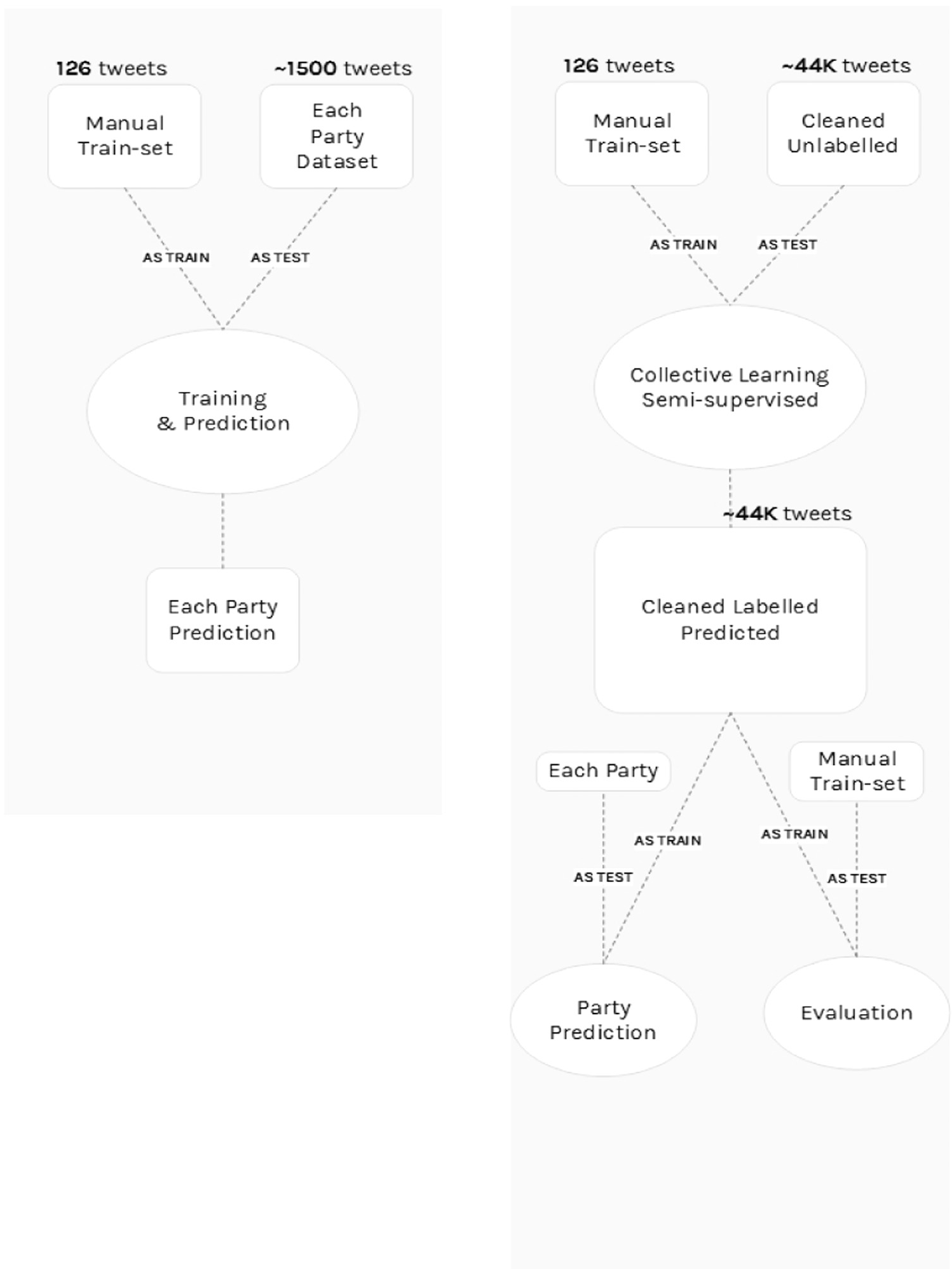 Figure 1: The diagnostic workflow from raw Greek tweets to semi-supervised classification.
Experiments and Political Insights
The researchers tested their model on 44,438 tweets surrounding the 2012 Greek elections.
Algorithmic Performance
The comparison between supervised and semi-supervised techniques yielded fascinating results. While Functional Trees excelled in the supervised setup, Random Forests dominated the semi-supervised environment.
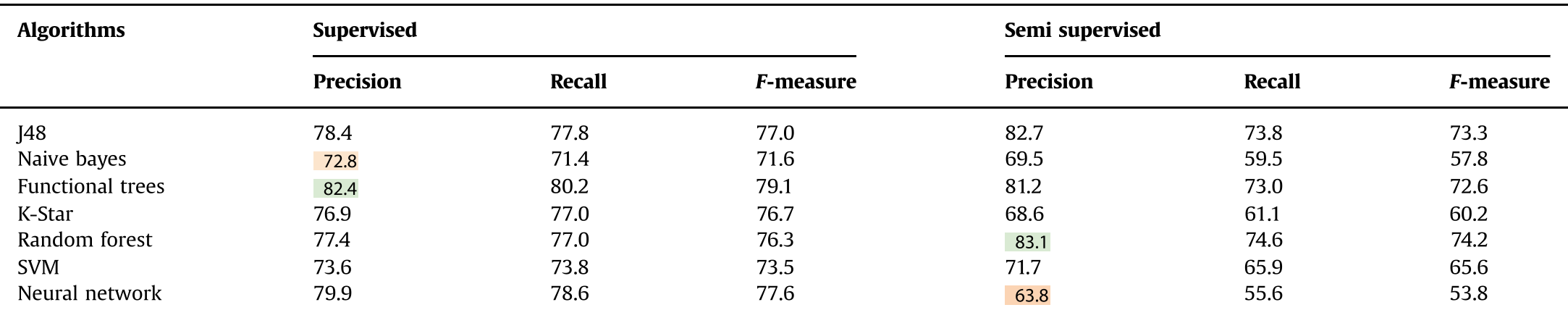 Table 1: Comparing Precision and Recall across multiple ML architectures.
The "Irony-Election" Correlation
Perhaps the most impactful finding was the correlation between irony levels and political fate. Parties like PASOK, which received a staggering 64% irony score (Supervised) / 26% (Semi-supervised) in the pre-election period, saw a devastating -30.74% drop in actual election results compared to 2009. This suggests that a high volume of irony serves as a leading indicator of political "losing" or public disillusionment.
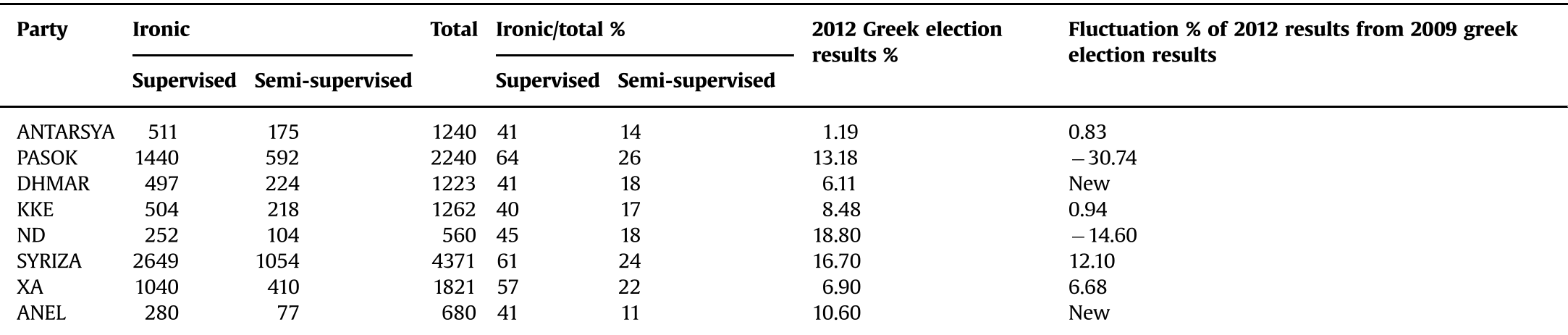 Table 2: Irony percentages vs. actual 2012 election outcomes.
Critical Insight & Future Outlook
The study proves that more data (even unlabeled) is often better than more labels. The semi-supervised approach detected fewer ironic tweets than the supervised one, but the authors argue this is "closer to reality." Supervised models often tend to over-fit and hallucinate irony in neutral text because they are forced to make decisions based on a very limited, biased manual sample.
Limitations:
- Grammatical Constraints: The Balkanet framework used struggled with Greek grammatical conjugation, limiting the "Meanings" score's effectiveness.
- Demographic Bias: Twitter users in Greece (3.7% of the population) represent a younger, more liberal demographic, which might skew the irony detected toward specific political spectrums.
The Takeaway: Irony detection is no longer just an academic curiosity. For polling companies and brands, understanding humor is the next frontier of market intelligence. By utilizing semi-supervised learning, we can finally begin to unpack the complex, sarcastic nature of human digital discourse at scale.