
JECRIPE: Bridge the Communicability Gap in Games for Down Syndrome
Semiotic Inspection of a Game for Children with Down Syndrome
This paper presents JECRIPE, a specialized 3D game designed to stimulate cognitive development in preschool children with Down syndrome. Using the Semiotic Inspection Method (SIM), the researchers evaluated the game's communicability—specifically how well the designer's intent is conveyed through interface signs—to improve interaction for this specific user demographic.
TL;DR
Researchers developed JECRIPE, a 3D game targeting cognitive stimulation for preschool children with Down syndrome. By applying Semiotic Inspection, they moved beyond traditional usability to evaluate how the game "talks" to the user, uncovering unique design challenges where "fun" errors can actually hinder learning.
Background: The Inclusive Education Challenge
Digital games are powerful vehicles for learning, yet children with Down syndrome often face a "digital divide." Most software assumes a baseline of fine motor skills and linguistic processing that these children are still developing. The goal of JECRIPE (developed using Unity3D) is to bridge this gap through structured tasks in three virtual environments: The Music House, The Bubble House, and The Day Care Center.
Problem & Motivation
Standard Human-Computer Interaction (HCI) evaluation—like asking a child "Is this hard?"—fails with 3-to-7-year-olds who have cognitive impairments. The authors recognized a need for an analytical approach that allows experts to step into the child’s world by deconstructing the interface's signs.
The core insight? A game for this demographic must not just be usable; it must be highly communicable. If the designer’s intent (e.g., "drag this object") isn't conveyed through the right "signs," the therapeutic value is lost.
Methodology: Semiotic Engineering
The paper utilizes the Semiotic Inspection Method (SIM), which views the interface as a "message" from the designer to the user.
The Three Tiers of Signs:
- Metalinguistic Signs: Instructions and help messages. (e.g., The voice telling the child to "pop bubbles").
- Static Signs: Elements that don't move. (e.g., The map of JECRIPE Island, the child-like hand cursor).
- Dynamic Signs: System behavior in response to action. (e.g., The character "Samuca" looking at an object to indicate a desire).
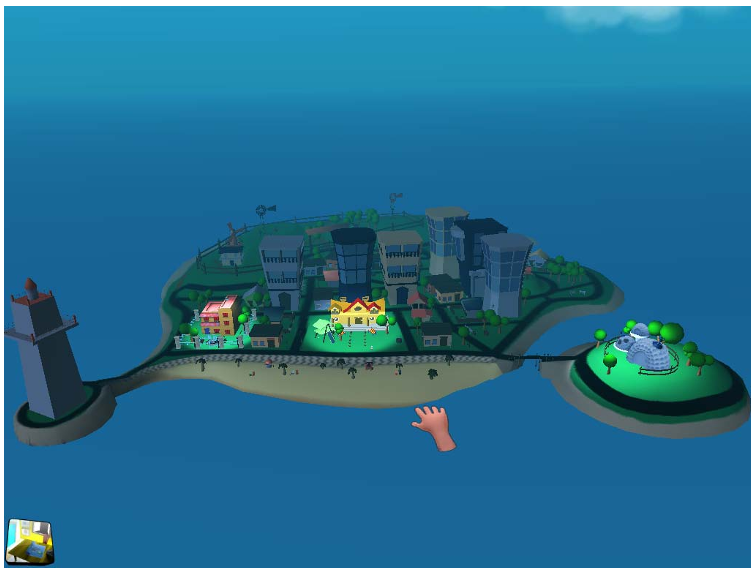 Figure 1: The JECRIPE Island serves as a central hub for navigating between cognitive tasks.
Detailed Cognitive Tasks
- The Music House: Stimulates imitation and rhythm through popular Brazilian songs.
- The Bubble House: Focuses on perception and fine motor skills by popping bubbles and color-matching toys.
- The Day Care Center: Enhances hand-eye coordination using drag-and-drop mechanics to give a baby (Samuca) the toys he requests through non-verbal cues.
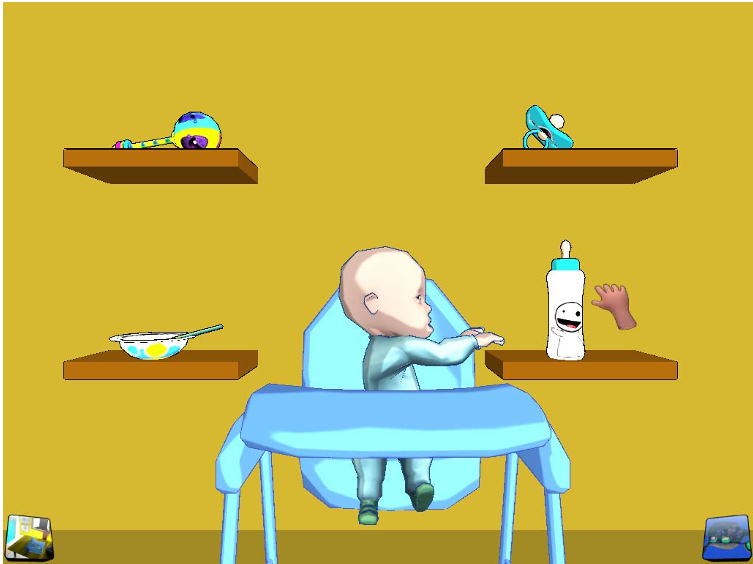 Figure 2: The Day Care Center uses Samuca, a character with Down syndrome, to foster social identification and empathy.
Experimental Insights & Results
The SIM evaluation revealed a fascinating paradox. In the "Day Care Center," when the player makes an error, the character Samuca performs a "dissatisfaction" animation. The inspection and subsequent user observation showed that children actually enjoyed the error animation, repeating the mistake intentionally to hear Samuca laugh or cry.
Key Findings:
- Instruction Gaps: The game didn't explicitly explain the difference between moving the mouse (Bubble House) and clicking-and-dragging (Day Care Center).
- Metaphor Success: The mouse pointer, designed as a child's hand with Down syndrome characteristics, significantly improved user engagement and identification.
- Navigation: Users often ignored the intended order of difficulty, suggesting a need for a "Global Goal" (e.g., a "Happiness Meter" for the main character) to guide progress.
Critical Analysis & Conclusion
Takeaway
JECRIPE demonstrates that for special needs populations, Feedback is Metacommunication. Every sound and animation must be scrutinized: does it reward the right behavior or just provide entertainment for the wrong behavior?
Limitations
The study highlights that "Adult-to-Child" empathy is difficult. Even experts cannot perfectly predict how a child will perceive a dynamic sign. Furthermore, the complexity of imitation movements in the "Music House" proved too high for some children, highlighting a need for more granular difficulty settings.
Future Work
The authors suggest implementing a narrative-driven goal—making the main character "Betinho" happy through total game progress—to transform individual activities into a cohesive learning journey.