
The Silver Digital Divide: Bridging Seniors into the Russian e-Governance Landscape
9102_Seniors' Inclusion into e-Governance Social Media, e-Services, e-Petitions Usage.
This paper explores the inclusion of senior citizens in the Russian e-Governance ecosystem, covering social media engagement, e-Service adoption, and e-Petitions. By leveraging opinion polls, social media monitoring (IQBuzz), and API-based portal analysis, the study identifies a significant digital divide where elderly participation in e-Democracy remains low despite a growing demand for digital administrative services.
Executive Summary
TL;DR: While Russia boasts over 15 million internet users aged 55+, their presence in the e-Governance sphere is characterized by a "service gap." They are increasingly interested in digital government services but remain largely invisible in e-Participation and policy-making platforms.
Positioning: This work is a crucial sociological and technical assessment that challenges the "Techno-Ageism" stereotype. It identifies that the barrier to inclusion isn't necessarily a lack of interest, but rather a lack of tailored accessibility and literacy support.
The "Joker" Problem: Motivation and Pitfalls
The research begins by debunking a common myth: that seniors don't use social media. However, it uncovers a fascinating data integrity challenge. In an analysis of 100 million accounts on VKontakte, the authors found that roughly half of the profiles claiming to be seniors were actually young "jokers" faking their age.
The motivation for the study is clear: as global populations age, the democratic health of a nation depends on its ability to integrate the "silver generation" into digital decision-making processes. Current SOTA (State of the Art) focuses on younger demographics, leaving a vacuum in our understanding of how seniors navigate e-Petitions and e-Services.
Methodology: A Multi-Lens Approach
The authors used a sophisticated blend of quantitative and qualitative tools to map the senior digital landscape:
- IQBuzz Monitoring: To track real-time discussions on seniors' employment, pensions, and care.
- e-Petition API Analysis: Specifically targeting the
roi.ruportal to evaluate the impact of elderly-related initiatives. - Gadget Assessment: Identifying that mobile phones (49%) are the gateway for seniors, rather than laptops.
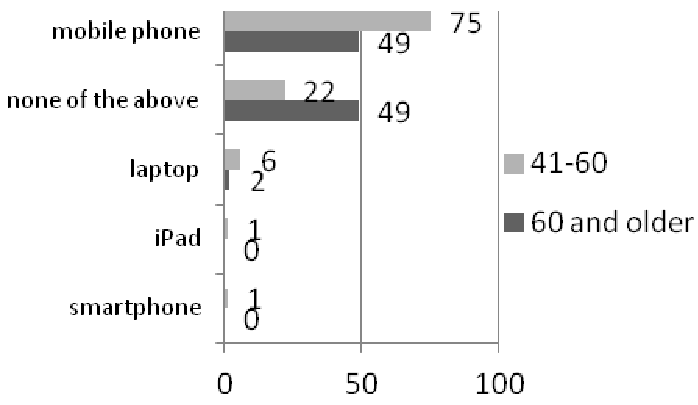 Figure 1: Preference for high-weight, easy-to-use mobile devices over complex laptops.
Key Findings: The Engagement Paradox
The study reveals a stark contrast between need and usage:
- High Demand, Low Adoption: While 93% of seniors frequent government offices, only 14% use the federal e-Service portal.
- Petitions and Power: Despite making up 37% of the active electorate, seniors' interests are represented in less than 2% of e-petitions. Most of these petitions focus on pension indexing, reflecting a reactive rather than proactive digital engagement.
- Social Media Bursts: Online discussions peak sharply around legislative changes (e.g., the 2015 pension formula changes), reaching 3,500 messages per day, indicating that seniors (or their caregivers) are highly sensitive to policy shifts discussed online.
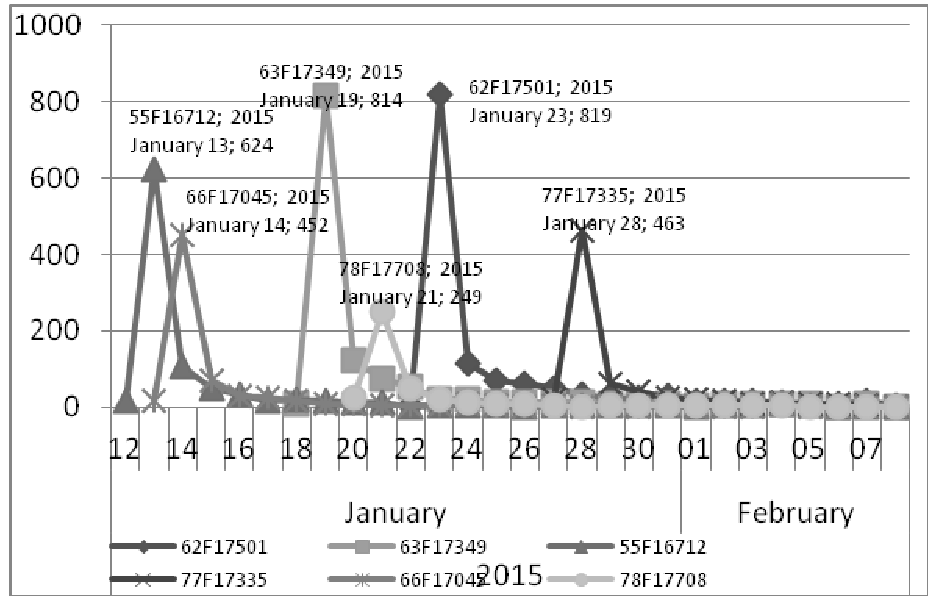 Figure 2: Voting dynamics for popular initiatives, showing the "first-day peak" phenomenon common in digital activism.
Critical Insight & Future Outlook
Takeaway: The "silver generation" has the potential to be a powerhouse in e-Governance, but they are currently treated as passive service consumers rather than active digital citizens.
Limitations: The study notes the difficulty in detecting the exact age of social media users, as only 30% of accounts provide verifiable age data. This suggests that the "digital senior" population might be even larger, but less visible due to privacy concerns or profile inaccuracies.
Future Work: To bridge this gap, future research should focus on Inclusive UX Design. E-Governance platforms must move away from complex, multi-step authentication and high-density text toward simplified, voice-assisted, or high-contrast interfaces that accommodate the specific needs of aging users.