
Beyond the Screen: How Quality and Community Drive Online Engagement in Universities
Sense of Community in Online Social Networks at University Environments
This study investigates the Sense of Community (SOC) in online social networks within university environments in Peru. Utilizing a structural model to analyze the relationships between system quality, information quality, satisfaction, and SOC, the research demonstrates how these factors collectively drive student usage of online academic and social platforms.
TL;DR
In the digital age, a university is more than just a physical campus; it is a virtual network of interactions. This research examines the "Sense of Community" (SOC) among engineering students in Peru. The findings reveal a crucial hierarchy: System and Information Quality are the foundations that build Satisfaction and SOC, which together pulse the lifeblood of social network Usage.
The "Why": Why Does Digital Belonging Matter?
In many university environments, administrators struggle with low engagement on official platforms. Traditional views often fail to distinguish between whether students use a platform because it "works well" (System Quality) or because they "feel they belong" (Sense of Community).
The authors argue that SOC—defined by membership, influence, and emotional connection—is a powerful motivator. However, the motivation to participate isn't born in a vacuum; it is a response to the environment provided by the institution.
Methodology: The Architecture of Community
The study utilizes a structural model to test seven hypotheses. It breaks down the digital experience into four pillars:
- System Quality (SQ): Does it load fast? Is it easy to navigate?
- Information Quality (IQ): Is the content accurate, current, and understandable?
- Sense of Community (SOC): Do students feel their needs are met through the group?
- Satisfaction: Does the system meet the user's requirements?
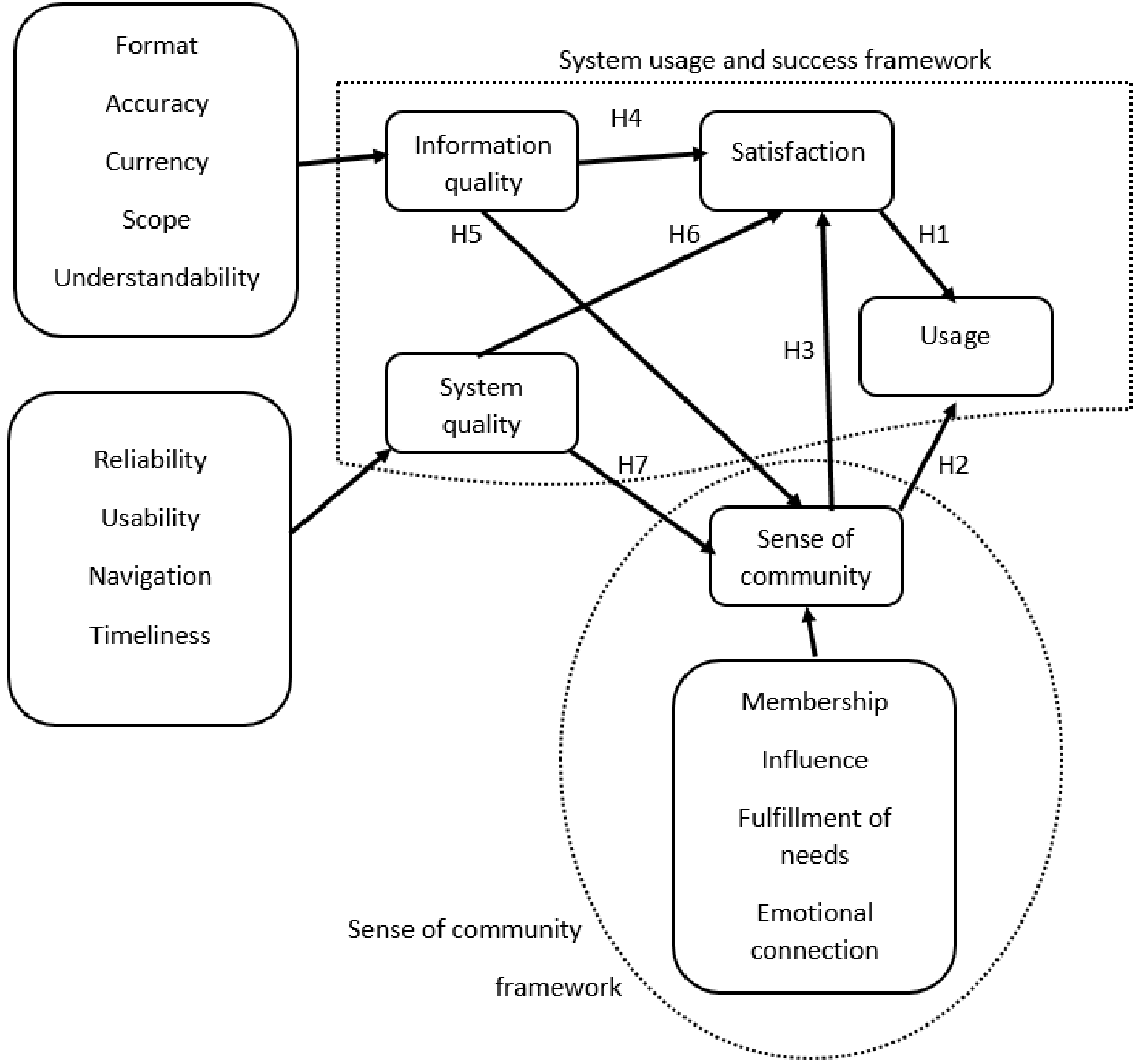
The researchers surveyed 164 students, primarily using Facebook (78.7%) and Instagram (12.2%), to validate how these pillars interact.
Key Insights: Quality as the Trigger
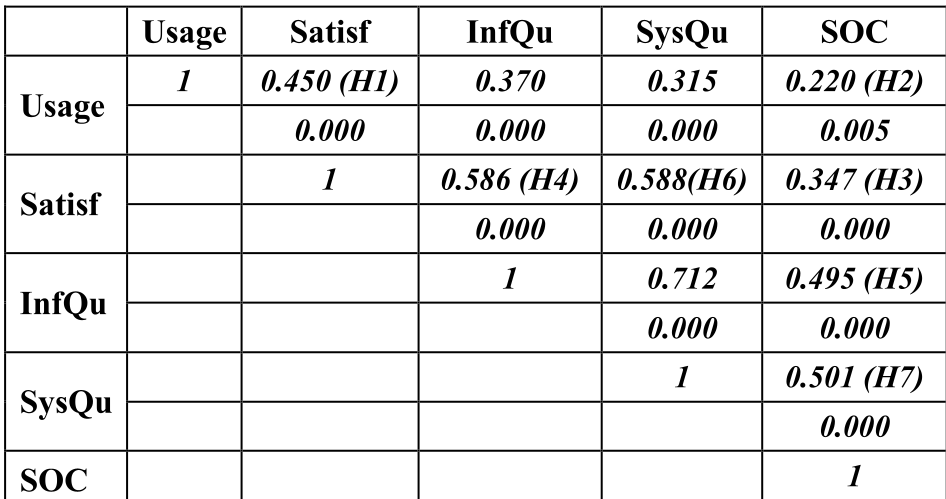
The results from the correlation matrix provide a fascinating look at the "User Journey" of a student:
- The Power of Infrastructure: System Quality (SQ) and Information Quality (IQ) had the strongest correlations with SOC (r=0.501 and r=0.495 respectively). This suggests that you cannot "force" a community feeling if the technology is frustrating or the information is stale.
- The Satisfaction Bridge: Interestingly, SOC had a relatively weak direct impact on usage. Instead, SOC builds Satisfaction, and Satisfaction is what ultimately drives students to keep logging in.
- Gender and Platform Trends: The study noted a heavy lean toward Facebook for academic/social professional use among engineering students, with a high reliability (Cronbach’s alpha > 0.70) across all measured factors.
Critical Analysis: Is Community Enough?
The most striking takeaway is that SOC is a byproduct of quality. For university managers and IT departments, the message is clear: if you want a vibrant online community, don't start with social engineering; start with technical engineering.
Limitations: The study focuses on a specific demographic (engineering students in Lima). Future research could explore if these same patterns hold for humanities students or in purely asynchronous e-learning environments where physical campus ties are absent.
Conclusion: A Roadmap for Institutional Success
To improve student participation and retention, universities must bridge the gap between "System Performance" and "Human Connection." By ensuring that online social networks are reliable and rich with high-quality information, institutions foster a sense of belonging that translates into higher student satisfaction and a more robust academic ecosystem.