
The Social IoT: How Smart Cities Use Facebook to Build Trust and Save Energy
Sensing service architecture for smart cities using social network platforms
The paper introduces a "Sensing-as-a-Service" (S2aaS) security architecture for smart cities that integrates IoT objects with Social Network Platforms (SNPs). It utilizes a modified reputation analysis algorithm and multi-layer encryption (BLS and PGP) to build a trust-based ecosystem on Facebook, achieving an adaptive, secure, and platform-agnostic communication framework.
TL;DR
Researchers have developed a sensing service architecture that turns social networks into a reputation engine for smart city sensors. By treating IoT devices as social entities that "post" data and receive "likes" from citizens, the system creates a self-regulating trust ecosystem. It utilizes the Eclipse Kura gateway and BLS signatures to ensure that data remains secure even when using non-trusted platforms like Facebook.
Background: Why Give Sensors a Social Identity?
The dream of the Smart City involves thousands of heterogeneous devices (from Linux-based hubs to bare-metal sensors) interacting with citizens. The major hurdle isn't just connectivity—it's trust. How can a traffic management system know that a temperature sensor isn't a malicious node providing false data?
The authors argue that Social Network Platforms (SNPs) are the logical choice for this "Sensing-as-a-Service" layer. They provide a ready-made platform for human-machine interaction, built-in authorization (OAuth), and a mechanism for reputation: the social graph.
Methodology: Trust Through "Random Walks"
The core of this paper is its unique reputation analysis algorithm. Instead of a centralized authority, the system uses the social graph to flow authority from one node to another.
1. Reputation Calculation
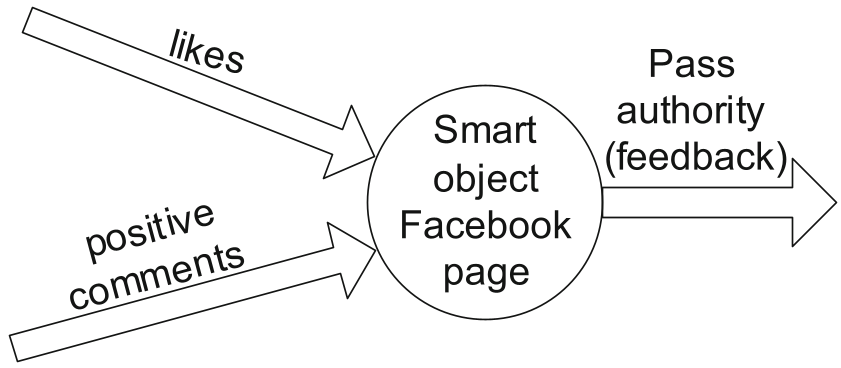
Every smart object has a Facebook page. Its "authority" is calculated based on:
- Initial authority (friends, total likes).
- Link weights: Sum of likes and positive comments between nodes.
- Authority Flow: A unidirectional flow where rewarded messages transfer a fraction of trust back to the input nodes (dependencies).
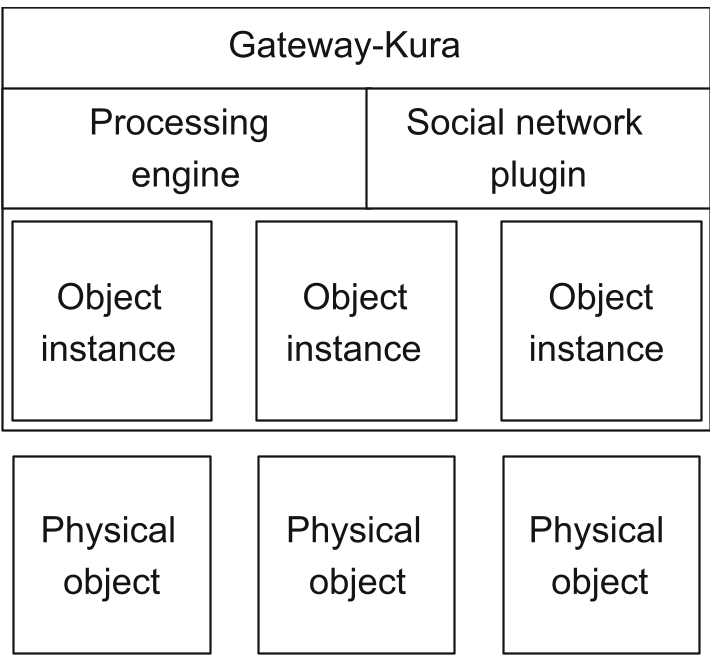
2. The Gateway Architecture
To manage resource-constrained devices, a Secure Smart Gateway acts as the intermediary. It speaks MQTT (a lightweight protocol) to the sensors and RESTful API/OAuth to Facebook.
3. Verification & Security
Since Facebook is not a "trusted third party," the authors use PGP-based witness messages. Each post includes a signature of the current data, the previous witness, and a timestamp. This creates a chain of integrity, allowing any node to detect if the social network has forged a message.
Experiments: Convergence and Scalability
The researchers tested the algorithm against different network topologies (Random, Watts-Strogatz, and Barabasi-Albert).
Key Insight: The algorithm converges fastest on random networks. In a smart city, geographical constraints add a degree of randomness to connectivity, which actually helps the system stabilize and identify trusted nodes more quickly.
Power Optimization: The Management Engine
IoT devices are often battery-powered. The paper proposes a Management Engine (ME) that adjusts sensing frequency based on:
- Social Events: If a big event is happening, increase frequency.
- Weather: If it's raining and fewer citizens are out, decrease frequency to save power.
- Battery Status: Linear functions adjust the "Sleep" and "Work" cycles of the gateway.
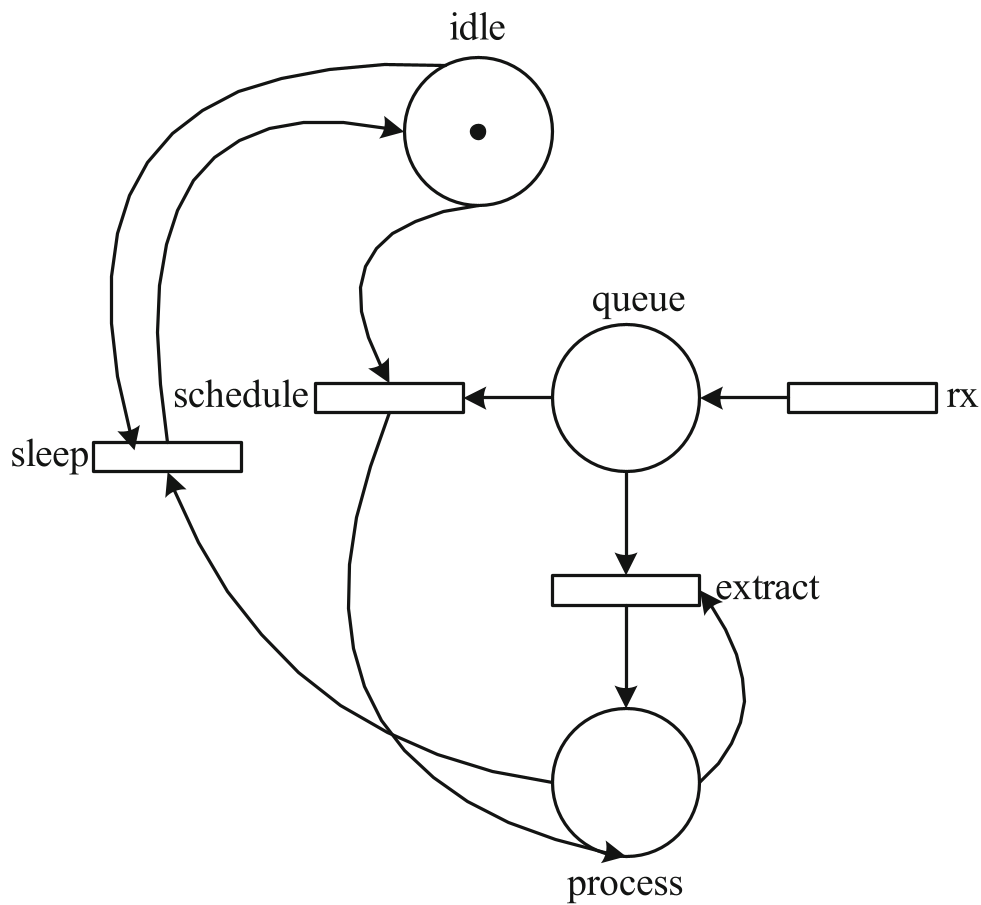
Simulation results show that by modeling the gateway as a Stochastic Petri Network (SPN), the system can provide a clear tradeoff between service availability and energy longevity.
Critical Analysis & Conclusion
The Good:
- Infrastructure Reuse: Using existing SNPs avoids the massive cost of building a proprietary smart city social layer.
- Hybrid Security: Combining social reputation with hard cryptography (BLS/PGP) provides defense-in-depth.
The Challenges:
- Sybil Attacks: Malicious actors could create thousands of fake accounts to "like" a bad sensor. While the authors mention PGP verification by authorities as a fix, this re-introduces some centralization.
- Single Point of Failure: The gateway remains a bottleneck. Future work on "Smartphone Ad-Hoc Networks" (SPAN) could allow citizens' phones to act as mobile gateways, making the system even more resilient.
Final Takeaway
This work bridges the gap between the Internet of Things and the Social Web. By treating data reliability as a social "reputation," we can create smarter, more transparent cities where citizens directly validate the environment they live in.