
Beyond the Filter: How #Depression on Instagram Challenges the Positivity Bias
Sensitive Self-disclosures, Responses, and Social Support on Instagram: The Case of #Depression
This study investigates sensitive self-disclosures (negative emotions and stigmatized experiences) on Instagram using the #depression hashtag. Through mixed-methods qualitative and statistical analysis, the authors reveal how imagery and text facilitate social support, storytelling, and community building for vulnerable populations.
TL;DR
While social media is often criticized for being a "highlight reel," a seminal study by Andalibi et al. reveals a parallel world on Instagram where users leverage the #depression hashtag to share their most vulnerable moments. By analyzing thousands of posts, the researchers found that instead of facing the "positivity bias" common on Facebook, users disclosing mental health struggles, eating disorders, and self-harm often find deep-seated social support, validation, and a sense of community through visual storytelling.
The Problem: The Social Risk of Being Unhappy Online
Psychology has long noted a phenomenon called Positivity Bias. On platforms like Facebook, users feel pressured to share only "winning" moments. Disclosing negative emotions is often seen as a social risk, potentially leading to rejection or awkward silences.
However, the human need for Social Sharing of Emotion—the process of turning traumatic or stigmatized events into social representations via conversation—remains constant. The authors sought to understand if Instagram’s image-centric nature offered a "loophole" for these sensitive disclosures.
Methodology: Coding the Unspoken
The researchers didn't just look at text; they adopted a Social Semiotics perspective, treating images and captions as distinct but overlapping modes of communication.
- Data Source: 95,046 posts tagged with #depression.
- Visual Analysis: Categorizing imagery into themes like "Self-appearance," "Illness," and "Personal Narratives."
- Social Support Behavioral Code (SSBC): Comments were categorized into five support types: Informational, Instrumental, Emotional, Network, and Esteem.
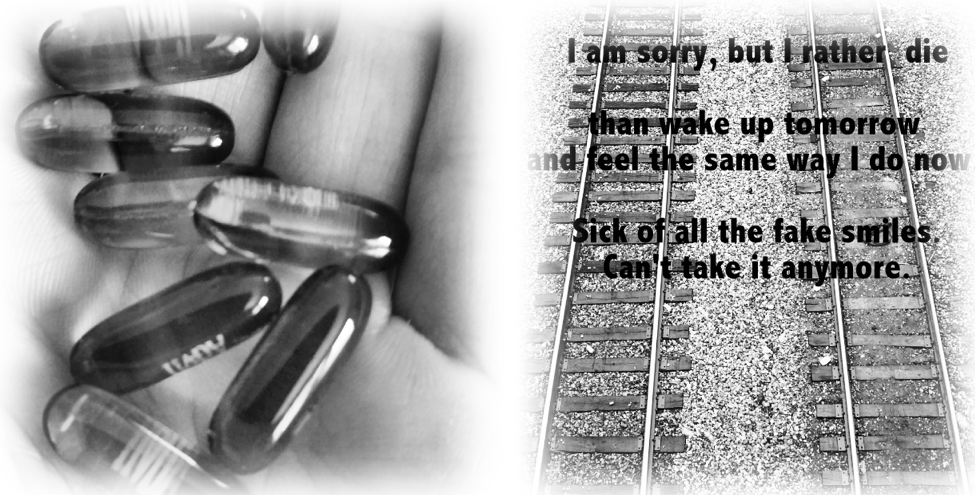 Note: Visual representations of the data show a shift from simple selfies to metaphorical imagery (e.g., railroad tracks for "feeling lost") or medical realities.
Key Insights: Why do People Share?
Drawing on Rimé’s framework, the study identifies several drivers for sensitive disclosure:
- Cognitive Work: Using the platform to make sense of a negative experience.
- Attachment System Activation: Seeking a "secure base" from an imagined audience.
- Social Comparison: Assessing one's own feelings by seeing if others relate (e.g., "Just another depressed girl").
Results: The "Likes" and "Comments" of Vulnerability
The most striking finding was the correlation between post topic and the type of support received.
| Post Topic | Primary Support Outcome | Statistical Multiplier (IRR) |
|---|---|---|
| Personal Narrative | Network Support ("You're not alone") | 3.22x |
| Seeking Support | Instrumental Support ("DM me to talk") | 2.76x |
| Food & Beverage | Emotional Support (Empathy) | 3.50x |
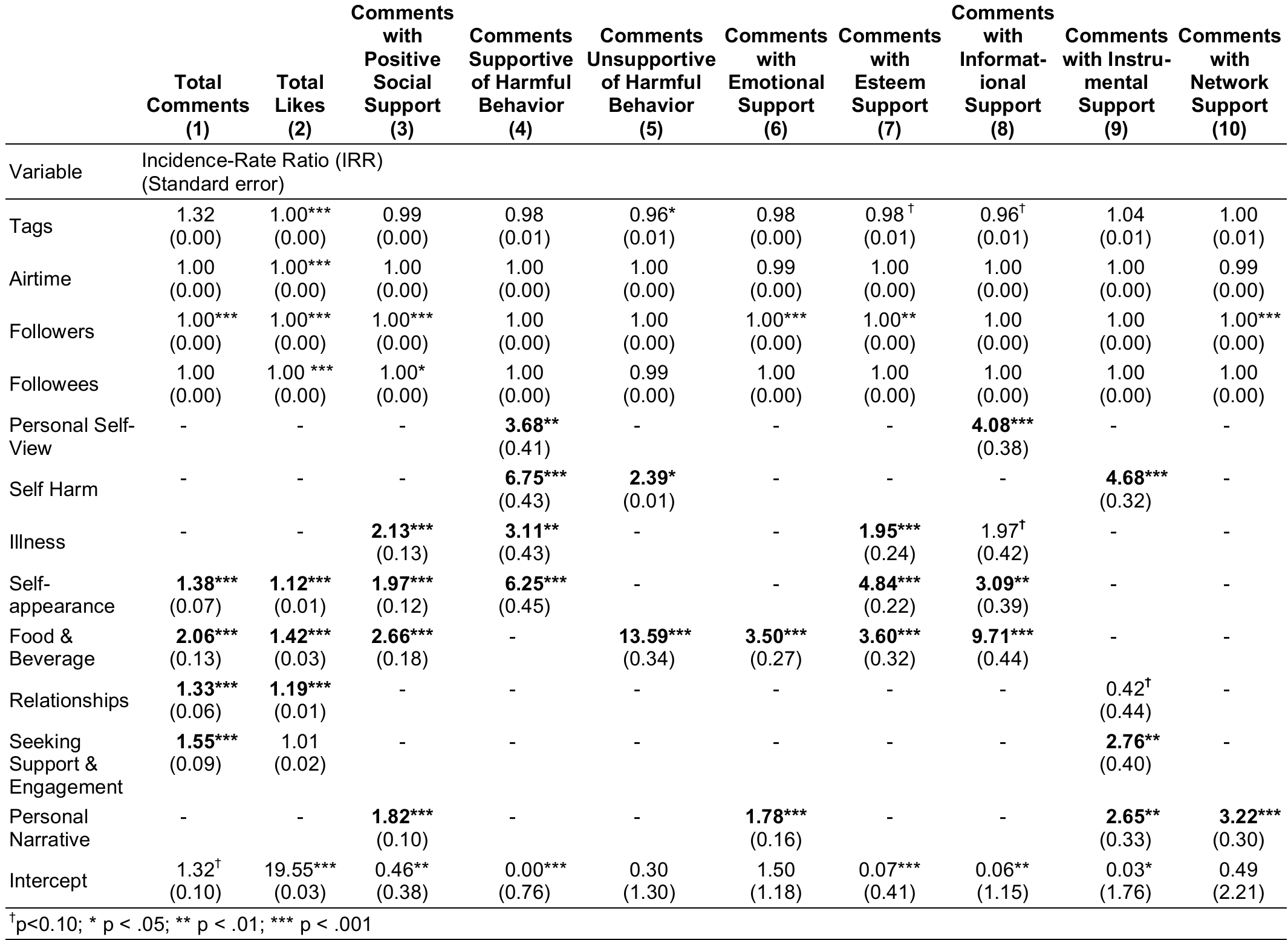 The Poisson regression models shown above demonstrate that "storytelling" (Personal Narrative) is the most effective way to trigger a sense of community (Network Support).
Critical Analysis: The Double-Edged Sword
While the study found a "Sense of Community" and surprising levels of support for recovery rather than pro-disease behaviors (e.g., pro-anorexia), the authors raise a vital concern:
- The "Brand" of Sadness: Could the positive reinforcement (likes/comments) for negative posts inadvertently reinforce a user's identity as "the depressed person," making recovery harder?
- Emotional vs. Practical: Most support was emotional ("I care") rather than instrumental ("Here is a clinic"). Instagram is a place for legitimizing pain, not necessarily solving it.
Conclusion: A Digital Safe Haven
The study concludes that Instagram serves as an emotional "personal record." For those with stigmatized identities, the platform’s lack of a "real name" policy (perceived semi-anonymity) allows for Empowered Exhibitionism—the voluntary sharing of vulnerability to find strength in numbers. For mental health professionals, these findings suggest that understanding a patient’s "digital footprint" may provide a much richer context for their lived experience than clinical interviews alone.