
Sensor Fusion in the Field: Virtual Substitutes for Low-Cost Smart Farming
Sensor Fusion for IoT-based Intelligent Agriculture System
The paper introduces a low-cost, IoT-based intelligent agriculture system that utilizes an ATmega-based microcontroller and ThingSpeak cloud for real-time monitoring of 8 environmental parameters. The core innovation lies in using Regression Trees for sensor fusion to achieve "sensor substitution," allowing the system to accurately predict missing sensor data from available nodes.
TL;DR
This study presents a hardware-software cooperative IoT system that uses Regression Trees to understand the hidden relationships between environmental variables. By doing so, the authors prove that we can "virtually" replace certain physical sensors (like Temperature or Air Pressure) with data fused from others, achieving up to 98% accuracy while significantly cutting hardware costs.
Context: The Cost-Reliability Dilemma
In precision agriculture, more data usually means better decisions. However, high-sensitivity sensors are expensive, and low-cost alternatives often suffer from noise or reliability issues. If a moisture sensor fails in a remote field, the whole automated irrigation logic might collapse.
The authors' central Insight is that environmental variables are not independent. Since light affects temperature, and temperature affects dew point, we can treat the sensor network as a single interconnected organism rather than a collection of isolated probes.
Methodology: The 4D-Rule and Regression Trees
The system architecture follows a "4D-Rule" workflow: Data acquisition, Pre-processing, Data mining, and Decision.
1. Hardware Prototyping
The researchers built a prototype using an ATmega microcontroller (Arduino-based) connected to eight sensors: Light (L), Air Quality (A), Pressure (P), Humidity (H), Temperature (T), Water Level (W), Soil Moisture (S), and Dew Point (D).
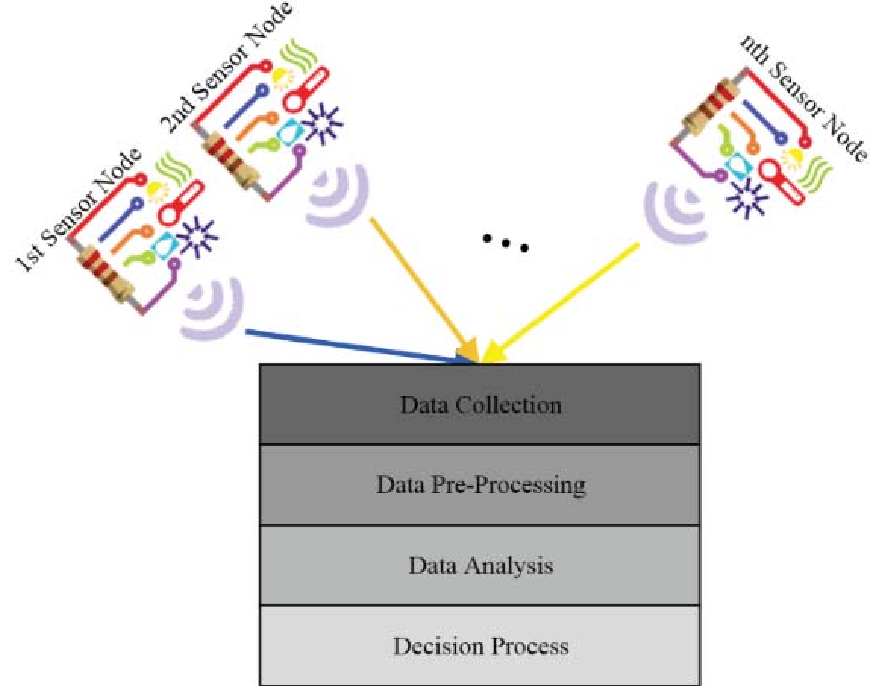 Fig 1: The 4D-Rule framework for data flow from sensor to decision.
2. The Logic of Substitution
Instead of just monitoring values, the authors used Regression Trees (a form of supervised learning). The goal was to find a subset of sensors that could predict the value of a target sensor .
For every possible combination of sensors, they trained a tree to see which "Fusion" resulted in the highest accuracy. This is particularly useful for Missing Value Robustness—if a sensor dies, the tree provides a backup estimate.
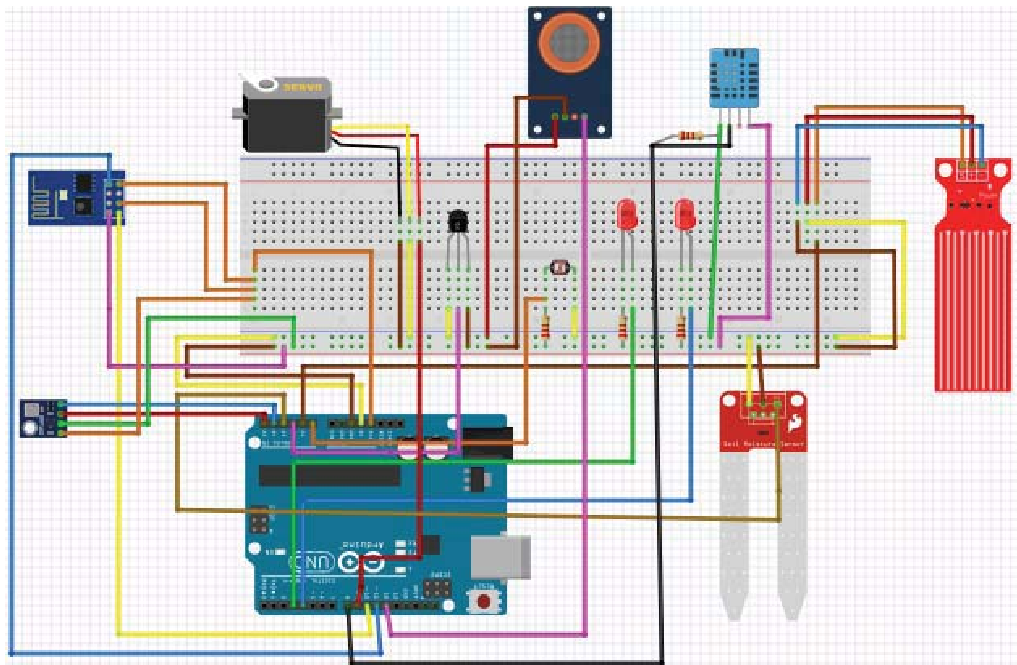 Fig 2: The physical prototype layout on the ATmega controller.
Experimental Results
The results confirm that some sensors are highly redundant, which is great news for cost reduction.
- Air Pressure (P) was the easiest to substitute, with 98% accuracy achieved simply by monitoring Air Quality (A).
- Temperature (T) was predicted with 92% accuracy by fusing Humidity and Air Pressure data.
- Dew Point (D) reached 84% accuracy when fusing Humidity, Temperature, and Soil Moisture.
Conversely, sensors like Light (L) and Humidity (H) proved harder to predict (sub-50% accuracy), indicating they are "primary" variables that are difficult to infer from other sources in this specific setup.
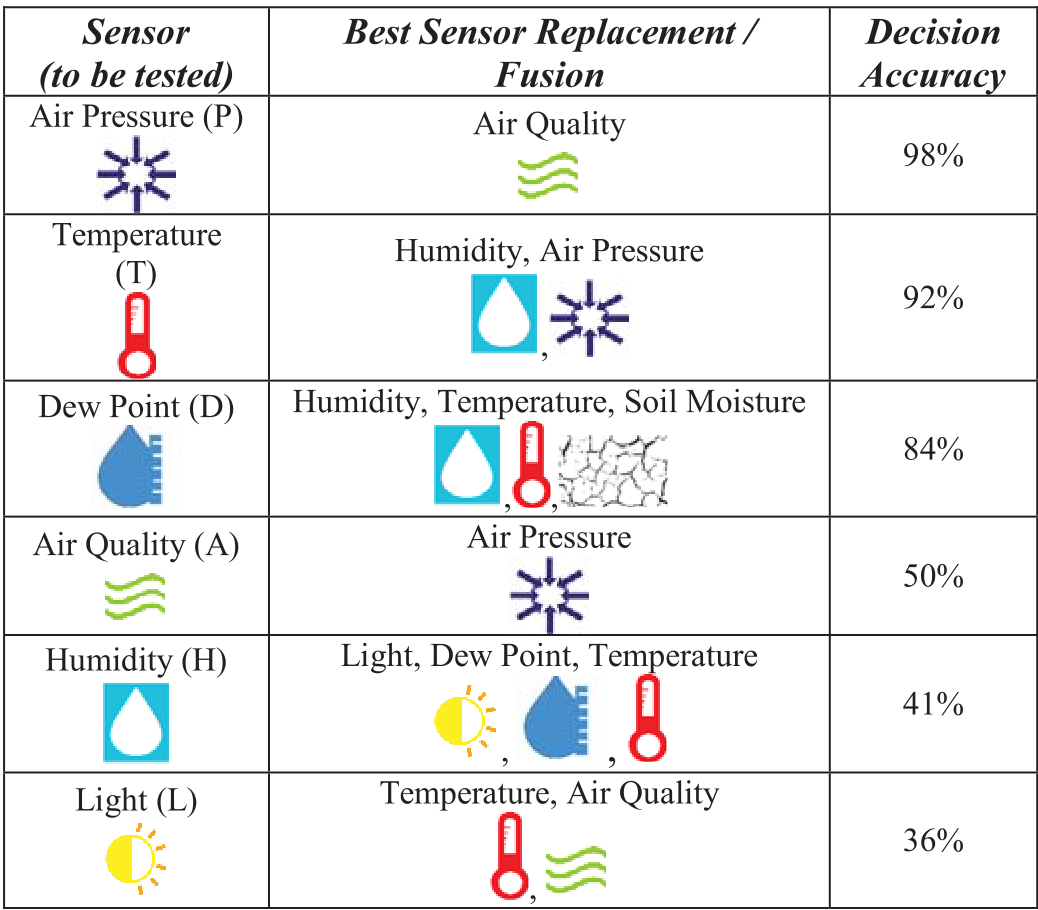 Table 1: Best accuracy achieved for various sensor replacement scenarios.
Critical Insight: Why Does It Matter?
The real value of this work is not just "saving a few dollars on a sensor." It's about Resilience.
In an industrial IoT deployment, the cost of sending a technician to a remote farm to replace a $5 sensor is far higher than the sensor itself. If a system can self-calibrate and "virtually" fill the data gap using Regression Trees until the next scheduled maintenance, the operational ROI (Return on Investment) increases dramatically.
Conclusion and Future Outlook
The paper successfully demonstrates that Regression Trees are an efficient, low-computation way to handle sensor fusion on the edge.
Limitations: The current model was trained on data from June in Istanbul. Seasonal variations (Winter vs. Summer) might drastically change the correlations between variables like Light and Temperature, suggesting that a Recursive or Online Learning approach might be needed to keep the "virtual sensors" accurate year-round.