
From Text to Affect: Bridging NLP and Real-Time 3D Virtual Human Animation
From sentence to emotion: a real-time three-dimensional graphics metaphor of emotions extracted from text
The paper introduces a real-time computational pipeline that converts text sentences into 3D facial expressions for Virtual Humans (VH). It utilizes a hybrid emotion extraction method combined with a Poisson distribution-based probabilistic model to map text to Russell’s circumplex model of emotion (Valence and Arousal).
TL;DR
The paper presents a novel framework for transforming text into 3D facial expressions in real-time. By combining opinion mining with probabilistic modeling, the authors create a "graphical metaphor" for emotion, mapping textual sentiment to the Valence-Arousal space and rendering it through both facial geometry (FACS) and symbolic color.
Context & Positioning
Published in 2010, this work sits at the intersection of Affective Computing and Computer Graphics. While previous research focused on high-fidelity facial muscles or basic sentiment classification, this paper targets the "missing link": how to move from an arbitrary sentence in a forum or script to a nuanced, real-time visual representation of that emotion on a Virtual Human (VH) avatar.
The Problem: The Ambiguity of Text
Mapping text to emotion is inherently difficult because:
- Subjectivity: Different readers perceive the same sentence differently.
- Intensity: Simple keyword matching fails to capture "how" happy or "how" angry a statement is.
- Real-time Constraints: Complex linguistic models often struggle to stay within the frame budget required for VR (typically <16ms).
Methodology: The Three-Stage Pipeline
1. Dual Emotion Extraction
The authors employ a two-pronged approach to analyze text:
- Lexicon-based: Uses dictionaries (GI and LIWC) to find emotional "strength" scores.
- Language Model: A supervised n-gram classifier trained on massive blog datasets (BLOGS06) to determine the probability of a sentence being subjective vs. objective.
2. Probabilistic Re-mapping via Poisson Distribution
Instead of directly using classifier scores, the authors treat emotion as a statistical probability. They use the Poisson distribution to calculate the intensity of Valence (pleasure) and Arousal (excitement).
- Intuition: If a sentence has low-intensity words, the distribution is flat and wide (uncertainty). High-intensity words "sharpen" the distribution, making the resulting emotion more specific and intense.
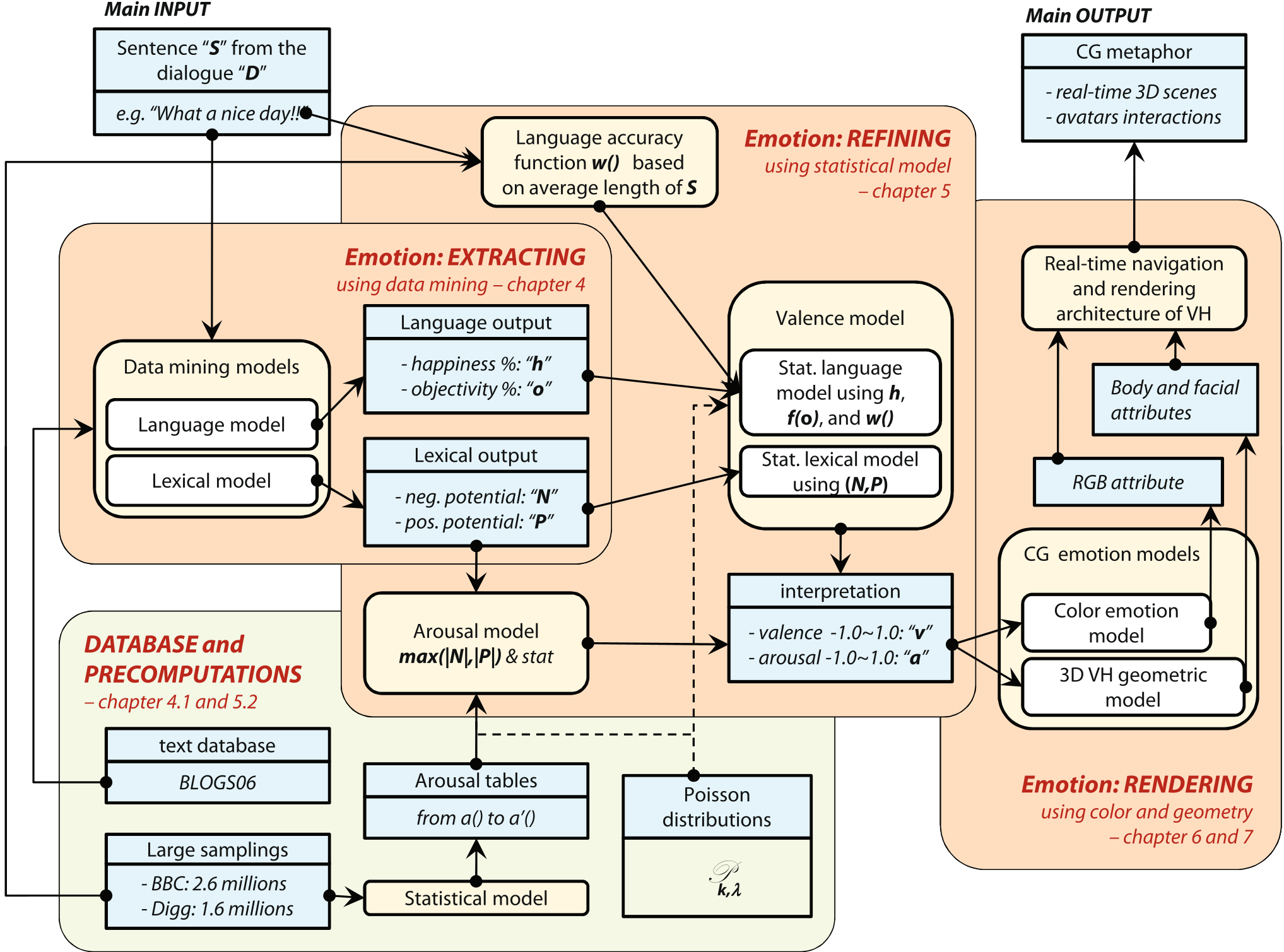 Figure 1: The overall architecture showing the flow from text extraction through statistical refining to 3D metaphor rendering.
3. FACS and Color Metric
The final parameters are mapped to:
- Facial Action Coding System (FACS): Adjusting 10 Action Units (AUs) such as lip corners (AU 12/15) and eyebrows (AU 1/2/4).
- Emotional Color Metaphor: Mapping Valence and Arousal directly to RGB values (e.g., Red for high arousal/passion, Blue for low valence/depression).
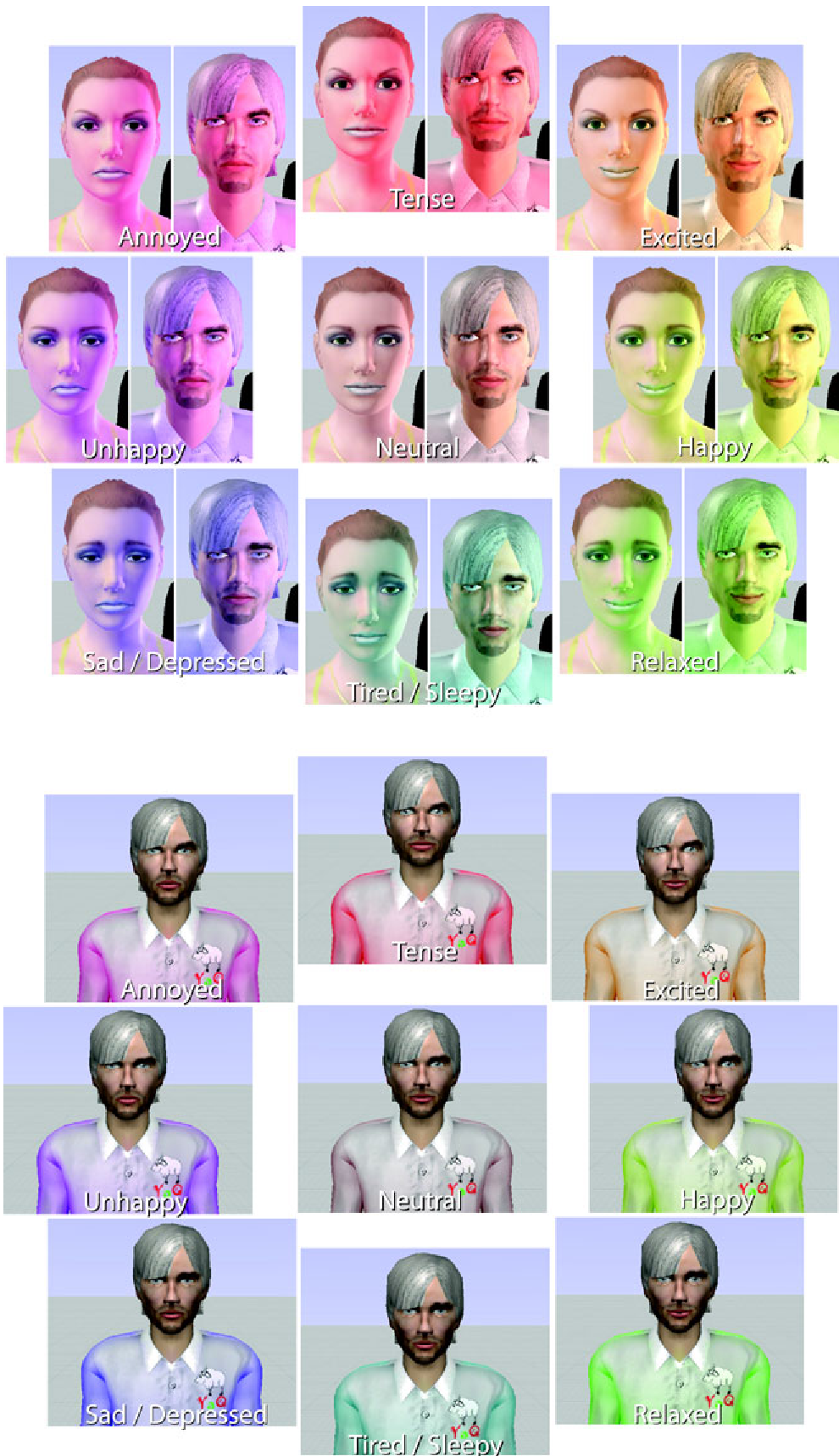 Figure 2: The system's ability to generate infinite variations of expression based on different (v, a) coordinates.
Experiments and Results
The authors tested the model on diverse datasets including:
- Internet Fora (Digg): Capturing the sarcastic or aggressive nature of social media.
- Theater & Comics: Proving the model’s utility in embodying scripted manuscripts.
The performance is remarkable: the extraction and rendering process is "transparent," taking less than 10ms, which allows the VH to maintain a rendering speed of over 60 FPS on standard PCs of that era.
 Figure 3: Mapping real-world text from comics and movies to the emotional 2D space.
Critical Insight & Conclusion
The true value of this paper is not just the animation, but the philosophical shift in how we process text for graphics. By acknowledging that a model cannot know a speaker's "personal experience," the authors built a system that is "surprisingly objective" and statistically valid.
Limitations: The model lacks a third dimension—Potency/Intensity—and does not yet account for individual personality or long-term social context. However, it provides a rigorous blueprint for real-time emotional interaction in virtual environments.
Summary of Key Takeaways:
- Poisson Distributions are excellent for modeling the "fuzziness" of language.
- Real-time performance (<10ms) is achievable with pre-computed tables and efficient n-gram models.
- Visual Metaphors (color + geometry) can convey emotion effectively without needing photorealistic textures.