
SVM-Powered Sentiment Analysis: Decoding User Satisfaction in Mobile Data Services
Sentiment Analysis on User Satisfaction Level of Mobile Data Services Using Support Vector Machine (SVM) Algorithm
This paper presents a sentiment analysis system designed to evaluate user satisfaction with mobile data services in Indonesia by classifying social media data (Twitter and Instagram) into positive, neutral, and negative categories. Using a Support Vector Machine (SVM) with a Radial Basis Function (RBF) kernel, the study achieves a peak accuracy of 99.03% and an F1-score of 93.90% through optimized preprocessing and feature weighting.
TL;DR
This research develops a high-precision sentiment analysis system specifically for the Indonesian telecommunications sector. By combining Support Vector Machines (SVM) with TF-IDF weighting and specialized Indonesian POS Tagging, the authors reached a staggering 99.03% accuracy in classifying user feedback into positive, neutral, and negative categories.
Introduction & Motivation
In the digital age, social media is the primary battlefield for customer satisfaction. For Indonesian mobile operators, understanding the "pulse" of millions of tweets and posts is an impossible manual task. The authors identified a critical need for an automated system that doesn't just read words, but understands the sentiment behind service-related complaints and praise.
The technical challenge lies in the nature of Indonesian social media text: it is informal, filled with negations, and requires specific linguistic handling to be useful for machine learning models.
Methodology: The SVM & NLP Pipeline
The core of the system is a sophisticated multi-stage pipeline designed to transform raw "noisy" text into structured data.
1. Advanced Preprocessing
Beyond standard cleansing and stemming, the authors implement two critical steps:
- Convert Negation: This flips the sentiment value of phrases (e.g., "tidak bagus" / "not good") to ensure the model doesn't get misled by positive words in a negative context.
- POS Tagging: The system prioritizes adjectives, adverbs, nouns, and verbs—the "sentiment carriers"—based on the Big Indonesian Dictionary (KBBI).
2. The SVM "Kernel Trick"
Since text data is rarely linearly separable, the authors utilize a Radial Basis Function (RBF) Kernel. This mathematical approach projects the data into a higher-dimensional space where a "hyperplane" can effectively separate the sentiments.
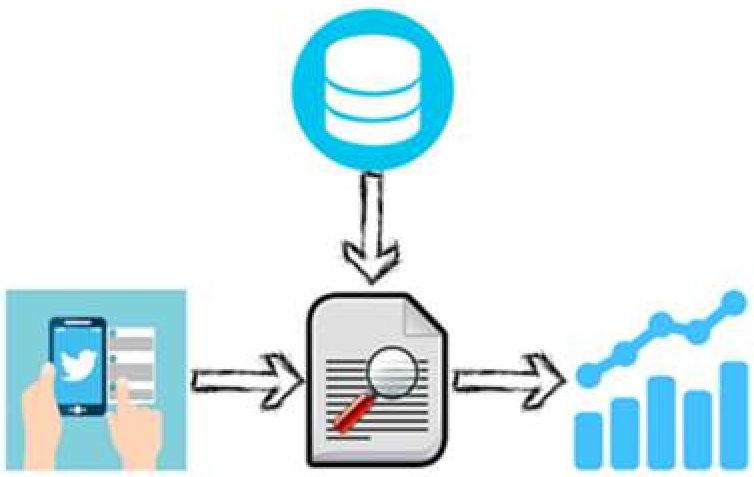
Figure 1: Illustration of the Sentiment Analysis flow from data retrieval to classification.
Mathematics of Weighting
The system uses TF-IDF (Term Frequency-Inverse Document Frequency) to calculate word importance. To prevent numerical instability during SVM training, the authors applied a normalization formula:
This ensures that frequent but meaningless words are penalized while salient sentiment-bearing words are highlighted.
Experimental Performance
The authors tested the system across different training-test ratios and K-fold cross-validations. The results proved remarkably stable.
| Metric | Average Value |
|---|---|
| Accuracy | 99.03% |
| Precision | 95.43% |
| Recall | 92.45% |
| F1-Score | 93.90% |
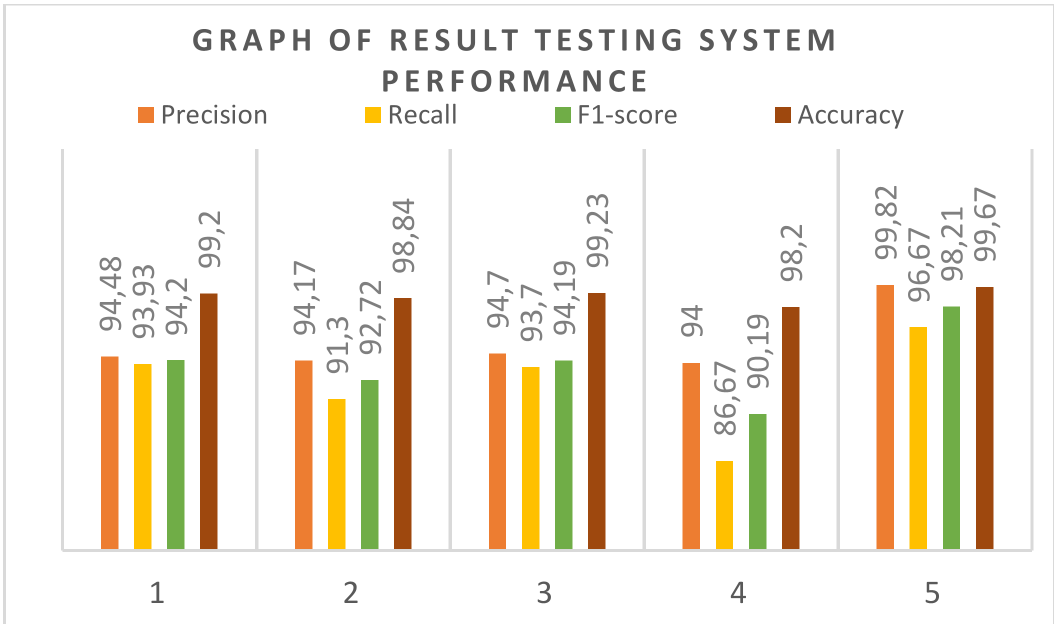
Figure 2: Performance stability across multiple test iterations and data splits.
The study also performed a competitive analysis of Indonesian providers, finding that Provider A maintained the highest satisfaction levels, while Provider C faced the most significant volume of negative feedback.
Critical Insight & Conclusion
While the accuracy of 99% is exceptionally high (suggesting a potential for overfitting or a very specific dataset), the methodology highlights the indispensable role of POS Tagging in sentiment analysis. By filtering for "sentimental" word classes, the noise is drastically reduced.
Future Outlook: While SVM remains a powerful classifier for structured text features, the next evolution of this work would likely involve Deep Learning (LSTMs or Transformers) to better capture the long-range dependencies and context in Indonesian slang that traditional POS taggers might miss.