
Decoding the Digital Pulse: Sentiment and Strategy in Portuguese Politics
Sentiment Analysis of Portuguese Political Parties Communication
This paper presents a comprehensive computational analysis of Portuguese political parties' communication on Twitter, utilizing VADER sentiment analysis and TF-IDF similarity metrics. The study identifies communication performance, sentiment trends, and the alignment between social media output and formal political programs, achieving an 84% R-squared in predicting retweet behavior.
TL;DR
Social media is the modern agora, but is it a place for policy or just emotion? This study analyzes thousands of tweets from Portuguese political parties to reveal that negative sentiment drives engagement and that some parties are far more "on-brand" with their official programs than others. Using NLP and Machine Learning, the researchers achieved an 84% accuracy in predicting what makes a political tweet go viral.
The Research Gap: Beyond the English-Centric Web
Most digital political science focuses on US elections (Obama 2008, Trump 2016). However, the linguistic and cultural nuances of the Portuguese political landscape are often overlooked. The authors sought to bridge this gap by asking: Are parties actually talking about their goals, or are they just chasing the "hype machine"?
Methodology: The Tech Behind the Tweets
The study utilized a sophisticated pipeline to process data from the official accounts of parties like PS (Socialists), PSD (Social Democrats), and Chega (Right-wing nationalists).
- Sentiment Mapping: Using the VADER library, tweets were scored for Positive, Negative, and Neutral components.
- Consistency Check: The team used TF-IDF (Term Frequency-Inverse Document Frequency) to create a "digital fingerprint" of official electoral programs and compared them to daily tweets.
- Predictive Modeling: They compared various algorithms, including OLS (Ordinary Least Squares) and Neural Networks (MLP), to find the drivers of the "Retweet."
 Table 1: Research Objectives and corresponding Techniques used in the study.
Key Insights: What Makes a Politician "Viral"?
The findings confirm a cynical truth about social media: Negativity wins.
- The Negativity Coefficient: The regression analysis showed that negative sentiment is a massive driver for retweets. If a post is angry or critical, the network is far more likely to amplify it.
- Brevity is King: Text length (lenTex) had a negative coefficient, meaning shorter, punchier communication spreads faster.
- The Consistency Leader: The Iniciativa Liberal (IL) party showed the highest similarity between their long-form political programs and their day-to-day tweets.
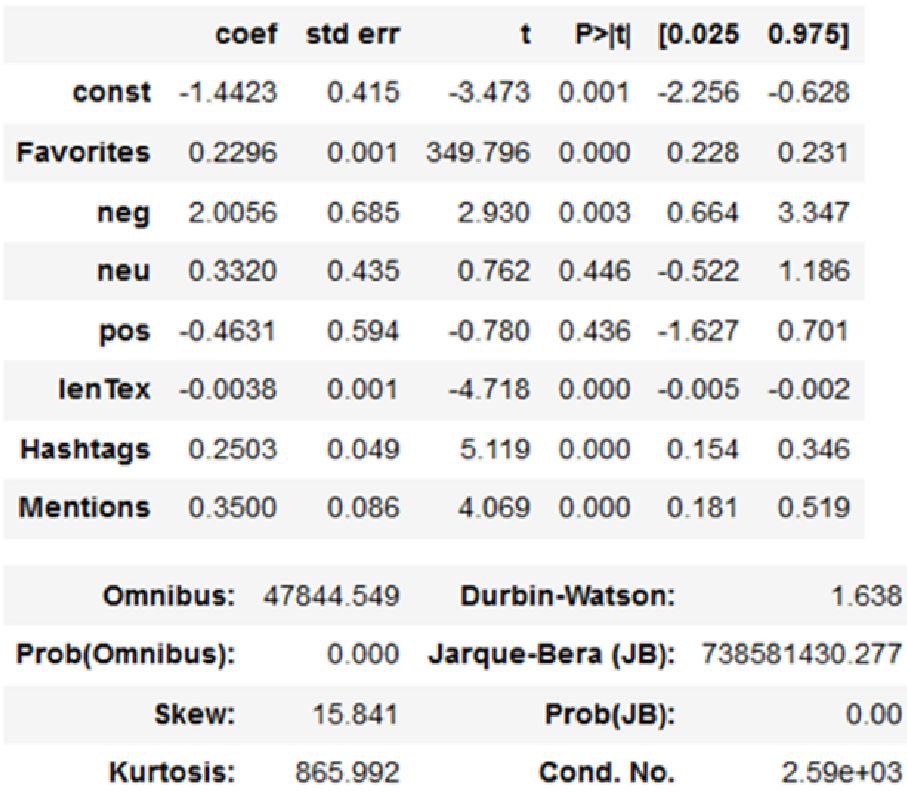 Table 2: OLS Regression results showing the impact of sentiment and length on retweets.
The Similarity Matrix
One of the most fascinating aspects of this research is the Heatmap of Similarity. It reveals that while parties like PS and PSD are ideologically similar (75% program overlap), their Twitter personas can vary wildly.
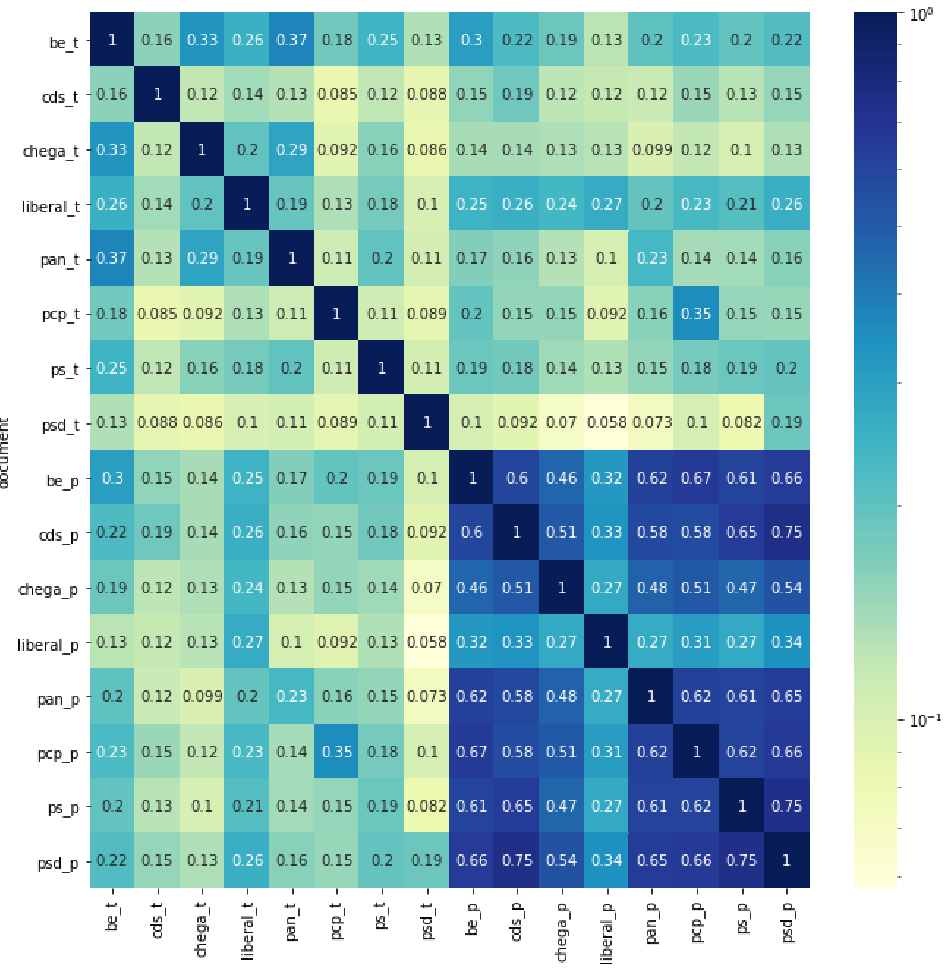 Figure 9: Similarity matrix between political programs and tweet content.
Critical Perspective & Conclusion
This work provides a vital benchmark for Portuguese NLP. However, it relies on translating Portuguese to English to use the VADER library—a step that might lose cultural sarcasm or specific political idioms.
The Takeaway? If you are a political strategist, keep it short and keep it "spicy" (negative) if you want reach. But if you are a voter, the "Iniciativa Liberal" and "Bloco de Esquerda" are currently the most consistent in matching their social media rhetoric with their actual policy documents.
Future research should look into the specific topics that drive these sentiments, moving from "how" they speak to "what" exactly triggers the Portuguese electorate.