
Analyzing the Pulse of the Road: Sentiment Analysis for Ride-Sharing in Bangladesh
Sentiment Analysis Based on Users’ Emotional Reactions About Ride-Sharing Services on Facebook and Twitter
2020-01-01
Summary
Problem
Method
Results
Takeaways
This paper presents a sentiment analysis framework tailored for ride-sharing services (Uber and Pathao) in Bangladesh using social media data from Facebook and Twitter. The study compares three machine learning models—Naive Bayes, Support Vector Machine (SVM), and Decision Tree—to classify user opinions into fine-grained categories, with Naive Bayes achieving the highest performance.
## TL;DR
The ride-sharing revolution in Bangladesh, dominated by Uber and Pathao, has generated mountains of unstructured feedback on social media. This study develops a robust pipeline to scrape, clean, and classify these reviews. By leveraging a refined **Naive Bayes classifier** and specific linguistic rules for handling negations and contrastive clauses (like "but"), the researchers achieved a **peak accuracy of 87%**, significantly outperforming traditional Decision Trees and SVMs for this specific task.
## Background & Motivation: Why Bangladesh?
In Bangladesh, the digital shift happened rapidly. Uber (cars) and Pathao (bikes) became essential services almost overnight. However, ride-sharing platforms face unique local challenges—from driver behavior to traffic-induced delays.
The authors identified a critical gap: while global sentiment analysis is mature, the localized context of Bangladeshi social media discourse remained unquantified. They set out to move beyond binary "Good/Bad" classifications to a four-tier system: **Good, Bad, Not so good, and Not so bad**.
## The Methodology: Logic over Complexity
The study emphasizes that sentiment isn't just about keywords; it's about context. The pipeline follows a standard NLP flow: **Tokenization -> Frequency Distribution -> Feature Extraction -> Classification**.
### 1. Handling the "But" Factor
The core innovation here is the heuristic treatment of compound sentences.
* **Conflict Resolution**: If a user says "The car was clean **but** the driver was late," the system identifies a positive clause followed by a negative one.
* **Classification**: Instead of neutral, it assigns "Not so good," capturing the flavor of a mitigated positive experience.
### 2. The Model Architecture
The researchers compared three stalwarts of Machine Learning:
* **Naive Bayes (NB)**: A probabilistic model that assumes feature independence.
* **SVM**: A geometric approach seeking an optimal hyperplane.
* **Decision Tree**: A logic-based tree structure.
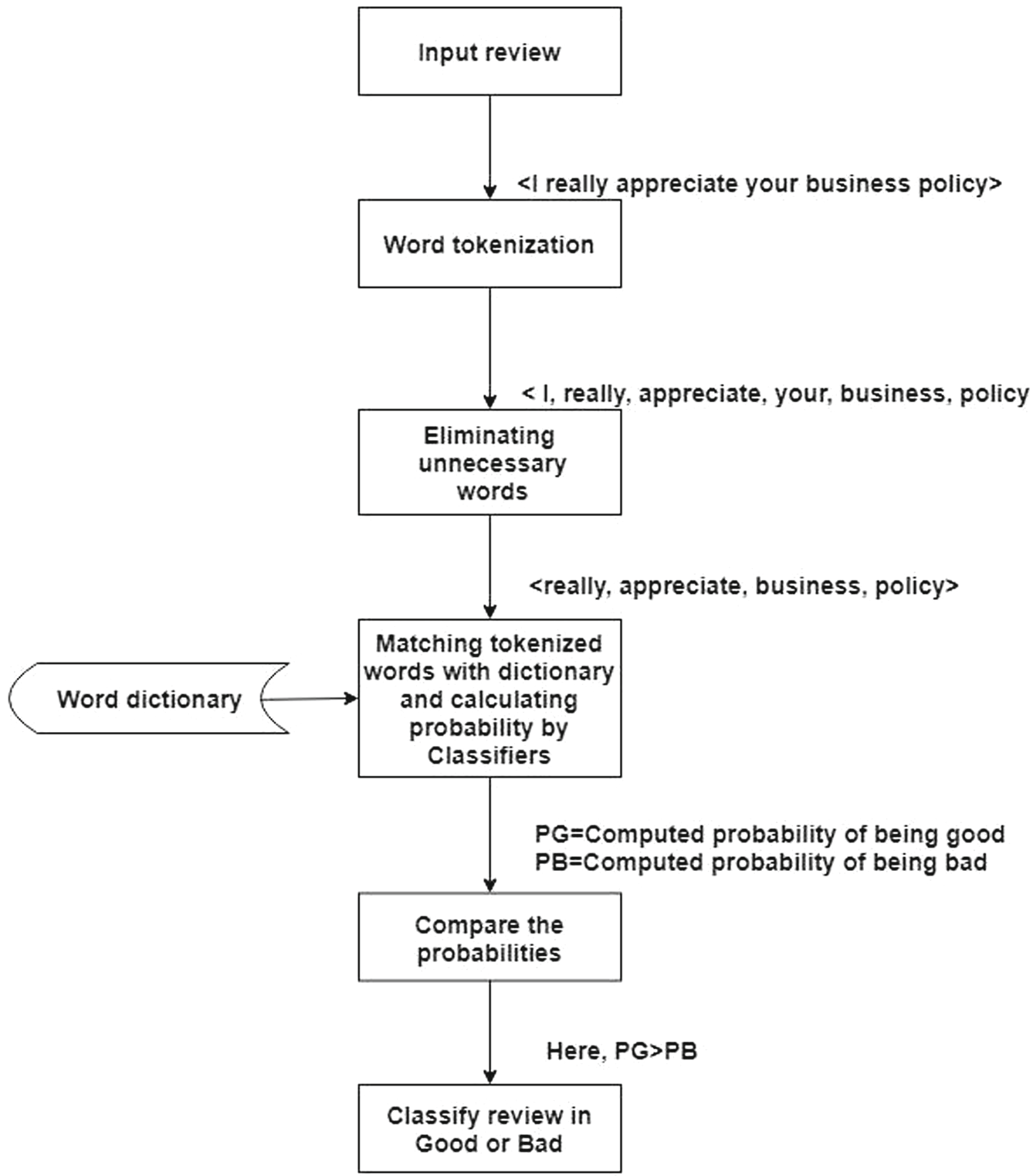
*Figure 1: The system architecture flow from social media input to final sentiment classification.*
## Experimental Results: Naive Bayes Reigns Supreme
The experiment involved 1,000 collected reviews and a testing set of 280. The results were categorized using confusion matrices to track how many "Not so good" reviews were mistakenly flagged as "Bad."
| Classifier | Accuracy | Recall | Precision (PPV) |
| :--- | :--- | :--- | :--- |
| **Naive Bayes** | **0.87** | **0.89** | **0.88** |
| SVM | 0.84 | 0.87 | 0.85 |
| Decision Tree | 0.79 | 0.82 | 0.80 |
### Why did Naive Bayes win?
While SVMs are often more powerful in high-dimensional spaces, **Naive Bayes** is exceptionally robust for text classification when the dataset is relatively small (1,000 samples). Its scalability and ability to handle discrete word counts make it highly effective for the short, punchy nature of Facebook and Twitter comments.
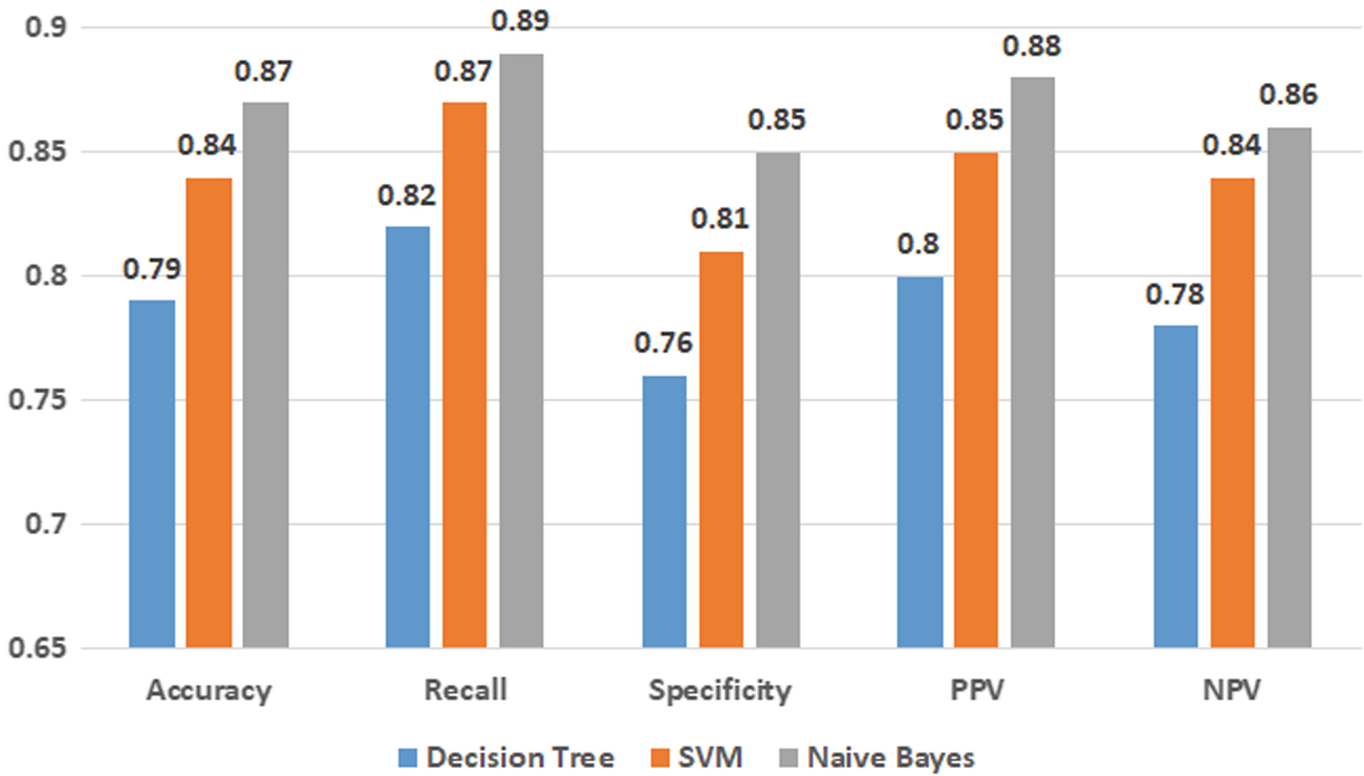
*Figure 2: Comparative performance across Accuracy, Recall, and Specificity metrics.*
## Critical Analysis & Professional Insight
This paper serves as a valuable case study for **Transfer Learning** principles, even if it uses classical ML. It demonstrates that adding simple **Inductive Biases** (like the negation and conjunction rules) can compensate for smaller datasets.
**Limitations**:
* **Language Barrier**: The study currently only processes English reviews. In Bangladesh, "Banglish" (Romanized Bangla) and native Bangla script are prevalent.
* **Data Scarcity**: 1,000 reviews is a small sample in the era of Big Data.
**Future Outlook**:
Integrating **Deep Recurrent Models (LSTMs)** or **Transformers** could further improve accuracy, especially for Romanized Bangla where word order and spelling are highly irregular. For companies like Uber and Pathao, moving this pipeline to **real-time inference** would allow them to resolve customer service issues as they happen on social feeds.
## Conclusion
By focusing on the specific linguistic habits of social media users and comparing standard classifiers, this work provides a blueprint for localized sentiment analysis in emerging markets. It proves that you don't always need the most complex model; sometimes, the right logic and a well-tuned classical classifier are the most efficient tools for the job.