
Sentiment Analysis for the Polish Language: From PMI to Dictionary Expansion
Sentiment Analysis of Social Networks Statements for the Polish Language
This paper explores the adaptation of three distinct sentiment analysis methods—PMI-IR, Dictionary Expansion through conjunctive connections, and a Neighborhood-based bigram analysis—specifically for the Polish language in social media contexts. The study evaluates these unsupervised and lexicon-based approaches against a commercial baseline, Brand24.pl, using a manually annotated dataset of Polish social media statements.
TL;DR
This research tackles the complexities of sentiment analysis in the Polish social media landscape. By adapting three distinct linguistic approaches—PMI-IR, Conjunctive Dictionary Expansion, and Neighborhood Analysis—the authors attempt to bridge the gap between English-centric sentiment tools and the morphologically rich Polish language. While the Dictionary Expansion method proved most robust among the three (52.1% accuracy), the study highlights the significant challenges of automated sentiment detection compared to commercial-grade solutions.
Background & Motivation
Sentiment analysis is no longer just about "thumbs up or down" on movie reviews. In the era of social media, opinions are brief, informal, and highly subjective. For the Polish language, the difficulty is doubled by its complex grammar and the lack of comprehensive, publicly available sentiment lexicons. The authors argue that while objective statements are easier to parse, the "hidden" emotional coloration in social networks requires specialized automated methods to process data at scale.
Methodology: Three Paths to Sentiment
The researchers built a pipeline starting with a custom tagger and the PoliMorf morphological dictionary. From there, they tested three different "philosophies" of sentiment detection:
1. The Statistical Approach (PMI-IR)
Based on the idea that positive words frequently appear near other positive words.
- Mechanism: It calculates Pointwise Mutual Information (PMI) using search engine hit counts.
- Formula:

2. The Linguistic Graph Approach (Dictionary Expansion)
This was the standout performer. The authors started with a manual "seed" of 1,091 adjectives.
- Insight: Conjunctions like "i" (and) usually connect words of the same sentiment, while "lub" (or) or "czy" (whether) might reverse it.
- Result: By iterating through the Polish National Corpus, they expanded their lexicon to over 12,000 annotated adjectives.
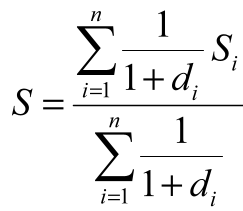
3. The Contextual Approach (Neighborhood Method)
This method attempts to determine the sentiment of a "bigram" (a two-word phrase) by looking at its neighbors in a 5-gram corpus. If a bigram often appears near known positive words, it inherits that sentiment based on a weighted distance formula:
Experimental Battle: Custom vs. Commercial
The authors tested these methods against Brand24.pl, a leading commercial tool, using 60 manually classified opinions across four categories: Movies, Politics, Sports, and Music.
Performance Metrics
The results showed a clear hierarchy in effectiveness:
| Method | Accuracy |
|---|---|
| Brand24.pl (Commercial) | 67.6% |
| Dictionary Expansion | 52.1% |
| Neighborhood Method | 43.3% |
| PMI-IR Method | 38.0% |

Critical Insight & Analysis
Why did the Dictionary Method win? The strength of the Polish language lies in its adjectives. By focusing on conjunctive connections, the researchers captured the "inductive bias" of how Polish speakers naturally group related emotions.
The failure of the PMI-IR method (38%) is equally telling. It relied on search engine result counts (Bing), which are often noisy and do not accurately reflect linguistic sentiment in a specific social media context. This suggests that for Polish, corpus-based linguistic rules are far more reliable than generic "web-scale" statistics.
Potential & Limitations
- Data Sparsity: The Neighborhood method suffered when bigrams didn't appear frequently enough in the 5-gram corpus to establish a clear sentiment.
- Preprocessing: The study used a basic tokenizer. The authors admit that a more advanced lemmatizer would significantly reduce "noise" from the various inflected forms of Polish words.
- Future Scope: Moving from document-level analysis to attribute-centric analysis (e.g., distinguishing between liking a movie's "acting" but hating its "pacing") is the next logical frontier.
Conclusion
This work provides a foundational framework for Polish NLP, proving that even with limited resources, a graph-based expansion of emotional lexicons can yield functional results. While they haven't yet beaten commercial black-box algorithms, the transparency of the conjunctive dictionary method offers a valuable "white-box" alternative for researchers.