
Decoding the Student Mind: Sentiment Analysis and Emotional Tracking in Distance Learning
Sentiment Analysis to Track Emotion and Polarity in Student Fora
The paper proposes a data mining framework using MongoDB and R (via the rmongodb package) to perform sentiment and emotion analysis on student forum posts from the Hellenic Open University. It utilizes a Naive Bayes classifier to categorize unstructured textual data into polarity (positive, negative, neutral) and six distinct emotions (anger, disgust, fear, joy, sadness, surprise) to monitor student engagement.
TL;DR
Researchers at the Hellenic Open University have developed a methodology to go beyond "what" students are saying to "how" they are feeling. By leveraging MongoDB and Naive Bayes classification in R, they successfully mapped student forum discussions to six core emotions, providing educators with a visual dashboard of student morale and potential burnout indicators.
Background: Beyond the Final Grade
In the world of Distance Learning, the online forum is the heartbeat of student-teacher interaction. While Learning Management Systems (LMS) like Moodle excel at tracking when a student logs in, they often fail to capture the sentiment behind their words. Are they frustrated? Are they satisfied? Is a specific module causing widespread anxiety?
Previous work in Educational Data Mining (EDM) focused heavily on polarity—simply labeling a post as "positive" or "negative." This paper argues that such a binary view is insufficient for a holistic pedagogical approach.
The Technical Architecture: Scalable Sentiment Mining
The authors implemented a modern data pipeline designed to handle the velocity and variety of educational "Big Data."
1. The Storage Layer (MongoDB)
Unlike traditional SQL databases, the researchers chose MongoDB, a NoSQL system. This choice was driven by the need for Horizontal Scalability and the flexibility to store unstructured forum posts as BSON objects without a rigid schema.
2. The Analysis Layer (The R-Environment)
The methodology utilizes the rmongodb package to bridge the database with the R statistical language. To overcome language barriers (the original posts were in Greek), the team employed a translation-based pipeline to utilize the Janyce Wiebe subjectivity lexicon and Strapparava's emotion lexicon.
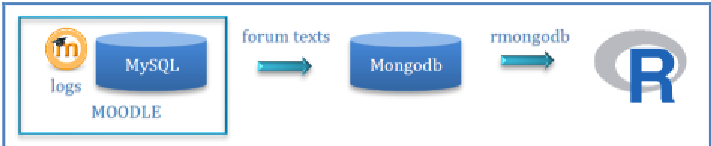 Figure 1: The framework illustrating data migration from Moodle to MongoDB and subsequent analysis in R.
Methodology: From Words to Vectors
The core of the sentiment engine is the Naive Bayes (NB) classifier. By using a "Bag-of-Words" model, the system calculates the probability of a message belonging to a certain emotion based on term frequency.
- Polarity Class: Neutral, Positive, Negative.
- Emotion Class: Anger, Disgust, Fear, Joy, Sadness, Surprise.
Key Insights and Results
The study analyzed 524 threads and 1,479 messages from five different graduate modules. The results provided a fascinating "emotional map" of the semester.
- The Peak of Participation: Most active discussions occurred in the first two months, primarily driven by anxiety regarding the first assignment.
- Predominant Positivity: Across most modules (like PLS50 and PLS60), "Joy" was the dominant emotion, followed by a significant portion of "Unspecified" feelings.
- The "At-Risk" Signature: For certain students (e.g., st7 and st31), the analysis showed higher-than-average spikes in "Sadness" and "Negative Polarity." This provides a concrete "red flag" for tutors to reach out and offer support.
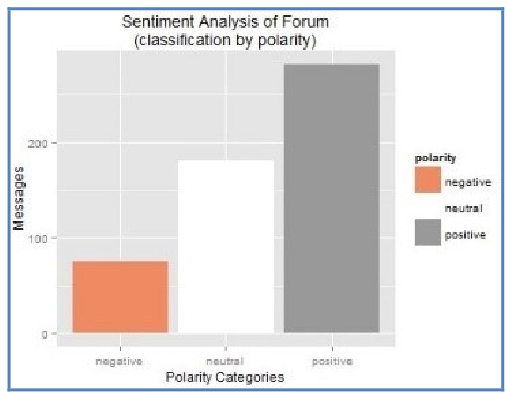 Figure 2: Visualization of polarity tracking across the forum dataset.
Critical Perspective: The Challenge of the "Unspecified"
While the methodology is robust, a significant chunk of messages remained categorized as "unknown" or "unspecified" emotions. This suggests that while Naive Bayes is efficient, it may struggle with the nuance of academic inquiry, which often uses logical, non-emotional language that traditional sentiment lexicons aren't trained for.
Future Outlook: The Emotional AI Tutor
This research opens the door for:
- Real-time Dashboards: Imagine a tutor receiving a notification when the "Frustration" level of a forum thread exceeds a certain threshold.
- Correlation with Final Grades: Future work will look at whether these emotional states can actually predict final marks, allowing for even earlier intervention before a student fails.
In conclusion, by treating student forums as a "goldmine of unexploited data," the authors demonstrate that text mining is no longer just for marketing—it is a vital tool for empathetic and effective distance education.