
Sentiment Analysis on Twitter: Decoding the "Peace Pulse" of Afghanistan
Sentiment Analysis on Twitter: A text Mining Approach to the Afghanistan Status Reviews
This paper presents a social media sentiment analysis framework using a text mining approach to examine public perception of the political situation in Afghanistan. By leveraging the VADER (Valence Aware Dictionary and sEntiment Reasoner) lexicon and NLP preprocessing on over 200,000 tweets, the study identifies a direct correlation between real-world political events—specifically a temporary ceasefire—and shifts in digital sentiment.
Executive Summary
TL;DR: This research utilizes text mining and NLP to analyze over 200,000 tweets to understand public sentiment regarding Afghanistan's political landscape. By applying the VADER sentiment model, the authors successfully mapped digital emotional fluctuations to real-world events, notably proving that a brief ceasefire in June 2018 triggered a rare surge in positive public sentiment.
Background: Published in the AIVR 2018, this work sits at the intersection of Social Media Analytics and Political Science. It acts as a methodological bridge, demonstrating how automated text mining can replace or augment traditional, often difficult-to-conduct public opinion surveys in volatile regions.
Problem & Motivation: The Noise in the Crowd
Monitoring public opinion in Afghanistan via traditional means (surveys, interviews) faces immense security and logistical barriers. Twitter offers a "digital town square," but it is notoriously messy.
The authors identified that prior research lacked a specific focus on Afghan political dynamics over a continuous temporal scale. They aimed to answer: Can we use automated tools to not only see what people are saying but to understand if political maneuvers—like peace talks—actually resonate with the populace?
Methodology: From Raw Data to Emotional Insights
The research follows a rigorous four-stage pipeline designed to distill signal from noise.
1. The Processing Pipeline
The authors utilized Python and the Tweepy library to harvest 209,048 tweets using keywords like "Afghan," "Taliban," and "Afghanarmy." This was followed by a heavy preprocessing phase using NLTK, reducing the dataset to 68,978 unique, cleaned English tweets.
2. The VADER Sentiment Engine
Instead of simple keyword matching, the study uses VADER (Valence Aware Dictionary and sEntiment Reasoner).
- Logic: It assigns a "Compound Score" between -1 (extreme negative) and +1 (extreme positive).
- Thresholds: Positive (>= 0.5), Neutral (-0.5 to 0.5), Negative (<= -0.5).
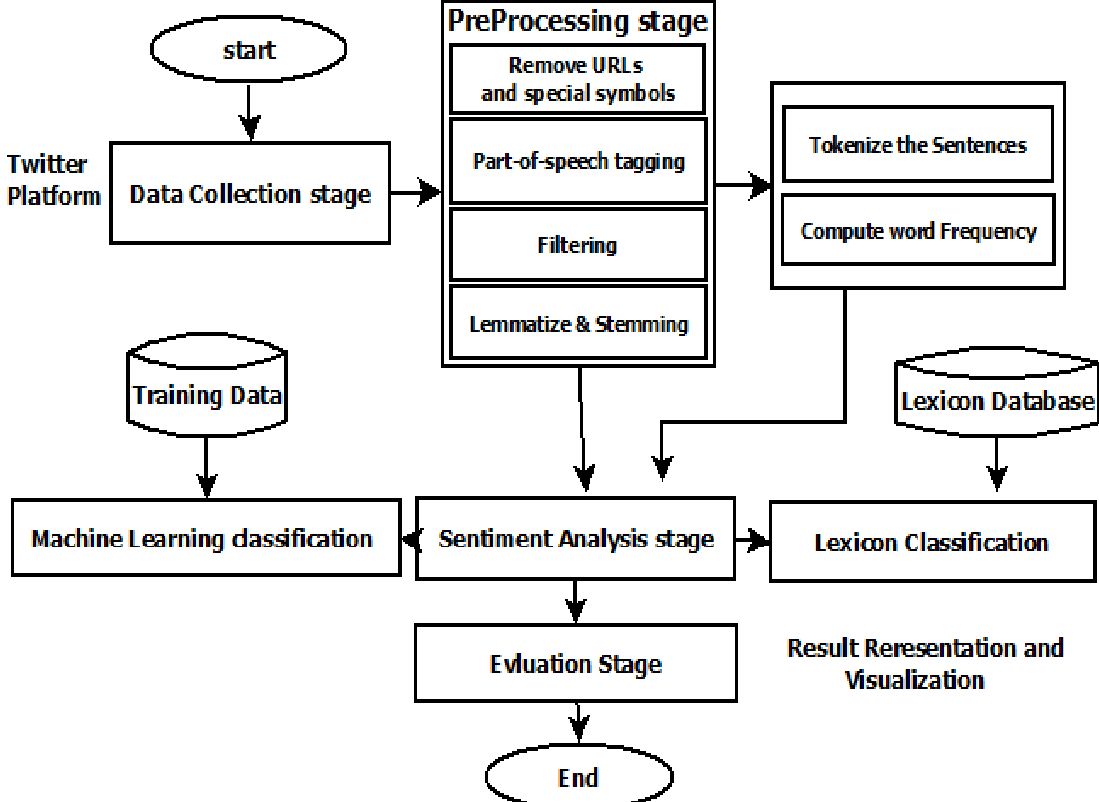 Figure 1: The Integrated NLP and Text Mining Approach
Experiments & Results: The Ceasefire Calibration
The analysis revealed a fascinating "Sentiment Mirror" to reality.
- The Baseline: For most of the study (March to early June), negative sentiment (34%) slightly outweighed positive (30.9%).
- The Pivot: Between June 13 and June 21, 2018, the graphs showed a dramatic crossover where positive sentiment became dominant.
- The Why: This period coincided with the interim peace/ceasefire between the Afghan government and the Taliban for the Eid holiday.
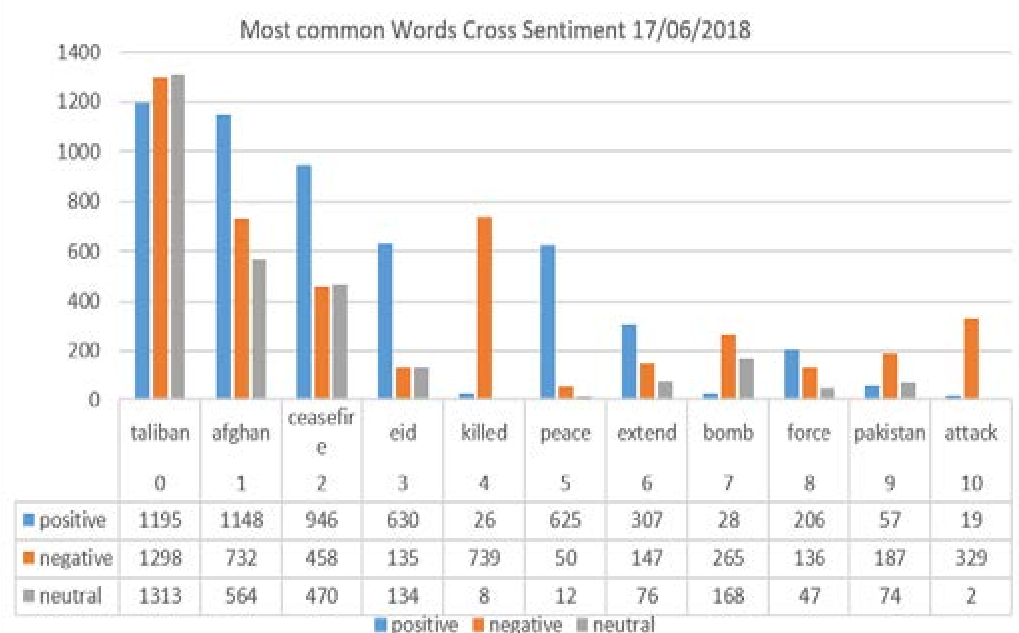 Figure 2: Daily Sentiment Distribution—Note the positive surge in mid-June.
High-Frequency Keywords
- Negative Drivers: "Killed," "Attack," "Shame," "Bomber."
- Positive Drivers: "Eid," "Ceasefire," "Peace," "Secure."
Critical Analysis & Conclusion
The Takeaway
This paper proves that social media is a valid barometer for political health. For government agencies and NGOs, this method provides a "low-cost, high-frequency" alternative to traditional data collection. It qualitatively identifies what people fear (security threats) and what they desire (peace and religious holidays).
Limitations & Future Work
- The Language Gap: The study was restricted to English tweets. In the context of Afghanistan, this inherently biases the data toward urban, educated, or international observers, potentially missing the sentiment of the Dari- and Pashto-speaking majority.
- The Emoji Factor: Early cleaning removed emojis, which the authors acknowledge are vital carriers of sentiment in modern microblogging.
- Next Steps: The authors plan to develop a Persian sentiment lexicon to capture local nuances and incorporate emoji analysis for higher granularity.
Ultimately, the work succeeds in showing that even in long-standing conflicts, "digital hope" is measurable and directly tied to tangible political progress.