
SePoMa: Bridging the Gap Between Big Data and Political Strategy via Semantics
SePoMa: Semantic-Based Data Analysis for Political Marketing
This paper introduces SePoMa (Semantic-Based Political Marketing), a framework that integrates Big Data analytics with Semantic Web technologies to enhance political communication strategies. By automatically populating a specialized political ontology from heterogeneous sources (Social Media, databases, news), SePoMa provides real-time "electorate knowledge" for candidate decision-making.
TL;DR
In the high-stakes arena of modern elections, data is the new "oil," but most of it remains crude and unrefined. SePoMa is a breakthrough framework that uses Semantic Web technologies to transform chaotic data from social networks and traditional media into structured "Electorate Knowledge." By moving past simple metrics to a logic-based ontology, it allows political strategists to see not just what people are saying, but why their opinions are shifting.
Problem & Motivation: The 3V Challenge in Politics
Political campaigns today are overwhelmed by the 3Vs of Big Data: Volume (millions of posts), Velocity (real-time news cycles), and Variety (tweets, polls, and official databases).
Current methods often fail because:
- Data Silos: Information in a party's private database doesn't "talk" to the sentiment on Twitter.
- Lack of Context: Traditional analytics can count keywords but struggle to connect a voter's opinion on "Healthcare" to a specific candidate's "Proposal X."
- High Latency: By the time a traditional survey is analyzed, the political landscape has already shifted.
The authors' insight is that Ontologies (formal representations of categories and relations) can provide the necessary context to auto-integrate these disparate data streams.
Methodology: The SePoMa Architecture
The core of SePoMa lies in its ability to turn raw data into a structured Knowledge Base.
1. The Political Ontology
Instead of relying on generic models, the authors built a specialized OWL 2 ontology centered on five pillars:
- Candidates & Political Parties: The actors.
- Proposals: The policy "products" (Health, Economy, etc.).
- Eligible Voters: The target market.
- Opinions: The sentiment-link between voters and proposals.
2. Automated Ontology Population
This is where the heavy lifting happens. SePoMa uses different pipelines for different data formats:
- Structured Data: Uses rule-based transformations to pull from relational databases.
- Semi-structured (JSON/XML): Uses a document parser and a 'JSON2RDF' algorithm.
- Unstructured (Social Media): Employs Sentiment Analysis to determine the polarity of posts and map them to specific ontology instances.
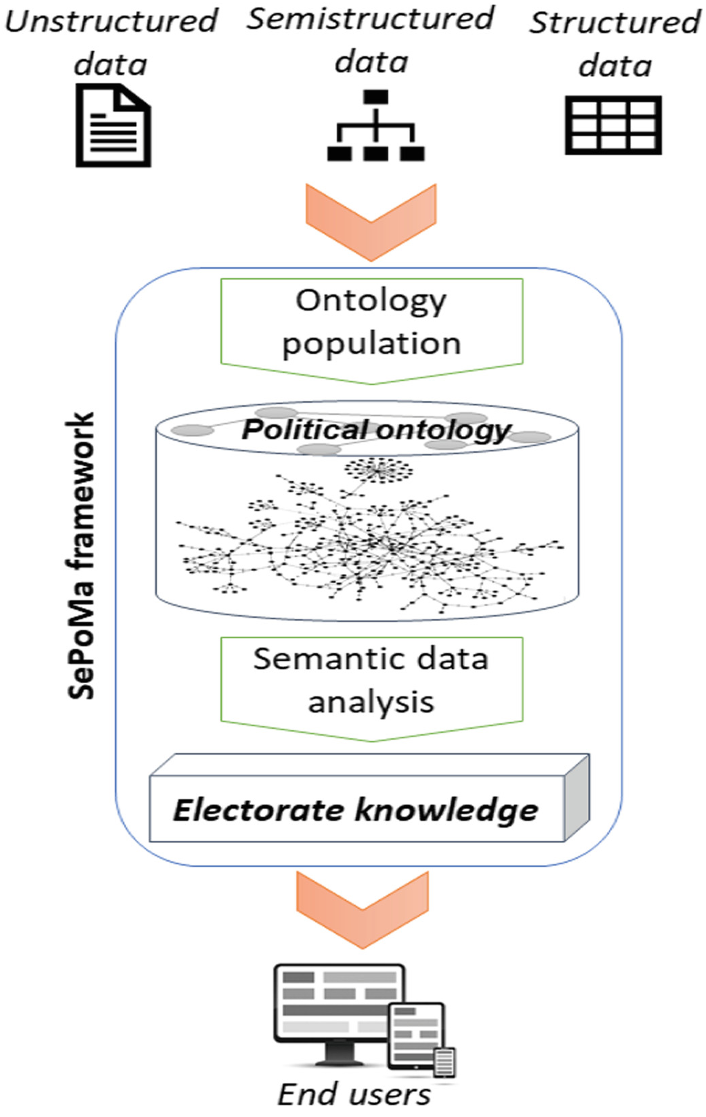 Figure 1: The functional architecture showing the path from heterogeneous sources to electorate knowledge.
Experiments & Real-World Context
The paper validates the approach through a use case involving the 2018 Mexico Election. During this period, candidates like Andrés Manuel López Obrador dominated social media. While basic analytics showed high engagement, SePoMa’s semantic approach allows strategists to:
- Identify which specific policy proposal (e.g., law and order) caused a spike in negative sentiment.
- Compare candidate positioning in real-time against opponents within specific "ideological niches."
- Adjust the messaging "on the fly" to better align with the concerns detected in the semantic layer.
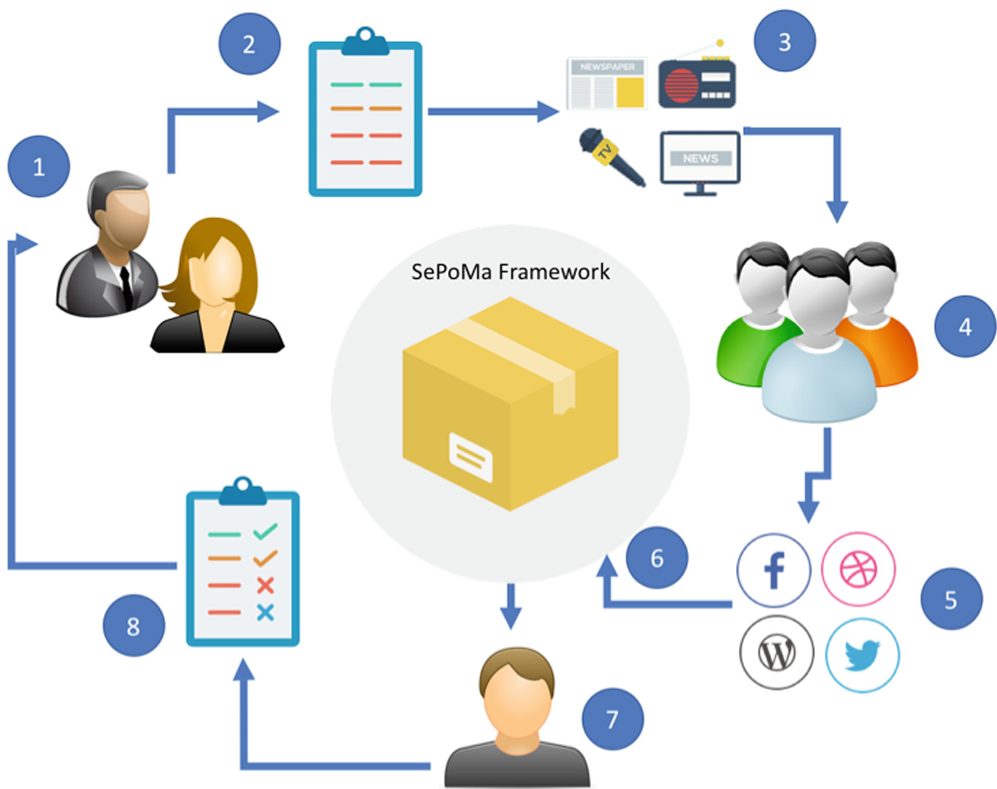 Figure 2: The feedback loop where SePoMa generates insights to refine political proposals.
Critical Analysis & Conclusion
Takeaway
SePoMa represents a transition from "Opinion Mining" to "Knowledge Engineering." It proves that for political marketing to be effective, it must be voter-centric and data-driven, using semantics to bridge the gap between human language and machine logic.
Limitations & Future Work
While the framework is robust, its reliance on fixed ontologies can be a bottleneck in the fast-evolving world of political jargon. The authors acknowledge this and propose Ontology Evolution—automated schema updates—as a future research direction. Furthermore, integrating LLMs (Large Language Models) could significantly enhance the "Unstructured Content" extraction phase, which currently relies on more traditional sentiment analysis.
Final Thought
As digital warfare in elections becomes more sophisticated, tools like SePoMa ensure that transparency and data-driven communication can help political entities find common ground with the electorate's true needs.