
Breaking the Rules: Detecting Money Laundering via Sequence Matching
Sequence Matching for Suspicious Activity Detection in Anti-Money Laundering
The paper introduces a sequence matching-based algorithm for suspicious activity detection in Anti-Money Laundering (AML). By utilizing Euclidean distance to compare transaction sequences against individual histories and peer group behaviors, the method achieves improved precision over traditional systems.
TL;DR
Current Anti-Money Laundering (AML) systems are plagued by "static thinking"—they look at individual transactions rather than temporal patterns. This paper proposes a Sequence Matching Framework that shifts the focus from "How much was spent?" to "How does this sequence of behavior compare to the account's history and its peers?" By using Euclidean distance-based similarity, the authors achieved a massive leap in specificity, reducing false alarms without missing suspicious sequences.
The Motivation: Why Rules Fail
Most AML systems currently in use are rule-based. They operate on simple thresholds: if a transaction exceeds , flag it. However, professional money launders are experts at "Learning the System." They use techniques like:
- Structuring: Breaking a $50,000 transfer into six smaller, non-suspicious transactions.
- Behavioral Training: Gradually increasing transaction amounts to "normalize" high-risk behavior in the eyes of static filters.
The authors realized that suspiciousness is not a point—it's a segment. A single 9,900 deposits in a week followed by an immediate withdrawal is a red flag.
Methodology: The Sequence Matching Framework
The researchers developed a four-stage pipeline to transform raw transaction logs into actionable intelligence.
1. High-Risk Segment Selection
To avoid the computational nightmare of comparing every possible sequence in a massive database, the authors first use a probabilistic model to identify "anchors"—segments where at least one feature (like transaction frequency or amount) is statistically abnormal.
2. Formulating Query and Reference Sequences
- Query Sequence: The window of transactions around a high-risk anchor (e.g., a 5-day window).
- Reference Sequences: This is the secret sauce. They compare the query to two things:
- Self-History: Is this person acting differently than they did last year?
- Peer Group: Is this person acting differently than other small businesses in the same industry?
3. Similarity via Euclidean Distance
By normalizing sequences and treating them as vectors in , the system calculates the Euclidean distance. A high distance from both the self-history and the peer group indicates a high probability of suspicious activity.
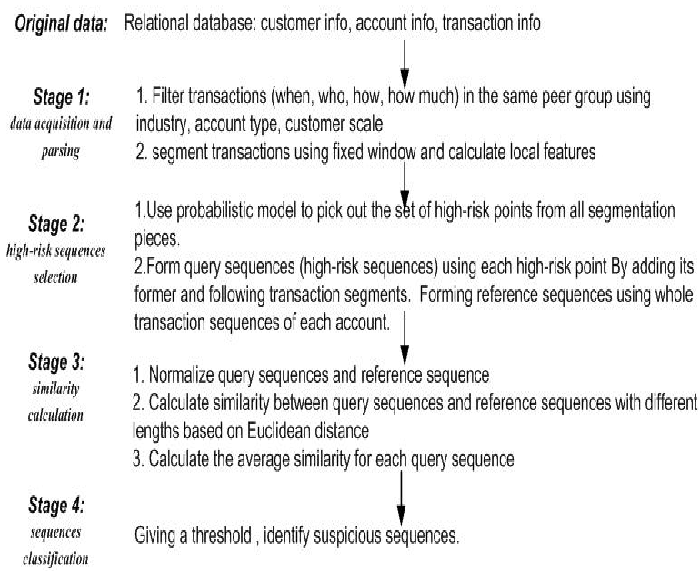 Figure 1: The proposed AML sequence matching and classification flow.
Experiments: Real-World Combat
The authors tested their algorithm against real data from a Chinese financial institution (640 normal accounts vs. 64 confirmed suspicious accounts).
Key Results:
- Sensitivity (Recall): The ability to find the "bad guys" remained comparable to traditional methods (~83%).
- Specificity: This is where the paper shines. Traditional systems had a specificity of 0.33 (meaning 67% of alerts were false positives). The sequence matching system pushed this to 0.73, more than doubling the accuracy of the alerts.
 Figure 2: Benchmark results showing the low specificity of traditional threshold-based systems.
Deep Insight & Conclusion
The core value of this work lies in the Peer Group comparison. Launders can easily "train" their own behavior to look normal over time, but it is much harder for them to mimic the aggregate behavior of an entire peer group (e.g., comparing a shell company to legitimate retail shops).
Limitations
- Window Size: The query sequence length () is fixed. If a laundering cycle spans months instead of days, a short window might miss it.
- Short Histories: The authors noted that the system struggles with new accounts that don't have enough longitudinal data for a "self-history" reference.
Final Thoughts
This paper is a stepping stone from rigid, human-set thresholds to behavioral AI. For financial institutions, implementing such sequence-aware models means fewer man-hours wasted on "ghost" cases and a higher success rate in stopping actual financial crime.