
Serious Games: Bridging the Gap Between Social Networks and Cultural Heritage
Serious Games: Valuable Tools for Cultural Heritage
This paper introduces five social media-integrated serious games developed for the Archaeological Museum of Tripolis under the EU H2020 CrossCult project. The research presents a multi-purpose framework where mini-games serve as tools for user profiling, museum promotion, and extending the visitor experience beyond physical site boundaries.
TL;DR
The paper presents a suite of five mini-games designed for the Archaeological Museum of Tripolis to transform passive museum visitors into active social media ambassadors. By leveraging psychological profiling (MBTI) and viral game mechanics, the researchers aim to solve the visibility and personalization challenges faced by smaller cultural institutions.
Background & Motivation
Smaller museums often exist in the shadow of major landmarks, suffering from a lack of "museumness"—the visitor's perception of the space's importance. The CrossCult project aims to change this by fostering "re-interpretations" of history. The core challenge is: How do we make ancient statues relevant to a digital-first audience without being intrusive?
The authors' insight is to meet the audience where they already reside: Social Networks. Instead of high-friction learning modules, they propose "Serious Games" as a trojan horse for cultural engagement and data collection.
Methodology: The Descriptive Framework
The authors utilize a structured descriptive model for cultural heritage games, which categorizes artifacts based on game characteristics, player personality, and organizational resources.
The Five Pillars of Engagement
- Your face on a statue!: A "Face-in-Hole" style game that creates personalized souvenirs.
- Who is your guardian goddess?: A quiz that uses MBTI-targeted questions to build a user profile for future personalization.
- Anthroponymy: A PacMan-style action game focused on the etymology of ancient names.
- Your status in ancient society: A social status quiz mapping personality to ancient citizenship roles.
- Old-fashion: A dress-up simulator exploring the evolution of ancient textiles.
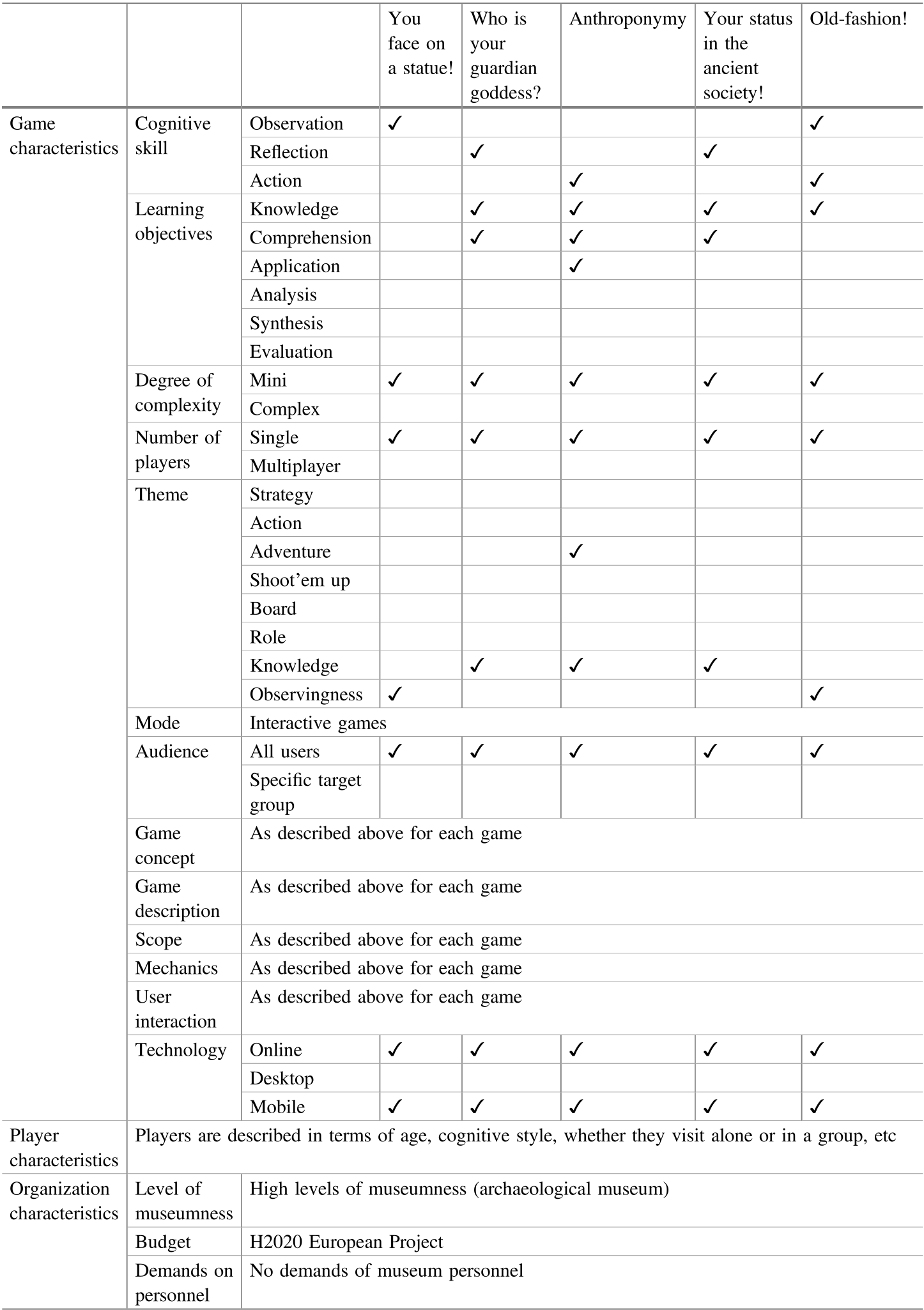 Figure 1: Comparison of the design objectives, cognitive skills, and technologies across the five proposed games.
Deep Dive: Profiling through Play
The most technically significant aspect is the use of Indirect Profiling. While the user is busy choosing their favorite animal or activity in "Who is your guardian goddess?", the backend engine is mapping these choices to the Myers-Briggs Type Indicator (MBTI).
This allows the museum's mobile app to later suggest exhibits that match the visitor's specific "Cognitive Style" (e.g., visual vs. text-heavy learners, or those interested in social history vs. technical craftsmanship).
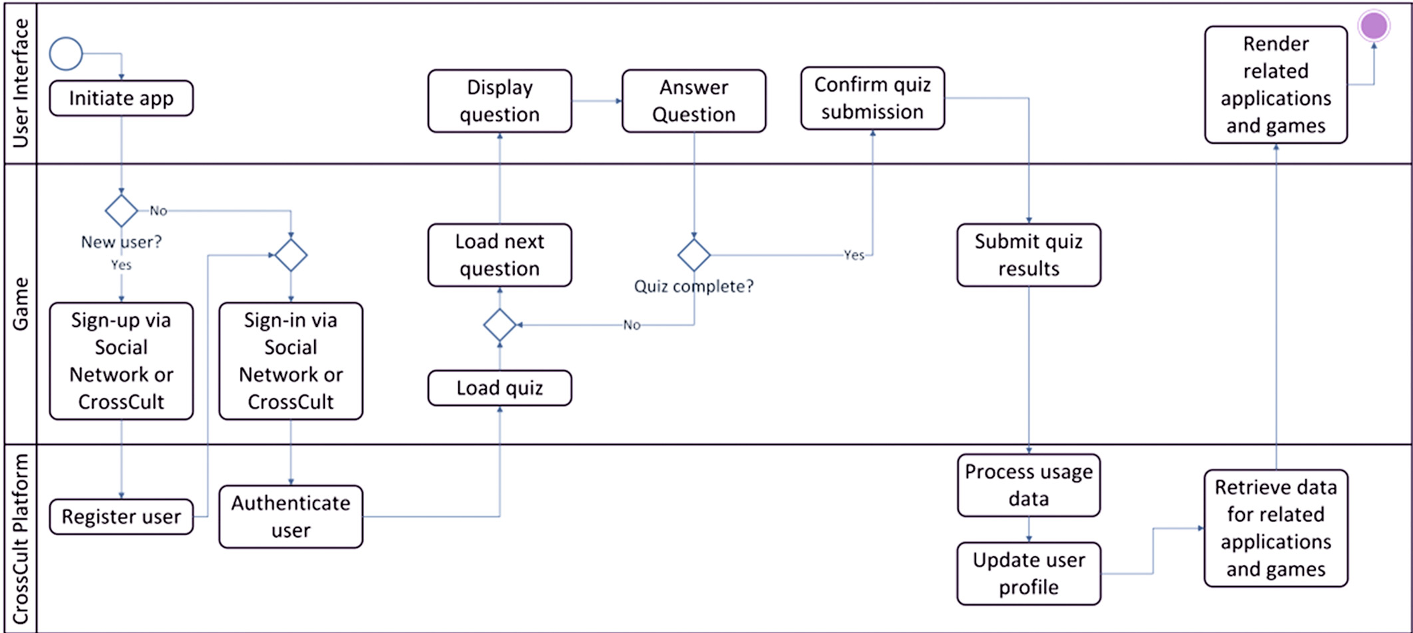 Figure 2: The logic flow for the profiling quiz, showing the transition from playful interaction to profile generation.
Experimental Potential and Future Work
While the paper focuses on the design and taxonomy of these games, the underlying goal is to create a "virtuous cycle" of cultural consumption:
- Pre-visit: User plays on Facebook, generating curiosity and a profile.
- During visit: The app provides personalized recommendations based on the existing profile.
- Post-visit: The user shares a personalized "Statue-Selfie" as a souvenir, attracting new visitors.
The authors acknowledge a limitation in the current framework: the lack of "Affective Impact" analysis. Future iterations of the model will include metrics for emotional engagement and long-term knowledge retention.
Critical Insight & Conclusion
This work highlights a shift in the Museology coordinate system. The value of a serious game is no longer measured solely by how much "history" it teaches, but by its ability to generate Context-Aware metadata. By blending pop-psychology with archaeology, the Tripolis pilot provides a survival blueprint for peripheral museums in the age of attention-deficit browsing.
Takeaway: Serious games are the "connective tissue" between a museum's physical artifacts and the digital identities of its visitors.