
Digital Hearth: Reimagining the Kitchen God through Service Design and Big Data
Service Design in the Preservation of Intangible Cultural Heritage: A Case Study in the Legend of the Kitchen God
This paper presents a service design framework integrating digital technology and Big Data to preserve the "Legend of the Kitchen God," a piece of Chinese Intangible Cultural Heritage (ICH). By developing the "Welcome Kitchen God" WeChat mini-program, the authors transform traditional worship into a modern social practice focused on recording "good deeds."
TL;DR
The "Legend of the Kitchen God" is a cornerstone of Chinese folklore, but as modern kitchens replace wood-burning stoves with induction cookers, the deity's "home" is disappearing. This research proposes a Service Design framework that migrates cultural inheritance from physical rituals to a digital social ecosystem. By leveraging WeChat, Data Mining, and gamification, the project transforms the act of worship into a sustainable daily practice of "doing good deeds," ensuring the spirit of the culture survives in a hyper-digitalized society.
Problem: The "Glass Case" Trap in Cultural Preservation
Traditional preservation methods often suffer from the "Museum Effect"—treating living culture as a static specimen. For the Kitchen God culture, several pain points emerge:
- Contextual Disconnect: Modern urban apartments lack the physical "hearth" where the Kitchen God's image traditionally resided.
- Surface-Level Engagement: Government-led festivals are often "one-off" events that fail to instill the core values of the heritage into the public's daily mindset.
- The Inheritor Gap: Younger generations view these legends as obsolete stories rather than relevant moral guides.
The authors argue that if culture is "living," its safeguarding must be dynamic. The goal isn't just to save the image of the Kitchen God, but the spirit of family harmony and social goodness he represents.
Methodology: The "Welcome Kitchen God" Service Framework
The researchers shift the paradigm from Tangible Preservation to Service Innovation. They identify "People" as the primary bearers of ICH and "Big Data" as the modern catalyst for connection.
The Service Architecture
The core of the methodology is a WeChat mini-program designed with seven distinct modules that map traditional concepts to modern digital interactions:
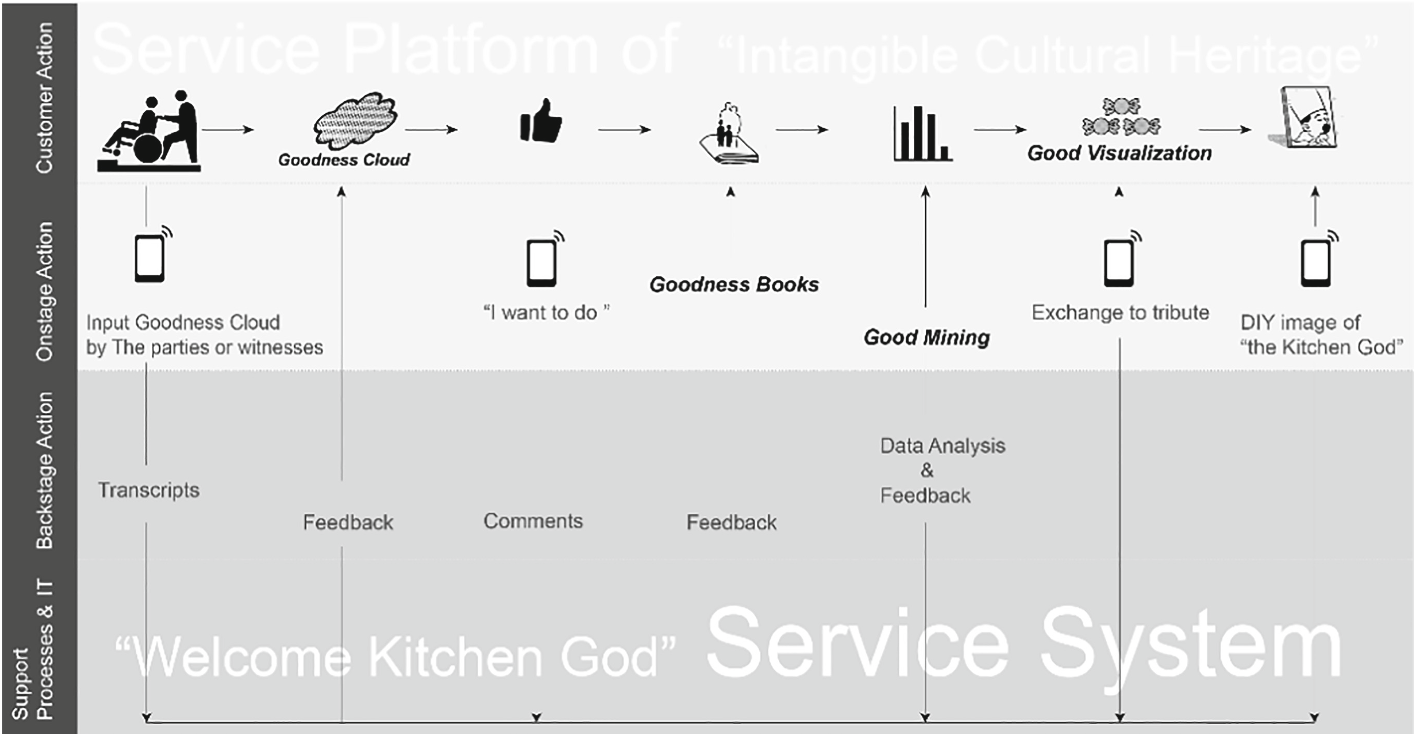
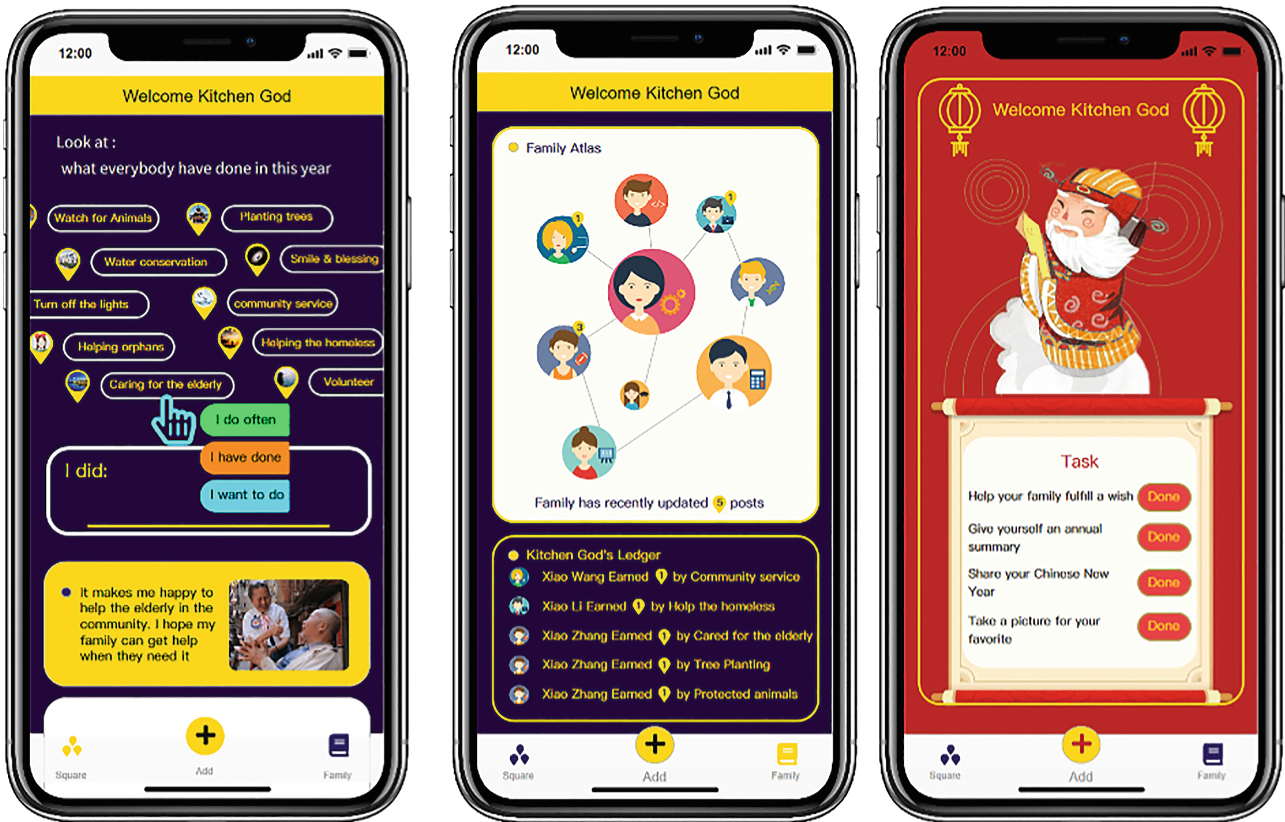
- Goodness Cloud & Books: A social feed where users post "small acts of kindness" (e.g., turning off lights, helping a neighbor).
- Household Team: Recreates the family-centric nature of the worship, allowing family members to collaborate on "goodness points."
- Data Mining (The Modern "Jade Emperor"): Traditionally, the Kitchen God reports a family's deeds to the Jade Emperor. Here, Big Data serves this role, analyzing which "good deeds" are trending or difficult, allowing for evidence-based cultural policy-making.
Experiments & Results: Quantifying Culture
The project demonstrates that Social Validation (the "Like" button) is a powerful tool for cultural transmission.
- Behavioral Data: By tracking "I have done it" or "I want to do it" markers, the system gathers quantitative evidence of cultural engagement.
- Gamified Incentives: Users earn virtual "Sacrifices" (traditional candies or buns) by performing real-world good deeds. This visualization of merit provides a sense of achievement that traditional storytelling lacks.
- SOTA Achievement: Unlike traditional government initiatives that generate high value only during the "Xiaonian" festival (~1.5 million yuan annually in Shunyi district), this digital service model allows for year-round interaction, breaking the seasonal limitation of cultural heritage.
Critical Analysis: Is Digital the Only Way?
The authors provide a compelling case for "Living Form Preservation." By acknowledging that the "hearth" is now a smartphone screen, they avoid the futility of trying to force ancient lifestyles onto modern people.
Limitations & Future Outlook: While the WeChat platform solves the "reach" problem, a potential risk is Over-Commercialization or the trivialization of sacred rituals into mere "digital points." Future work must balance the playfulness of the app with the solemnity of the tradition. However, this study sets a high bar for using Data Mining as a tool for cultural insight, proving that the "Jade Emperor" of the 21st century might just be an algorithm that encourages us to be better versions of ourselves.
Takeaway
The true value of Intangible Cultural Heritage lies not in the form of the ritual, but in the values it transmits. Service design provides the bridge, and Big Data provides the evidence needed to make ancient wisdom relevant in a world of granite countertops and exhaust fans.