
SIDEMAN: Optimizing Service Discovery via Human Social Patterns
ServIce Discovery in Mobile Social Networks
This paper introduces SIDEMAN, a novel service discovery algorithm for Mobile Social Networks (MSNs) that leverages human mobility and community interests. By integrating community detection with interest-aware dissemination, SIDEMAN achieves perfect Recall and significantly outperforms baseline broadcasting methods in energy efficiency.
TL;DR
Researchers have developed SIDEMAN, an energy-efficient service discovery algorithm specifically for Mobile Social Networks (MSNs). By aligning data dissemination with human social structures and specific user interests, SIDEMAN achieves a perfect 100% "Recall" rate (relevance) and consumes only a fraction of the energy required by traditional flooding-based methods.
Context & Positioning
In the era of "Pocket Switching Networks," our mobile devices are no longer just passive receivers; they are active nodes in an opportunistic web. While traditional service discovery (like those in IP networks) assumes stable connectivity, MSNs rely on human encounters. SIDEMAN moves beyond generic broadcasting by positioning itself at the intersection of Social-Aware Routing and Sensing-as-a-Service, treating social ties as the primary conduit for information.
The Pain Point: The "Noise" and "Drain" of Flooding
Existing solutions like s-Flooding and s-Gossip (social versions of standard protocols) often treat every member of a social community as a potential target. This creates two major problems:
- Low Recall: Nodes become "trash cans" for services they don't care about, simply because they are in the same physical community as the requester.
- Energy Exhaustion: Indiscriminate broadcasting in dense environments (like a conference) kills smartphone batteries rapidly.
Methodology: The SIDEMAN Architecture
SIDEMAN operates on a simple yet powerful logic: Community Recognition + Interest Matching.
1. Community Detection and Recognition
Using the AD-SIMPLE algorithm, a node tracks its contact history and current neighbors to identify its social cluster. To avoid the high cost of constantly asking everyone for their interests, SIDEMAN uses the Jaccard Index. If a current community looks 80% similar to one seen before, the node "recognizes" it and reuse cached interest profiles.
2. Proactive vs. Reactive Discovery
- Reactive (On-Demand): If you need a service you don't have, you query only those in your current community who have demonstrated a shared interest.
- Proactive (Service Exchange): When a community is recognized, nodes automatically exchange services matching the community's interests, effectively "priming" the cache for future needs.
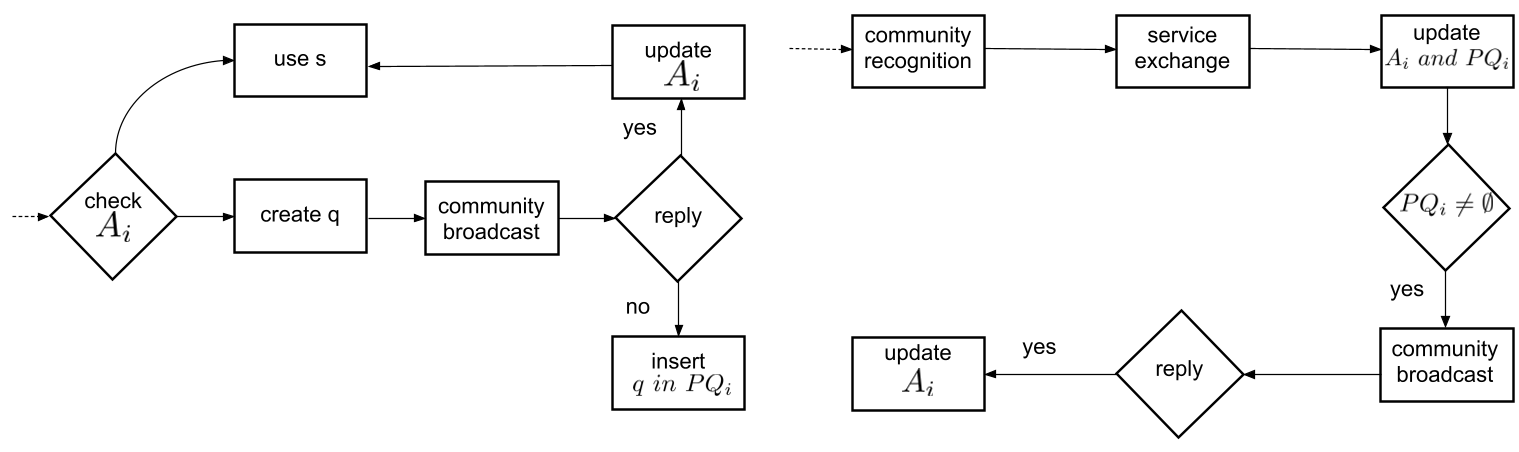 Fig 1: The dual reactive/proactive components of SIDEMAN.
Experimental Results: Perfect Recall and Energy Savings
The authors validated SIDEMAN using the famous Infocom 2006 traces (78 attendees equipped with Bluetooth iMotes).
- The Recall Gap: SIDEMAN maintains a 1.0 Recall rate. In contrast, s-Flooding drops to 0.2 because it forces nodes to store irrelevant data.
- Energy Efficiency: This is the "killer app" of SIDEMAN. While baseline algorithms would drain a standard smartphone battery halfway through the simulation, SIDEMAN only consumed 12% of the energy.
- Service Gain: Despite sending 84% fewer messages than flooding, SIDEMAN achieves a Service Gain of 0.94, meaning that when a user needs a service, it is already in their cache 94% of the time.
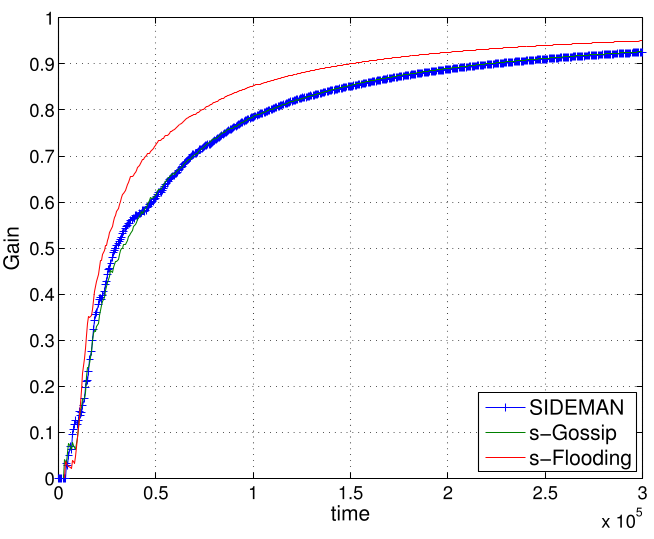 Fig 2: Recall performance over time (SIDEMAN vs. Baselines).
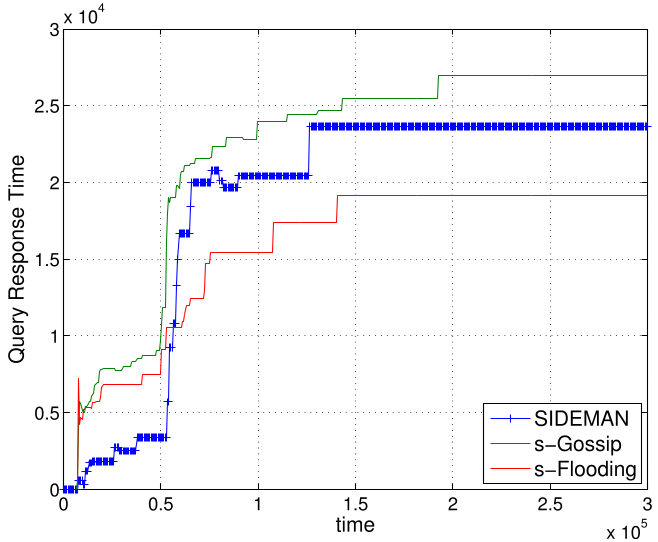 Fig 3: Cumulative energy consumption per node.
Critical Insight & Future Outlook
The genius of SIDEMAN is not in a complex mathematical transformation, but in the Inductive Bias that human interests are the most reliable filter for data traffic in mobile environments.
Limitations: The query response time is slightly higher than flooding because SIDEMAN is "pickier" about who it talks to. In high-emergency scenarios where speed is more critical than battery life, flooding might still have an edge.
Conclusion: For the future of localized MSNs and D2D (Device-to-Device) communication in 6G, SIDEMAN provides a blueprint for how "social intelligence" can replace "brute force" communication.