
The Growth of Service and the Service of Growth: Navigating the Quality-Profit Trap
The growth of service and the service of growth: Using system dynamics to understand service quality and capital allocation
This paper utilizes System Dynamics (SD) to model the growth trajectory of a European restaurant chain (Beefeater). It characterizes the fundamental trade-offs between maintaining service quality and meeting corporate profitability targets to secure expansion capital.
TL;DR
Expanding a service business isn't just about opening new locations; it’s a high-stakes balancing act. This paper uses System Dynamics (SD) to show how a restaurant chain's obsession with short-term profit targets can inadvertently "kill" its growth engine by eroding service quality—a "soft" variable that is often invisible on a spreadsheet until it's too late.
Executive Summary
In the world of service management, what you can't measure easily often determines what you can measure eventually. This study analyzes the Beefeater restaurant chain, which grew to 200 outlets in a decade, to reveal the hidden "feedback loops" that dictate success. By mapping these dynamics, the authors prove that management policies—specifically regarding capital allocation and staffing—are more decisive than external economic downturns in determining whether a brand thrives or dies.
The "Invisible" Friction: Why Linear Thinking Fails
Most managers view growth linearly: Investment -> Expansion -> Profit. However, the authors argue that service businesses are governed by archetypes, specifically the "Limits to Growth."
When a restaurant becomes successful, it attracts more customers. This is a Reinforcing Loop (R). However, success breeds its own nemesis: Crowding. As waiting times increase and service quality drops, customer satisfaction falls, triggering a Balancing Loop (B) that eventually halts growth.
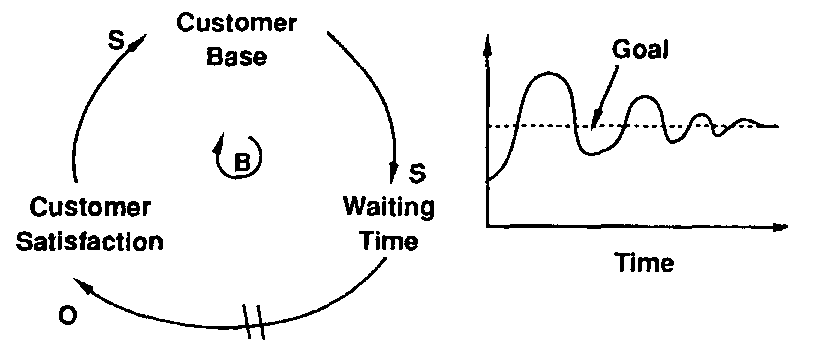 Fig 1: The feedback loop between customer base, waiting time, and satisfaction.
Methodology: Bridging Soft and Hard Variables
The core of the Beefeater model lies in its ability to simulate Soft Variables. Unlike traditional accounting models, this SD model treats the following as quantifiable stocks:
- Service Quality: Based on staffing levels vs. customer volume.
- Restaurant Standard: The physical condition/appeal of the site.
- Menu Attractiveness: The result of continuous R&D.
- Perceived Value: The customer's "vibe" check—balancing quality against price.
The Capital Allocation Conflict
A critical insight of the paper is the Conflict of Expectations. Corporate headquarters allocate capital based on ROCE (Return on Capital Employed). If a manager cuts staffing to boost ROCE and win expansion capital, they win the "battle" (short-term funds) but lose the "war" (long-term customer loyalty).
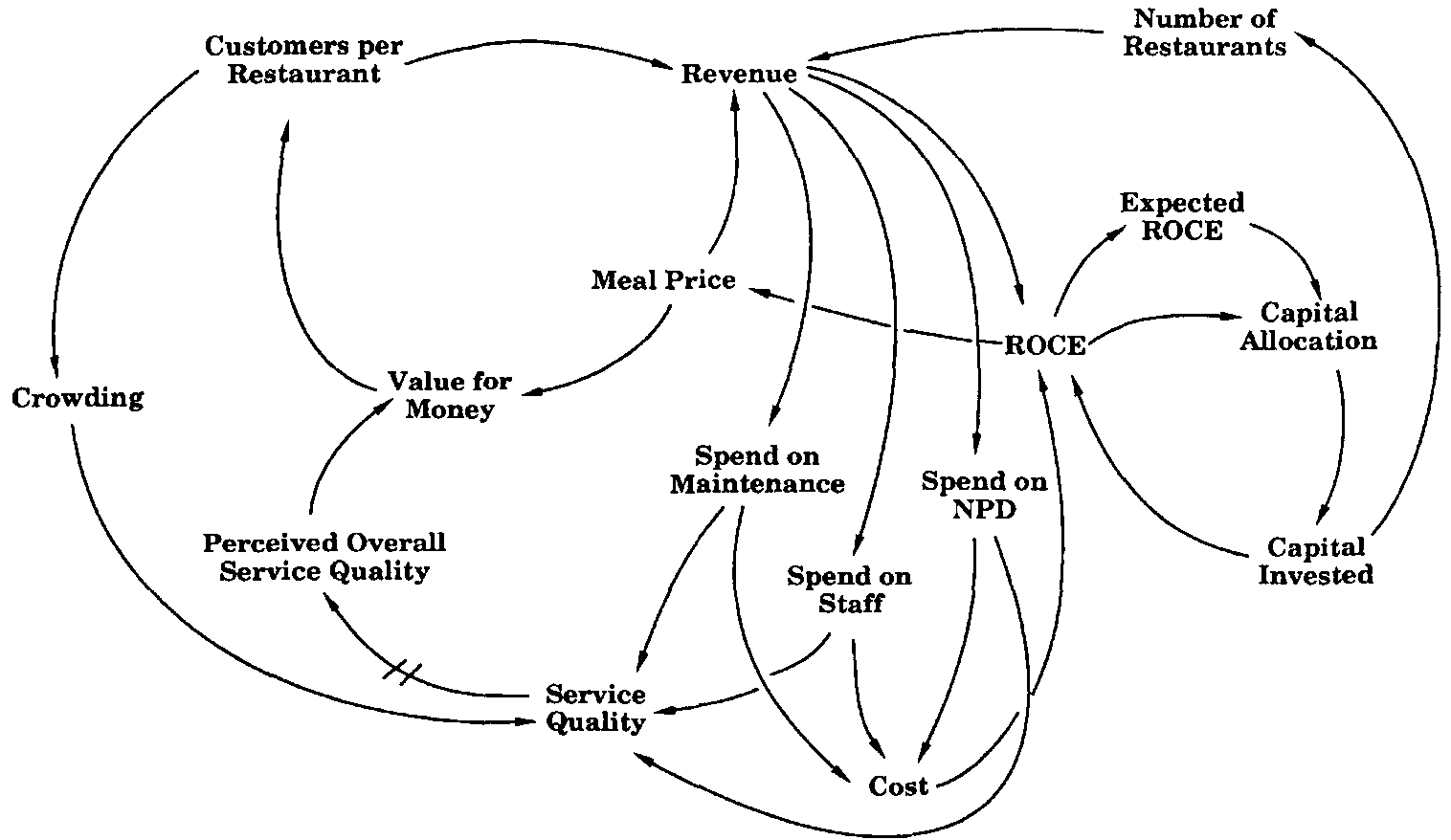 Fig 4: Simplified overview of the causal connections between quality, value, and capital allocation.
Experimental Insights: How to Kill a Business
The authors ran "what-if" scenarios that serve as a warning to all service executives:
- The Staffing Trap: By cutting the staff budget by just 2%, the simulation showed the growth engine completely stalling. While the spreadsheet looked "optimal" on day one, the resulting service decay led to a permanent decline in the customer base.
- The Pricing Paradox: Rapidly increasing prices to meet a profit shortfall actually resulted in fewer total restaurants compared to a "fixed price" strategy. The reason? The drop in Perceived Value outpaced the gain in per-meal profit.
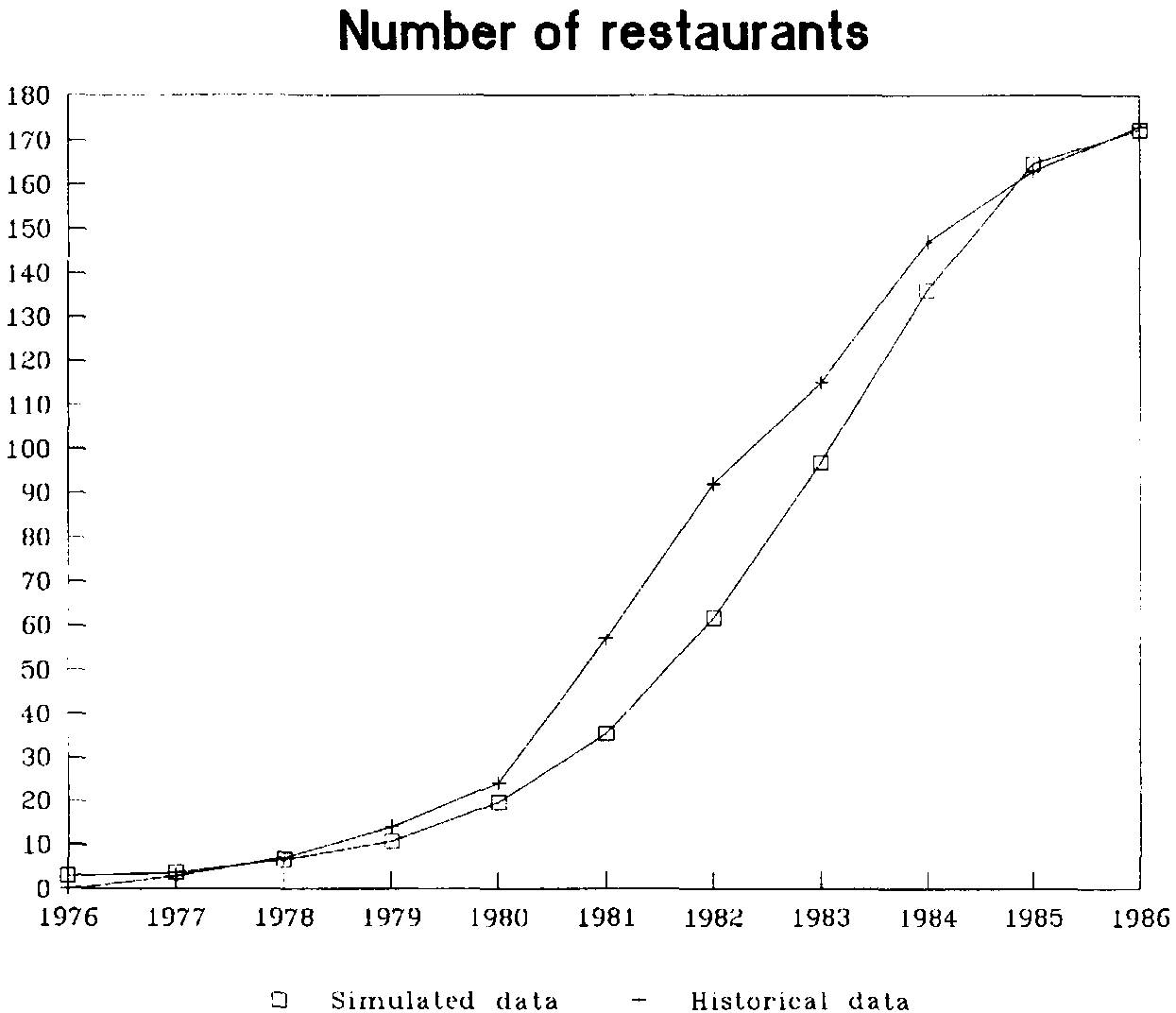 Fig 5: Actual vs. Simulated growth, illustrating the classic S-curve of expansion.
Critical Insight: The Management Flight Simulator
The paper concludes by advocating for Management Flight Simulators. Just as pilots train for crashes in a safe environment, managers should use SD models to "fail" safely.
- Learning via Failure: By seeing their virtual business collapse due to understaffing, managers develop an Inductive Bias toward long-term quality over short-term financial engineering.
- Soft over Hard: The model proves that the "error" from leaving out soft variables (like morale or crowding) is much larger than the "error" in measuring them imprecisely.
Conclusion & Takeaway
The ultimate takeaway is that policy failure is often misdiagnosed as market failure. In the service industry, growth must be served by quality; if quality is sacrificed to serve growth targets, neither will survive.
Key Takeaways for Leaders:
- Don't over-manage ROCE: Short-term financial optimization is often a debt taken against future brand equity.
- Anticipate the Balancing Loop: Successful growth will cause crowding. If you don't have a plan to maintain quality under pressure, your success will become your ceiling.
- Open the "Black Box": Use simulation to understand the why behind your results, not just the what.