
Automating Privacy: Leveraging Transitive Trust for Managed Data Sharing in Social Networks
Setting Access Permission through Transitive Relationship in Web-based Social Networks
The paper proposes a "Trust Network" framework for Web-based social networks (WBSNs) that automates access control through transitive relationships. It introduces a mechanism where private data access is determined by directed weighted graphs and obfuscation rules, achieving controlled data sharing between owners and indirect contacts.
TL;DR
As social networks grow, the manual management of privacy becomes a bottleneck. This paper introduces a Transitive Trust Network that automatically calculates data access permissions for people you don't even know, based on your existing friends' recommendations. By using "Permission Values" instead of simple yes/no switches, the system can provide "blurred" or obfuscated data (e.g., showing your city instead of your exact street address) to distant acquaintances.
Background: The Privacy Scalability Crisis
In the era of Facebook and LinkedIn, we share everything from calendars to geolocation. Current systems force a binary choice: either you keep data private, or you share it with a broad group. This fails in common scenarios—like when a colleague’s business partner needs to see your "work" availability but shouldn't see your "family" events. Manually assigning rights to every "friend of a friend" is a cognitive impossibility.
The Core Insight: Trust is Transitive and Weighted
The authors argue that trust mirrors real-world social dynamics: if Alice trusts Bob, and Bob trusts Carl, Alice can inherently trust Carl—albeit to a lesser degree. To formalize this, they transform the social graph into a Directed Weighted Graph.
1. The Join Operation & Permission Values
Instead of binary access, every relationship has a weight . The permission for an indirect contact is calculated using a "Join" operation: This ensures that the "weakest link" in the chain defines the maximum trust allowed.
2. Architecture for Privacy Management
The framework involves four critical steps:
- Context Pruning: Ensuring trust only flows within relevant contexts (e.g., "Work" trust shouldn't leak into "Church" circles).
- Initialization: Merging social links into a unified trust graph.
- Computation: Running path-finding algorithms to find the strongest trust path.
- Obfuscation: Converting the final decimal value into a level of data detail.
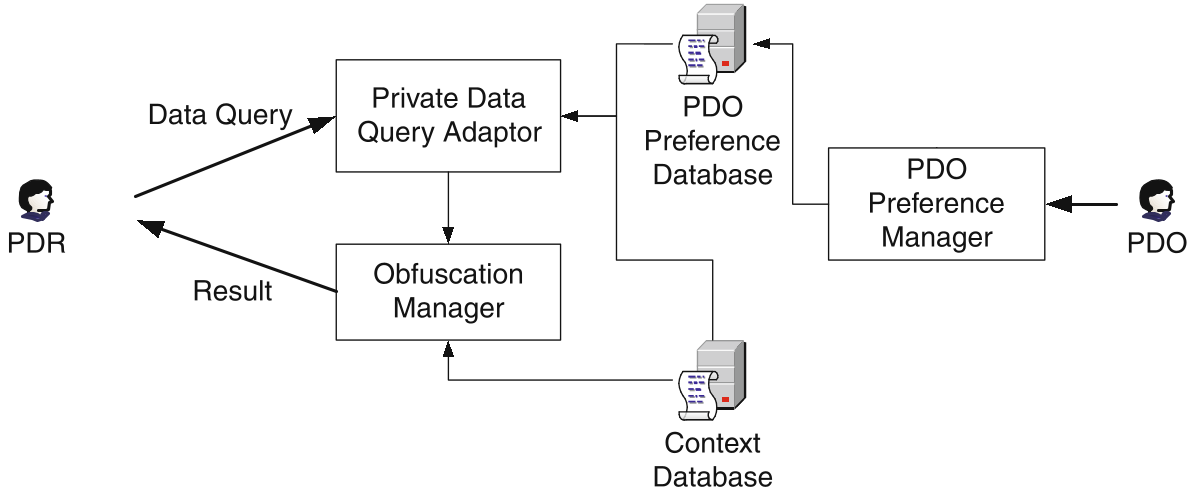 Figure 1: The Privacy Management Framework showing the interplay between the PDO (Owner) and PDR (Requester).
Methodology Refinements: Decay and Importance
To prevent data from leaking to the entire internet, the authors introduce two vital control mechanisms:
- Damping Factor (): Every "hop" reduces the trust value (e.g., if , trust drops by 30% each step).
- User Importance: Using a PageRank-style algorithm, they calculate how "central" or "reputable" a user is within the community. Highly active, verified users maintain trust better than "ghost" accounts.
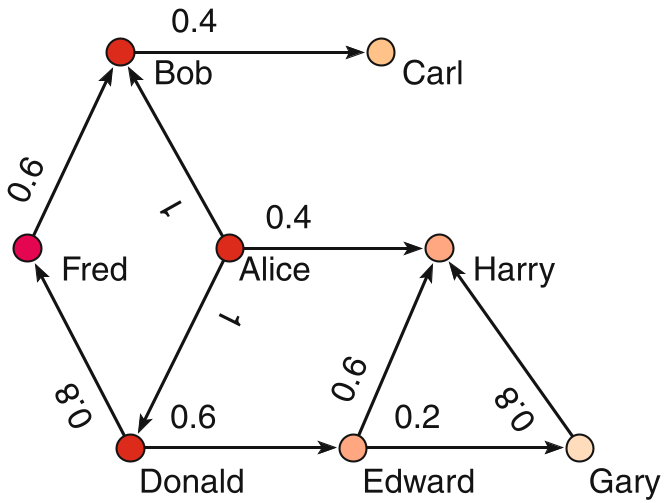 Figure 2: Trust network visualization where color shades represent the permission value gradient.
Experimental Results
Testing on real-world data from MSN and Facebook, the researchers demonstrated that:
- Reachability: Without transitivity, a user can only share with a handful of people. With a 3-hop limit, the "useful" sharing network expands by orders of magnitude.
- Safety: By adjusting the damping factor, a user can effectively "sunset" their data, ensuring that anyone more than 4 or 5 steps away sees essentially nothing.
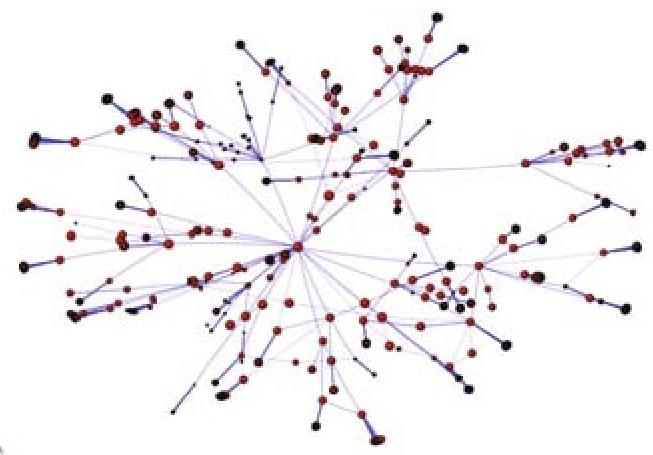 Figure 3: Impact of initial trust values on the reach of the transitive network.
High-Level Takeaways & Critical Analysis
The brilliance of this work lies in Data Obfuscation. Instead of hiding data, we blur it.
Pros:
- Reduces user burden significantly.
- Mathematically rigorous approach to "social intuition."
Limitations:
- Trust Inflation: If a user is "too friendly" and assigns high trust to everyone, they become a privacy leak for their entire circle.
- Computational Overhead: Calculating global PageRank and shortest paths in real-time for billions of users (like on modern Facebook) requires massive optimization beyond the scope of this paper.
Conclusion
This paper lays the groundwork for a more "intelligent" social web. By treating privacy as a mathematical function of social distance rather than a static wall, we can finally enjoy the benefits of ubiquitous sharing without the fear of unauthorized surveillance.