
SETTrust: Revolutionizing OSN Trust Prediction via Social Exchange Theory
SETTRUST: Social Exchange Theory Based Context-Aware Trust Prediction in Online Social Networks
This paper introduces SETTrust, a context-aware trust prediction framework for Online Social Networks (OSNs) that integrates Social Exchange Theory (SET) with Matrix Factorization (MF). It out-performs state-of-the-art models on real-world datasets like Epinions and Ciao, achieving significantly higher accuracy in predicting potential trust relations.
TL;DR
Trust is not a "one size fits all" label. SETTrust addresses the failure of current social network algorithms to recognize the situational nature of trust. By mathematically encoding Social Exchange Theory (SET)—the idea that humans weight the costs and benefits of a relationship—into a Matrix Factorization model, the authors have created a context-aware system that significantly outperforms existing SOTA models in predicting who you will trust next.
The "Context-Blind" Crisis in Social Networks
In current Online Social Networks (OSNs), trust prediction algorithms often assume that if User A trusts User B, that trust is absolute. However, human psychology is far more nuanced. You might trust your doctor for medical advice but not for financial investment tips.
The technical challenge lies in Data Sparsity. Most users only interact with a tiny fraction of the network. Existing "Context-Aware" models fail because they require deep interaction histories or private metadata (like GPS location) that just isn't available. This creates a gap: we need models that are smart enough to understand context but "lean" enough to work with minimal data.
Research Insight: Trust as an Economic Exchange
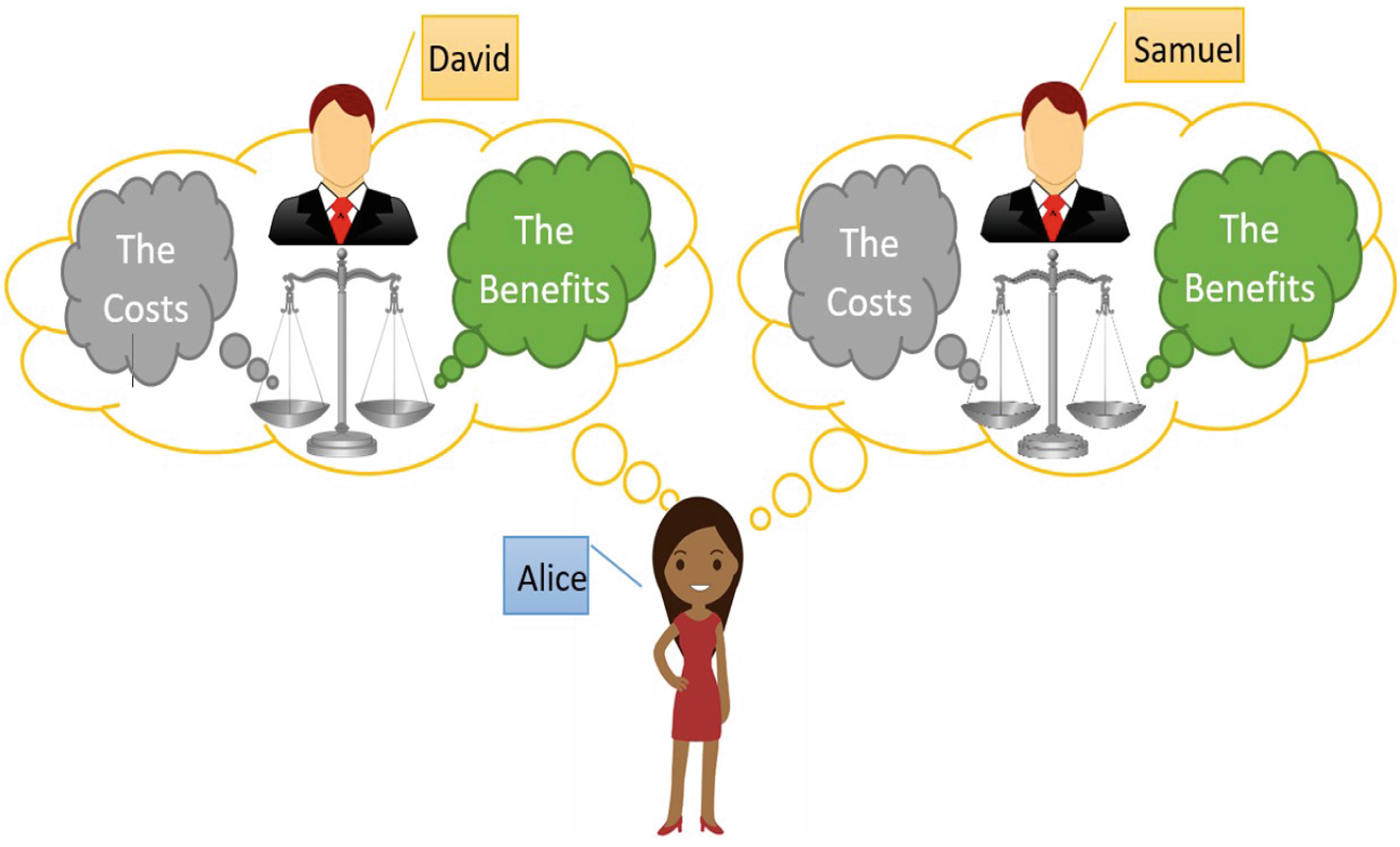
The authors pivot to Social Psychology, specifically Social Exchange Theory (SET). The core logic is simple: A user will establish trust if the perceived benefit (Expertise, influence, shared interests) outweighs the cost (negative social behaviors, language toxicity).
The SETTrust Factors:
- Level of Expertise: How active and well-rated is the user in a specific domain?
- Interest Alignment: Do the source and target users share the same categories?
- Social Status: Normalized follower counts as a proxy for social proof.
- Bad Language Detection: A novel "Cost" factor that uses text mining to detect swear words, signaling low psychological intimacy.
Methodology: Fusing Theory with Matrix Factorization
The genius of SETTrust is how it embeds this psychological theory into non-negative matrix factorization (NMF).
Instead of just factoring the trust matrix , the authors introduce a SET Regularization Term. This term forces the latent features of users () and the correlation matrix () to align with the calculated SET degree. If the "Costs-Benefits" analysis says trust is likely, the mathematical model nudges the prediction in that direction.
(Note: The paper utilizes a recursive updating schema to optimize U and H matrices iteratively until convergence.)
Experimental Battleground: Ciao & Epinions
The model was tested against major baselines including hTrust (Homophily-based) and sTrust (Status-based).
Key Findings:
- Context Matters: SETTrust consistently outperformed "context-less" models (sTrust, hTrust) by massive margins.
- Sparsity Resilience: Unlike Zheng’s model, which relies on "intimacy degree" (interaction frequency), SETTrust uses public social context, allowing it to work where other models see only "blank space."
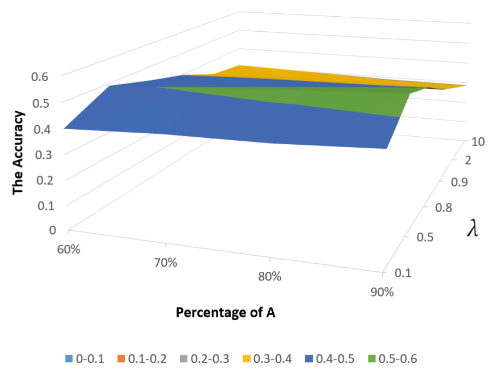
- The Balance: The authors found that a regularization weight of provides the optimal balance between historical data and SET theory.
Performance Comparison on Ciao Dataset:
| Approach | 60% Training | 90% Training |
|---|---|---|
| SETTrust | 0.49 | 0.55 |
| Zheng | 0.341 | 0.426 |
| hTrust | 0.29 | 0.297 |
| sTrust | 0.004 | 0.005 |
Critical Insight & Future Outlook
While SETTrust is a major leap forward, it currently views trust as a static snapshot. In reality, trust is dynamic—it erodes or grows over time. The authors acknowledge that future iterations must account for time-based relationships to tackle the "Fake News" phenomenon, where a trustworthy user might suddenly start sharing deceptive content.
The Takeaway: By bridging the gap between social psychology and hard data science, SETTrust proves that the most "human" features are often our best predictors for digital behavior.