
Shallow Kernels, Deep Impact: Revolutionizing Drug-Drug Interaction Extraction
Using a shallow linguistic kernel for drug–drug interaction extraction
This paper introduces the first comprehensive machine learning approach for Drug-Drug Interaction (DDI) extraction from biomedical texts using a <strong>Shallow Linguistic Kernel</strong>. The authors developed the <strong>DrugDDI corpus</strong>, the first gold-standard dataset for this task, and achieved a breakthrough F-measure of 60.01%, significantly outperforming traditional pattern-based systems.
TL;DR
Researchers have finally addressed the bottleneck in patient safety: the manual extraction of Drug-Drug Interactions (DDIs) from medical literature. By shifting from brittle, hand-crafted patterns to a Shallow Linguistic Kernel, this study achieved a 60% F-measure, nearly doubling the efficiency of previous systems and providing the community with its first dedicated gold-standard dataset: the DrugDDI Corpus.
Background: Why DDIs are an NLP Nightmare
In the medical world, a missing DDI report isn't just a data error—it's a patient safety hazard. While databases like DrugBank exist, they often lag years behind current research. The challenge in automating this is the language itself. Medical journals use dense, coordinate-heavy sentences like:
"Bentiromid may interact with acetaminophen, chloramphenicol, and local anesthetics such as benzocaine..."
Previous systems tried to solve this with "if-then" patterns. The result? They missed nearly 75% of actual interactions (Recall: 24.8%).
The Core Innovation: The Shallow Linguistic Kernel
Instead of trying to "understand" the sentence through complex and often error-prone deep parsing, the authors adopted a Composite Sequence Kernel strategy.
1. Architecture: The Two-Pronged Attack
The method uses the jSRE (Java tool for Relation Extraction) implementation, combining two specific kernels:
- Global Context Kernel (): Looks at the big picture. It analyzes three patterns: Fore-Between, Between, and Between-After. It essentially asks: "What words link these two drugs across the whole sentence?"
- Local Context Kernel (): Zooms in on the "neighborhood" (window) of each drug to identify its specific role.
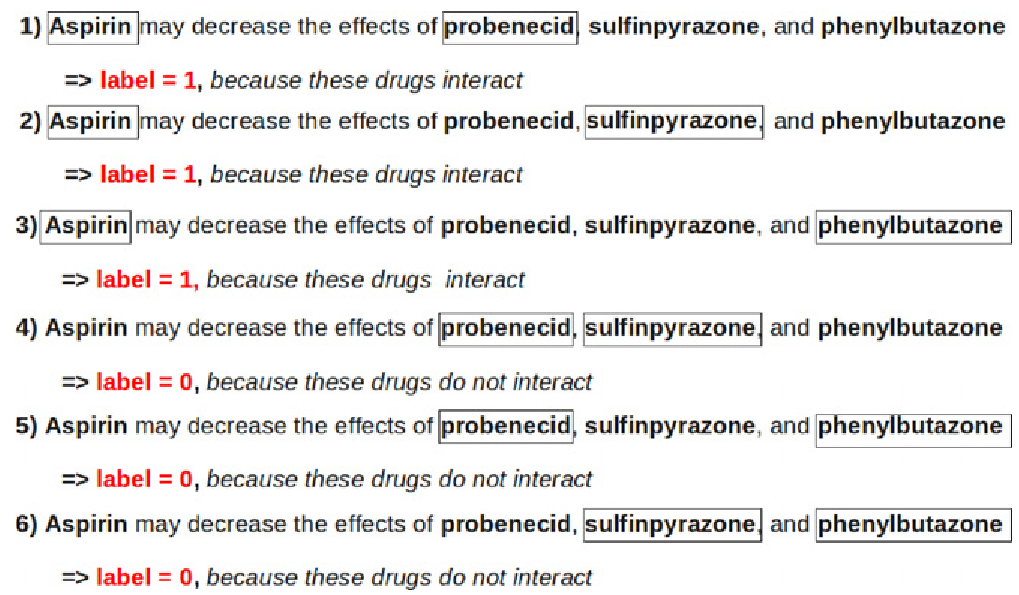 Fig 1: Labeling candidate drug pairs for the classification task.
2. The Power of N-Grams
The study found a critical "sweet spot" in hyperparameter tuning. By increasing the n-gram size to n=3, the system could capture more complex phrase structures, boosting precision by filtering out coincidental drug mentions that weren't actual interactions.
Experiments and Results
The authors didn't just test an algorithm; they built the arena for it. They created the DrugDDI Corpus, annotating 3,160 interactions across 5,806 sentences.
Breaking the Baseline
The results were unambiguous. Compared to the previous pattern-based approach, the kernel method was a seismic shift:
- Baseline (Patterns): 32.92% F-measure
- Shallow Kernel (n-gram=3, window=3): 60.01% F-measure
| Metric | Pattern-based | Shallow Kernel (This Work) |
|---|---|---|
| Precision | 48.89% | 51.03% |
| Recall | 24.81% | 72.82% |
| F-Measure | 32.92% | 60.01% |
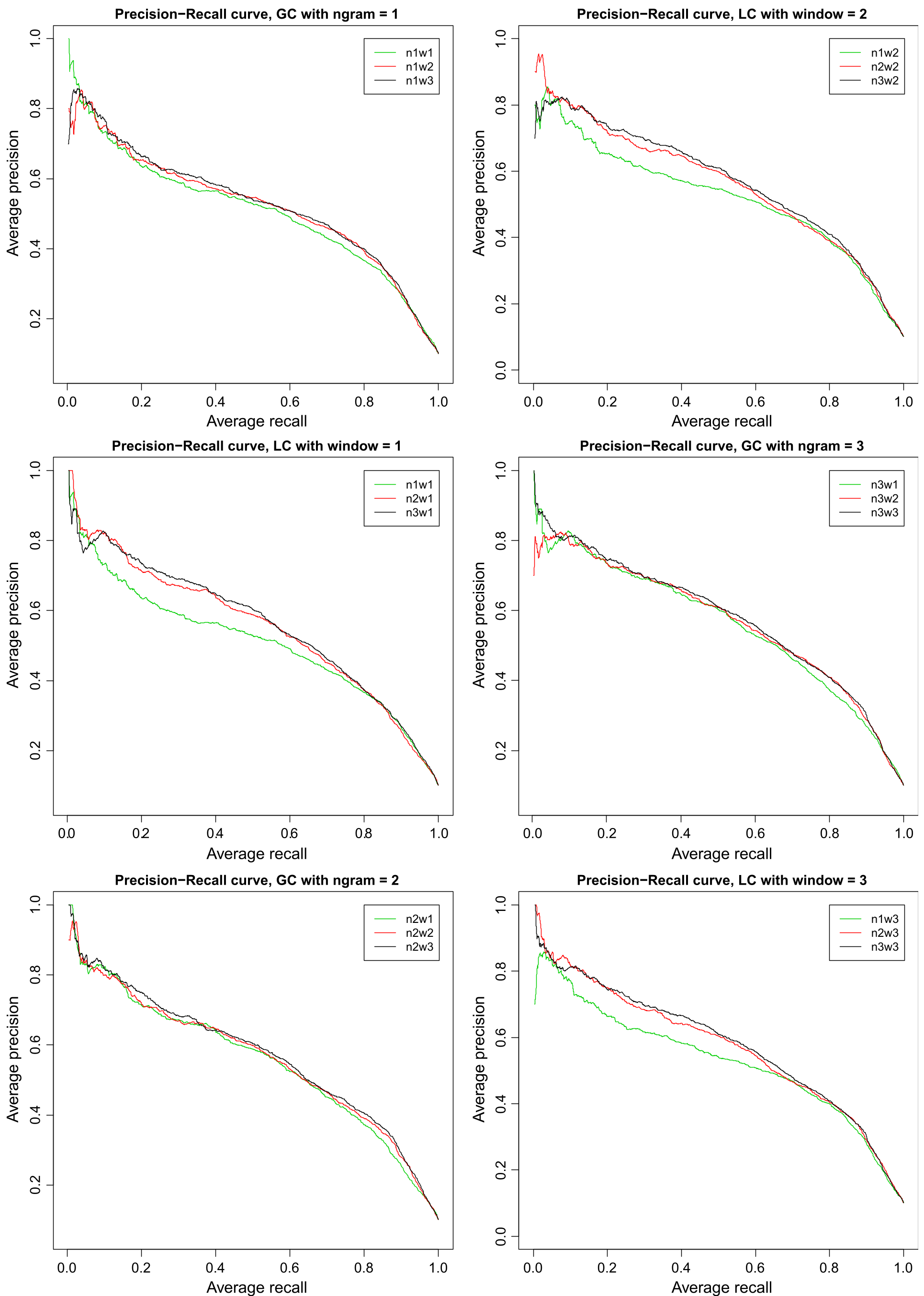 Fig 2: Precision-Recall curves showing the superiority of higher n-gram configurations.
Critical Insight: The "Imbalance" Reality Check
A fascinating part of this research is the Balancing Experiment. In the real world, 90% of drug pairs mentioned in a sentence don't interact. Usually, ML models struggle with such skewed data. However, the authors found that undersampling (making the data 50/50 positive/negative) actually hurt performance. The model needs to see the "noise" to learn how to ignore it. This serves as a vital lesson for practitioners: "Cleaning" your data to be balanced can sometimes strip away the context the model needs to achieve high precision.
Hard Lessons: Why the System Still Fails
While a 60% F-score is a massive step up, the error analysis reveals the "Final Bosses" of Medical NLP:
- Coordinate Structures: Lists of drugs often trick the model into seeing interactions where there are none.
- Negation: Sentences like "Drug A did NOT affect Drug B" are still frequently misclassified as positive interactions.
- Long-Distance Dependencies: When a DDI is described across massive, multi-clause sentences, shallow kernels lose the thread.
Conclusion and Future Outlook
Segura-Bedmar and her team have successfully moved DDI extraction from an artisanal, rule-based craft to a scalable, machine-learning science. The next frontier? Semantic Kernels. By integrating UMLS semantic types (knowing what kind of drug it is) and leveraging deeper structural representations like dependency graphs, we can hope to crack the 80% F-measure barrier.
For now, the DrugDDI Corpus stands as the definitive starting point for anyone looking to make medicine safer through the power of Natural Language Processing.