
Shape Anisotropy: The Hidden Architect of Active Turbulence and Swarming
Shape anisotropy governs organization of active rods: Swarming, turbulence, flocking, and jamming.
This study investigates the self-organization of light-driven, self-propelled "pusher-type" colloidal rods. Using a combination of experiments and Brownian dynamics simulations, the authors map out a comprehensive state diagram (isotropic, swarming, turbulence, flocking, jamming) governed primarily by rod aspect ratio and area fraction.
TL;DR
Why do some bacteria swarm in orderly flocks while others create chaotic, swirling "active turbulence"? By creating synthetic light-driven rods, researchers have discovered that the answer lies in Shape Anisotropy (Aspect Ratio). By simply changing the length-to-width ratio of a rod, the system moves from random motion to coherent swarms, chaotic turbulence, and eventually solid-like jamming.
Background: Beyond Spherical Active Matter
Most early studies on active matter focused on spheres (Active Brownian Particles). However, nature—from E. coli to sperm—is predominantly rod-shaped. Elongated shapes introduce alignment: when two rods collide, they tend to orient parallel to each other. This paper moves the field forward by decoupling the "biological" (sensing/signaling) from the "physical" (hydrodynamics/geometry).
The Problem: The Missing Link in Synthetic Models
Existing synthetic systems often lacked the ability to replicate the "pusher" hydrodynamics of real bacteria. Without the correct fluid flow, researchers couldn't explain why E. coli (intermediate length) generates turbulence, while its elongated mutants (long rods) do not.
Methodology: Janus Rods as a Minimal Model
The authors synthesized TiO2-SiO2 Janus rods. Under green light, a redox reaction at the TiO2 "head" creates chemical gradients, propelling the rod.
Key Insights into Fluid Flow
Using tracer particles, the team confirmed these rods are "Pushers": fluid is pushed out from the head and drawn in at the tail. This simulates the flow field of many common bacteria.
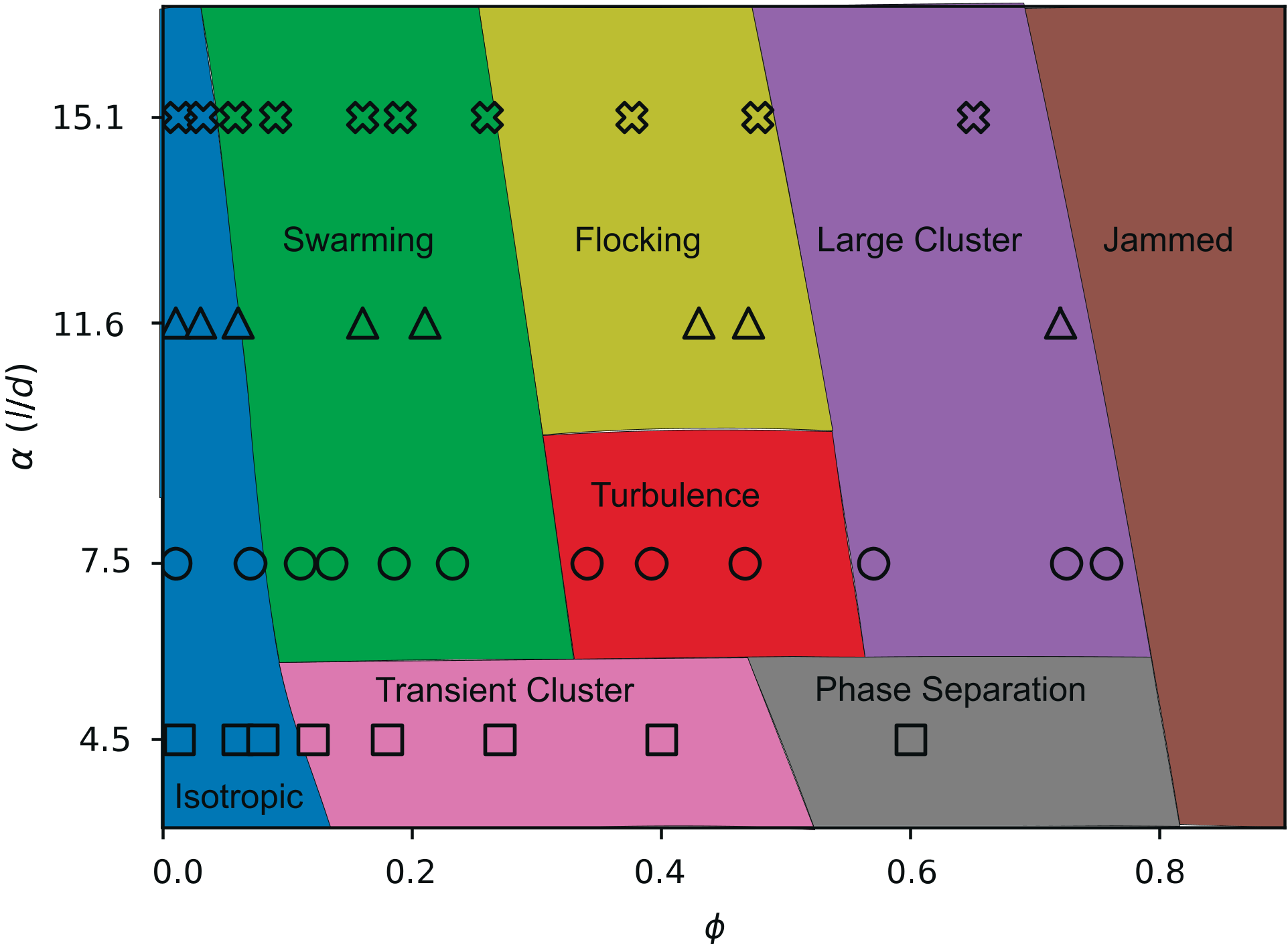 Figure 1: The experimental state diagram showing how area fraction (density) and aspect ratio (shape) dictate collective behavior.
The Core Discovery: Why Turbulence Disappears
The most striking finding is the role of the aspect ratio ():
- Intermediate Rods (): At moderate densities, these rods exhibit Active Turbulence. They form vortices that constantly assemble and break apart. The energy spectrum follows a power law consistent with bacterial "living fluids."
- Long Rods (): As rods get longer, turbulence is suppressed. Instead, the high alignment and steric hindrance force the rods into Flocking—large, stable structures that move together with less chaotic mixing.
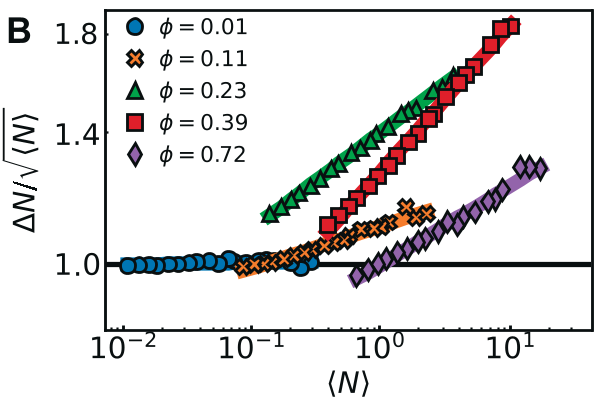 Figure 2: Analysis of the Turbulent phase (α=7.5), showing the formation of counter-rotating vortices and the energy spectrum scaling.
Sterics vs. Hydrodynamics: The Simulation Verdict
To prove that the fluid itself causes the turbulence, the authors ran simulations without hydrodynamics (only steric repulsion).
- Result: The simulations could replicate swarming and jamming, but failed to produce turbulence.
- Conclusion: Turbulence is a purely hydrodynamic phenomenon driven by fluid-mediated torques that "kick" the rods out of perfect alignment, preventing the stable flocking seen in longer rods.
Critical Analysis & Future Outlook
This work provides a physical rationale for biological evolution. Natural swimmers like B. subtilis have aspect ratios optimized (around 5-6) for turbulence, which enhances nutrient mixing.
Limitations: The study is conducted in a quasi-2D environment (sedimented at a surface). Future work should explore if these 3D "pusher" dynamics remain consistent in bulk fluids where gravity is neutralized.
Takeaway
For engineers of microrobotics, this research suggests that if you want a swarm to mix a fluid (for drug delivery or decontamination), use shorter rods. If you want a swarm to transport a cargo in a straight line, use longer, highly anisotropic rods.