
CognIA: Reimagining Financial Advice through Multi-Bot Multiparty Dialogue
Shaping the Experience of a Cognitive Investment Adviser
The paper introduces CognIA, a multi-bot conversational system designed as a cognitive investment adviser to assist novice investors. It leverages a multiparty dialogue architecture where a moderator bot coordinates specialized product agents (e.g., SavingsGuru, CDBGuru) to provide transparent, unbiased financial advice, achieving high user desirability ratings in qualitative evaluations.
TL;DR
Financial decision-making is rarely a solo endeavor; it involves news, friends, and competing advice. This paper presents CognIA, a conversational system that moves beyond the traditional one-to-one chatbot. By using a multiparty dialogue where specialized bots "debate" the merits of different investments (like Savings vs. CDBs) under a neutral moderator, the system builds user trust and simplifies complex financial comparisons for novice investors.
The Trust Deficit in Financial Advising
One of the most striking findings in the authors' initial user studies was the "Bank Manager Paradox." While bank managers are primary information sources, users often view them as biased vendors rather than objective advisors.
From a technical perspective, the industry has historically focused on dyadic interaction—one user talking to one bot. The authors argue this is an unnatural limitation. Human financial decisions are made in social contexts. Existing systems fail because:
- They don't allow for simultaneous comparison of competing products.
- They struggle to overcome cognitive biases like Loss Aversion (per Prospect Theory).
- They lack the transparency needed to prove the advice isn't just a sales pitch.
Methodology: Designing for Behavioral Economics
The researchers didn't just build a bot; they followed a rigorous four-stage design process:
- Exploratory Interviews: Understanding that "conservative" Brazilian investors usually default to low-yield savings due to a lack of time and technical jargon.
- Concept Testing: Comparing "User Exploration" (search-based), "Expert Knowledge" (human-centric), and "Cognitive Adviser" (AI-led).
- Wizard of Oz (WoZ): Using a human operator to simulate the bot to capture real user questions and linguistic patterns.
- Prototype Evaluation: Testing the final multi-agent system.
The Hub-and-Spoke Architecture
The final system, CognIA, utilizes the Sabia platform to manage multiple identities in a single chat room.
- Cognia (Moderator): The neutral gatekeeper that triggers the conversation and invites specialists.
- SavingsGuru & CDBGuru: Domain-specific agents that provide simulations and advocate for their respective products.
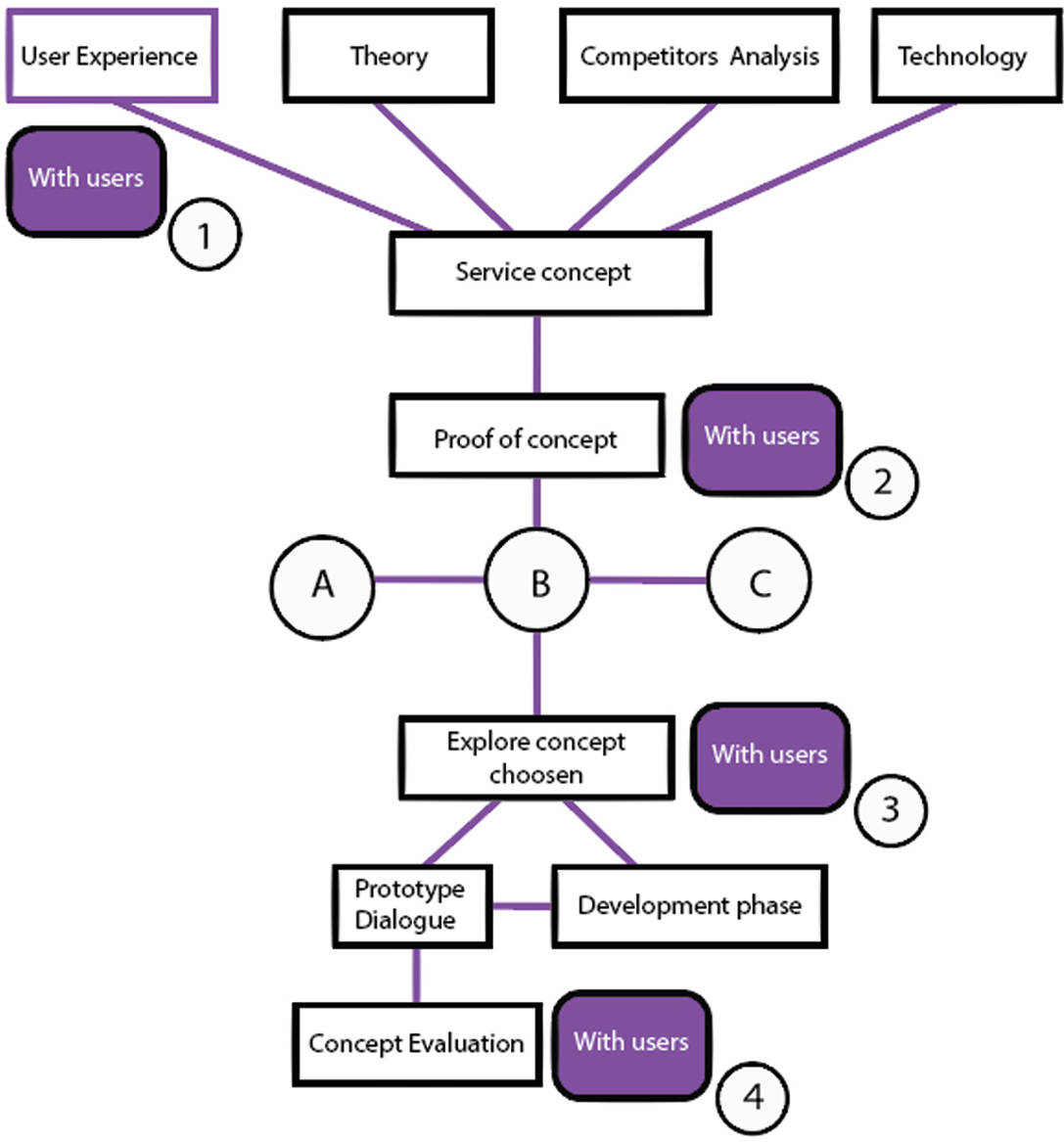 Fig 1: The multi-stage design process combining user experience research with technology constraints.
Experiments and Results: The Value of Separation
Through the WoZ and prototype studies, the team identified 125 unique financial queries, categorized into definitions, liquidity, and risk.
The most significant finding from the final evaluation (using the Product Reaction Card method) was that multi-agent separation actually improved cognitive organization.
- Visual Distinctions: Different colors and icons for different "Gurus" helped users track context without being overwhelmed.
- Trust through Competition: By seeing two different bots present simulations side-by-side, users felt they were getting a fairer view of the market than a single recommendation would provide.
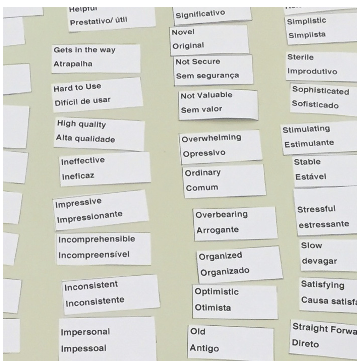 Fig 2: Adjectives chosen by users to describe CognIA, showing a strong lean toward "Helpful" and "Easy to Use."
Critical Insight: Beyond the Dyad
The core philosophy of this paper is that conversation is a social protocol. By treating bots as distinct entities in a multiparty chat, we can mirror the way people actually consult "experts" in the real world.
Limitations and Future Outlook
While the prototype was successful, the authors acknowledge several hurdles:
- Turn-taking Complexity: Managing who speaks when in a chat with 3+ participants is technically difficult.
- Context Tracking: Ensuring the "Savings bot" knows what the "CDB bot" just said to avoid repetitive information.
- Social Integration: The ultimate goal is a "mixed-reality" chat where humans (spouses/real advisers) and bots collaborate in the same thread.
In a world currently obsessed with monolithic LLMs, this work serves as a vital reminder: multi-agent orchestration might be the key to solving the trust and transparency issues that still plague AI today.
Takeaway for Researchers
If you are building a recommender system, don't just build a "chatbot." Build a forum where the AI can present multiple perspectives. Transparency isn't just about showing your work; it's about showing the alternatives.