
LSN Privacy Decoded: A Large-Scale Empirical Analysis of Location Sharing
8233_Sharing location in online social networks.
This paper provides the first large-scale empirical study of Location-based Social Networks (LSNs), examining platforms like Brightkite, Foursquare, and Gowalla. It introduces a novel metric, Proportion of Protected Updates (PoPU), to quantify user privacy consciousness based on a 21-month data trace of 4.4 million updates.
TL;DR
As the physical and digital worlds merged through Location-based Social Networks (LSNs), the risk of "location leakage" became a primary concern. This seminal study analyzes 21 months of data from Brightkite to reveal how age, gender, and even your friends' habits dictate how much of your life you keep private.
The Evolution of the "Check-in"
Long before "sharing your location" was a standard feature on every app, LSNs like Dodgeball, Brightkite, and Foursquare paved the way. These platforms introduced a unique social primitive: the "Check-in." Unlike traditional social networks (OSNs) that focus on content, LSNs bridge the gap between cyber-space and physical reality.
However, the authors point out a critical tension: while sharing location enables serendipity and social "molecularization," it also opens the door to stalking and burglary. The core problem was a lack of empirical data on how users actually used these privacy settings in the wild.
Methodology: Measuring the "Unseen"
To quantify privacy, the authors introduced the Proportion of Protected Updates (PoPU).
- The Logic: If an API shows 10 public updates for a user, but their profile says they’ve made 100 updates, their PoPU is 0.9.
- The Insight: A higher PoPU indicates a more "privacy-conscious" user who actively chooses to hide their whereabouts from the general public.
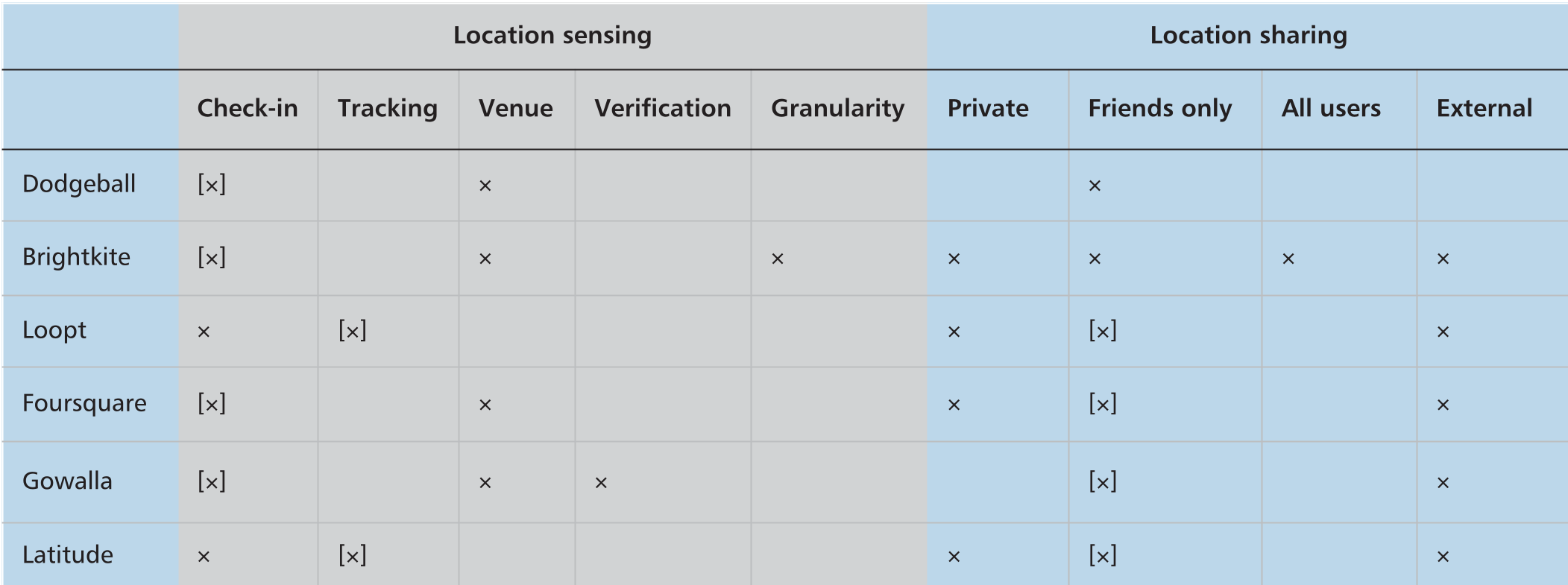 Table 1: A comparative look at how different LSNs handled sensing and sharing in the late 2000s.
Key Findings: Who Hides Their Location?
The study’s findings challenge some assumptions while confirming others:
- The Gender Gap: Female users consistently hidden a higher percentage of their updates compared to males.
- The Maturity Curve: Privacy consciousness (PoPU) steadily increases from teenagers to middle-aged users. Interestingly, users who forge or hide their age in their profiles exhibit the highest privacy protection across the board.
- The Mobility Paradox: As users visit more unique locations (becoming "highly mobile"), their PoPU tends to increase. Frequent travelers seem more aware of the risks of publicizing their trajectory.
- Geographic Culturalism: Users in Asia showed significantly higher PoPU values than those in the US or Europe, suggesting a cultural dimension to digital privacy.
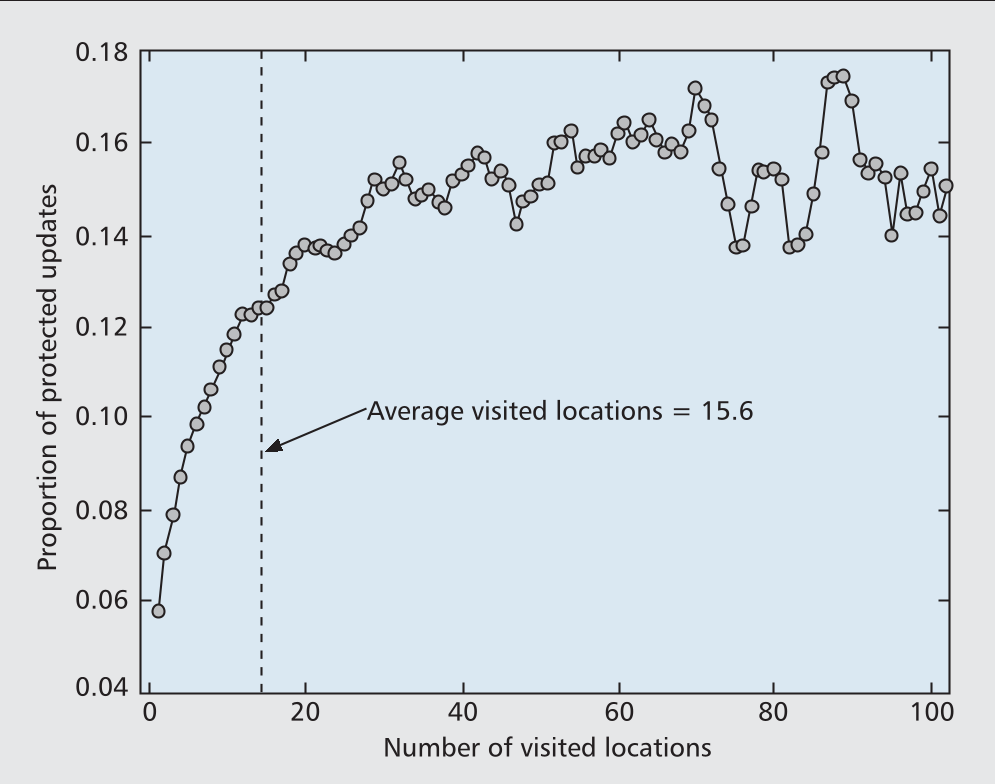 Figure 3: iPhone and mobile app users were found to be more privacy-conscious than web-based users, likely due to the "live" nature of mobile sharing.
Social Contagion: Privacy is Peer-Driven
One of the most striking insights is the correlation between friends. The researchers found that users don't make privacy decisions in a vacuum; if your friends have high PoPU, you are statistically likely to have high PoPU as well. This suggests that privacy is a social norm that spreads through network ties.
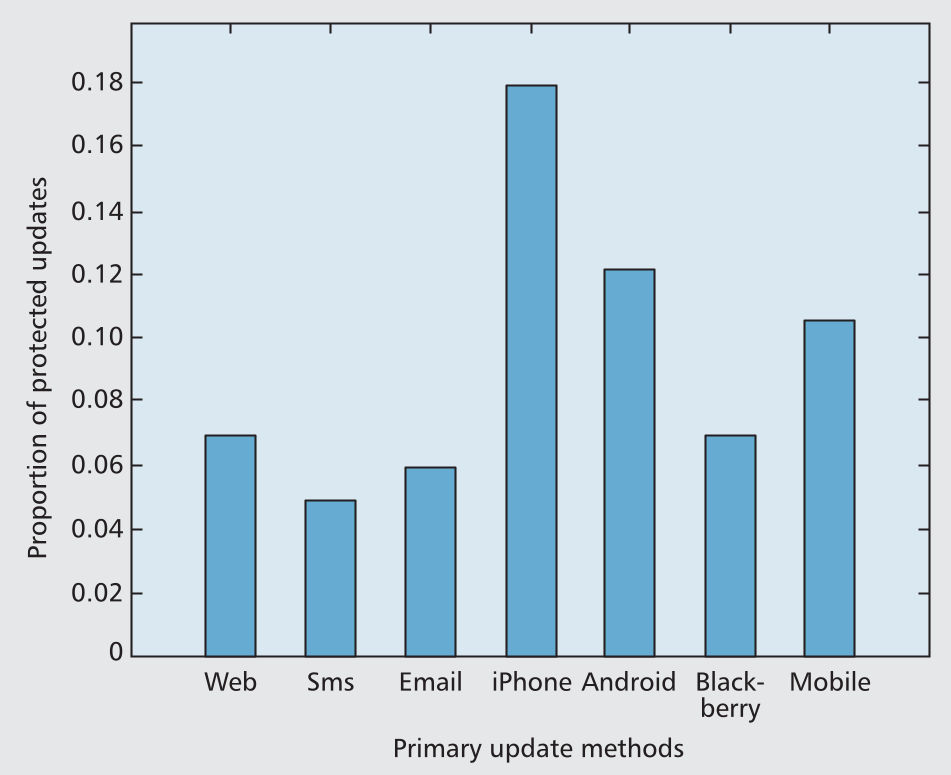 Figure 5: The clear upward trend shows that a user’s privacy behavior is mirrored by their social circle.
Critical Analysis & Conclusion
While this study was pioneering, it reflects a specific era of LSNs dominated by manual check-ins. Today, "passive tracking" (like Google Maps Timeline) is the norm, which often makes privacy settings more opaque to the average user.
Takeaway: This work proves that privacy is not just a personal setting—it is a demographic and social phenomenon. For future LSN design, "one-size-fits-all" privacy defaults are insufficient. Instead, localized and social-aware privacy recommendations could better serve a global and diverse user base.