
Breaking the 140-Character Barrier: How News Goes Viral on Twitter
Sharing News Articles Using 140 Characters: A Diffusion Analysis on Twitter
This study investigates the diffusion patterns of news articles from 12 major media outlets (e.g., BBC, NYTimes, Mashable) on Twitter. By integrating network and temporal analysis, the authors model how 140-character microblogs facilitate news consumption, identifying a transition of Twitter from a personal status platform to a vital newswire.
TL;DR
Is it possible to condense a global crisis or a complex financial report into 140 characters and still reach millions? This paper analyzes news diffusion from 12 elite agencies (including BBC, Reuters, and Mashable) to reveal that Twitter has evolved into a sophisticated newswire. By tracking URL cascades, the research identifies two distinct "viral" paths: the Instant Burst (high immediate volume) and the Deep Cascade (long-term survival through multiple layers of retweets).
The Core Challenge: Beyond Simple Retweets
Early research on social networks treated information spread like a virus (the SIR model) or a marketing fad. However, news is different. A tweet from the NYTimes doesn't just spread because it's popular; it spreads because of the credibility of the source and the structure of the network it inhabits. The authors recognized that we lacked a granular understanding of why some news agencies dominate the conversation while others flicker out in minutes.
Methodology: Mapping the News Ego
The researchers didn't just count retweets. They built User-User Directed Cascade Networks.
- Nodes: Twitter users.
- Edges: A retweet or reply.
- Weight: The frequency of interaction.
They further refined this into Seeding Node Ego Networks, focusing specifically on the primary accounts of news agencies (e.g., @bbcnews). This allowed them to see "levels" of diffusion: Level 1 is a direct retweet of the source, while Level 10+ represents a story that has taken on a life of its own, moving far beyond the original audience.
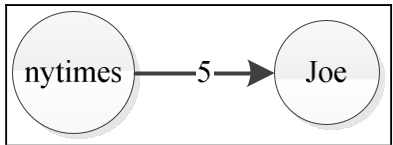 Figure 1: The fundamental building block of the news cascade.
Key Findings: The "BBC Effect" vs. The "Mashable Burst"
The study revealed a fascinating contrast in how different media types "win" on Twitter:
1. The Power of "Information Boosters"
BBC emerged as the undisputed heavyweight. How? By using co-seeding nodes. The main @bbcnews account is supported by @bbcbreaking and @bbcworld. These accounts retweet each other, acting as "information boosters" that push the news into different network clusters, resulting in a staggering network diameter of 34 levels.
2. Instant Gratification vs. Hard News Longevity
- Tech News (Mashable, Arstechnica): These sources see a massive spike in the first 2 hours. They have the highest "Level 1" engagement—people see it and retweet it immediately. However, their stories often "max out" and disappear after 48 hours.
- Legacy News (NYTimes, Washington Post): These show a slower initial burn but involve deep "diffusion ladders." Individual users act as mini-hubs, re-sharing the news days after the initial post.
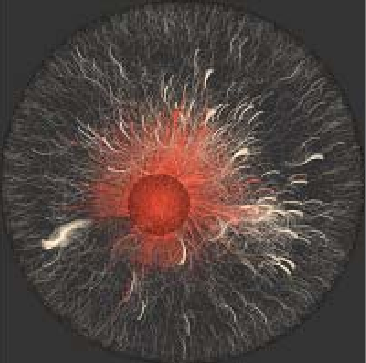 Figure 2: Comparison of NYTimes and Washington Post networks, showing the non-connected outer rings and the dense central cascades.
Survival of the Fittest
The "lifespan" of an article was found to be surprisingly resilient for top-tier agencies. While the average half-life of a general tweet is only 5.5 hours, nearly 45% of news articles survived beyond 18 hours.
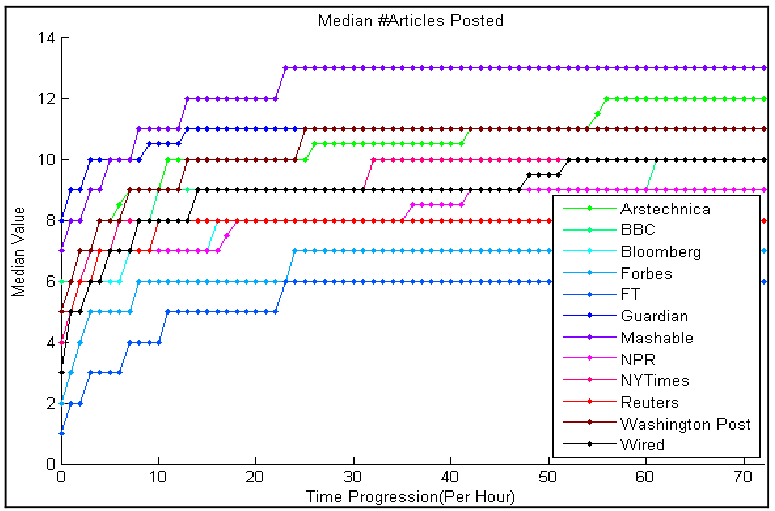 Figure 3: Cumulative growth of tweets over 72 hours, highlighting the steady influx for Arstechnica and Wired even after 50 hours.
Critical Insight: What Defines Success?
The authors pose a provocative question: Is success a "burst" of 1st-level retweets (instant reach) or a "deep cascade" (long-term discussion)?
- For Financial agencies (Bloomberg, FT), the edge/node ratio is low, indicating that news is often posted by individual users rather than through a central viral chain.
- For Global News, success is a high network diameter—the further the news travels away from the source, the more "awareness" it has truly created.
Conclusion & Future Look
The study proves that 140 characters are more than enough to spark a global cascade. However, the source of the news dictates the shape of the network. As social media continues to fragment, the ability of agencies like the BBC to use multiple "seeding nodes" provides a blueprint for any organization looking to maintain relevance in an increasingly noisy digital ecosystem.