
Shortest Path Discovery in the Multi-layered Social Network: Beyond Single-Layer Abstractions
Shortest Path Discovery in the Multi-layered Social Network
This paper introduces methodologies for discovering shortest paths in Multi-layered Social Networks (MSN), where nodes are connected via multiple types of relationships (layers). It proposes two algorithmic frameworks: Dijkstra Algorithm with Pre-processing (DAP) and Multi-layered Dijkstra Algorithm (MDA), achieving effective path discovery in complex multi-relational graphs like DBLP.
TL;DR
In modern social systems, relationships are rarely binary or single-dimensional. We use email, LinkedIn, and Twitter simultaneously, creating a "Multi-layered Social Network" (MSN). This paper addresses the fundamental challenge of finding the shortest path across these layers. By introducing parameterized "Multi-layered Edges" (ME) and modified Dijkstra algorithms, the authors provide a way to navigate complex relational data like the DBLP bibliography with precision and efficiency.
Problem & Motivation: The Flattening Trap
Most Social Network Analysis (SNA) works by "flattening" diverse interactions—such as co-authorship, citations, and mentions—into a single edge. This approach ignores the intensity and diversity of ties.
The researchers identified a critical gap: standard algorithms cannot handle the "multitude of relations" in a parameterized way. If you want to find a path that only considers strong connections (e.g., people who interact in at least three different ways), traditional single-layer graphs fail. The challenge is to define a "shortest path" that respects both the weight of individual layers and the density of the multi-layered connection.
Methodology: Aggregating Complexity
The core innovation lies in the Multi-layered Edge (ME). The authors move away from simple connectivity to a "strangeness" or distance-based metric.
1. Distance Transformation
Social ties are usually expressed as positive weights (higher is better). To find the shortest path, these must be converted to "cost" or distance: This formula normalizes the activity across all layers into a single distance metric.
2. The Threshold Logic
To filter noise, the authors introduce two parameters:
- (Alpha): The minimum number of layers required to form a valid multi-layered edge.
- (Beta): The maximum allowable distance (or minimum relationship strength).
3. Algorithmic Approaches
The paper proposes two ways to calculate paths:
- DAP (Dijkstra with Pre-processing): Pre-calculates all multi-layered edges and runs a standard search.
- MDA (Multi-layered Dijkstra): A more dynamic approach that evaluates the and constraints during the graph traversal, offering higher flexibility for "on the fly" analysis.
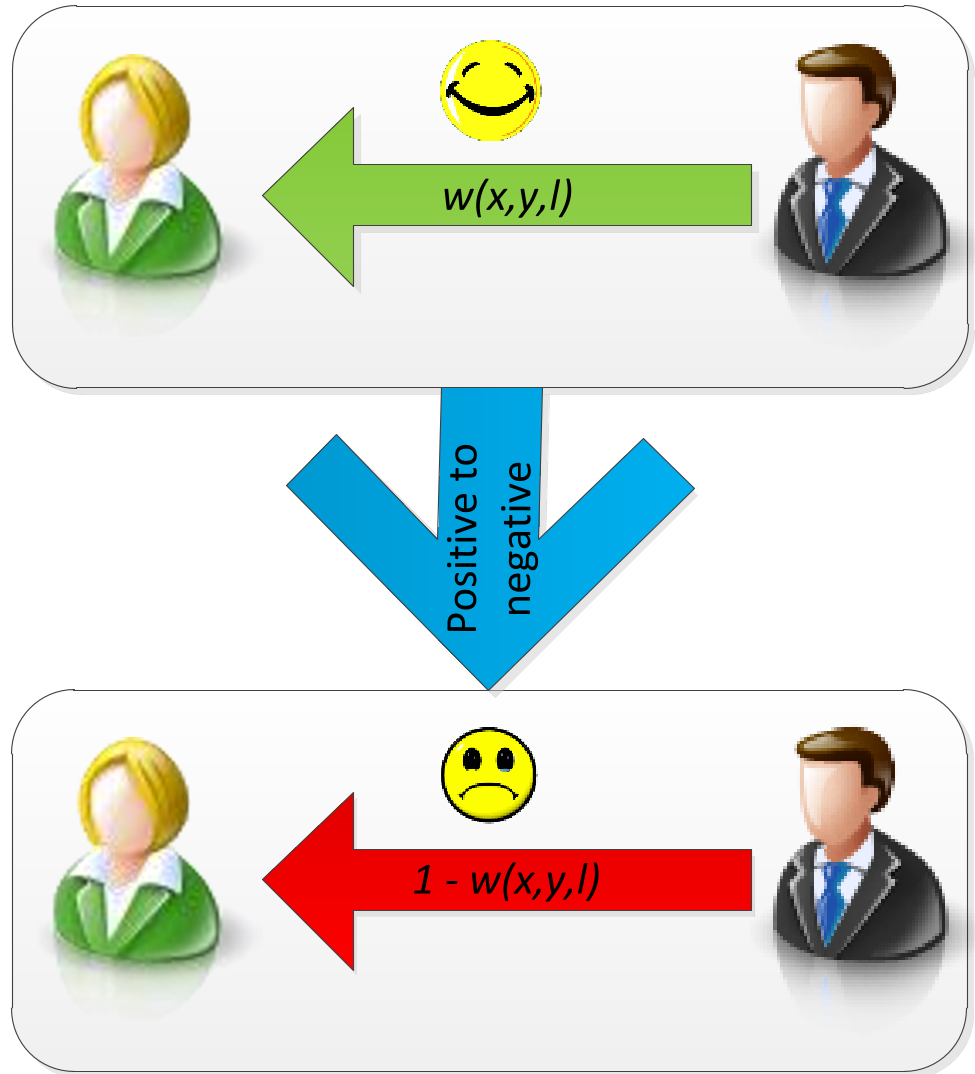 Figure 1: Conceptual view of a 3-layered network where nodes interact through different relationship types (l1, l2, l3).
Experiments & Results
The authors tested their methods on the DBLP dataset, a massive repo of computer science bibliographies.
The Impact of and
The results showed that these parameters are not just filters; they fundamentally change the network's topology.
- Path Survival: As increased from 1 to 3 (requiring connections in more layers), the number of reachable nodes dropped drastically.
- Path Quality: Interestingly, increasing doesn't just shorten paths; it often forces the algorithm to find "stronger" paths, even if they are physically longer in terms of hops (handshakes).
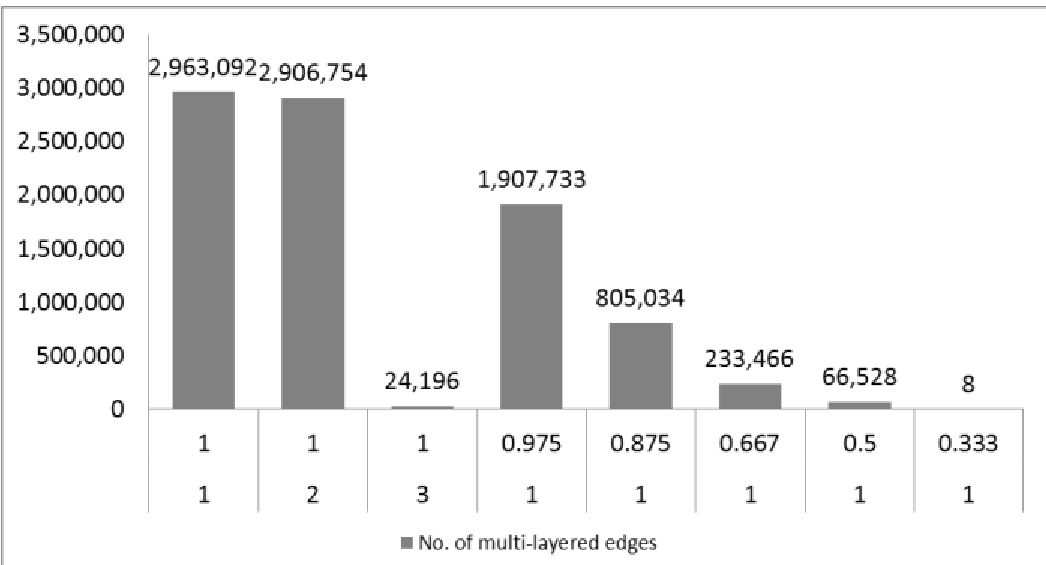 Figure 2: The sensitivity of Multi-layered Edges to and values.
| Start Node | No. of Routes | Avg. Path Length | ||
|---|---|---|---|---|
| 238369 | 1 | 1.0 | 361,440 | 4.819 |
| 238369 | 3 | 1.0 | 3,811 | 8.108 |
Critical Analysis & Conclusion
This paper succeeds in providing a robust mathematical and algorithmic framework for MSN. However, there are inherent limitations:
- Linear Weighting: The distance formula treats all layers as equally important. In reality, a "Family" tie might be worth ten "LinkedIn" ties.
- Threshold Sensitivity: As seen in the DBLP data, setting leads to a total collapse of connectivity, suggesting that the "sweet spot" for these parameters is highly dataset-dependent.
Future Outlook: This work paves the way for more sophisticated SNA metrics. Instead of just "Who is the most central person?", we can now ask "Who is the most central person across professional, academic, and social layers simultaneously?" This is a vital step toward true multi-dimensional organizational and social modeling.