
Signature Recognition: Man vs. Machine in the Age of Crowdsourcing
Signature Recognition: Human Performance Analysis vs. Automatic System and Feature Extraction via Crowdsourcing
This paper evaluates handwritten signature recognition performance by comparing non-expert humans (via Amazon Mechanical Turk crowdsourcing) against automatic systems using probabilistic and neural network classifiers. The study identifies key discriminative features used by humans to establish a baseline for human-assisted biometric verification.
TL;DR
Can a "crowd" of non-experts verify signatures as accurately as a specialized algorithm? This research utilizes 500 Amazon Mechanical Turk workers to benchmark human performance against automated systems. While machines are better at spotting forgeries (lower FAR), the "wisdom of the crowd" proves superior at recognizing genuine signatures (lower FRR), offering a roadmap for hybrid, human-assisted biometric systems.
Contextual Positioning
Biometric verification—specifically handwritten signatures—remains a cornerstone of legal and financial security. However, automatic systems often fail due to the high intra-variability of human writing. This paper acts as a benchmarking study, placing human perception alongside automated classifiers to identify which "discriminative features" humans process that machines might overlook.
The Problem: The Rigidity of Automation
Current Automatic Signature Verification (ASV) systems rely heavily on mathematical descriptors of strokes and pressure. They often suffer from:
- High FRR (False Rejection Rate): Legitimate signatures are rejected due to minor natural variations (e.g., signed while standing or in a hurry).
- Lack of Context: Machines struggle with "soft biometrics" that humans intuitively understand.
The authors argue that by studying how non-expert humans (like bank tellers or notaries) make these decisions, we can discover more robust features for automated models.
Methodology: Harnessing the Crowd
The researchers deployed a manual recognition system via Amazon Mechanical Turk (MTurk).
1. Experimental Protocol
- Data: BiosecurID database for the manual system; SVC2004 for the automatic baseline.
- Task: 500 workers viewed 4 training signatures and rated 1 test signature on a similarity scale of 1-10.
- Aggregration: The "Combined" system used a mean-value calculation of worker responses to stabilize performance.
2. The Automatic Baseline
The study compared this against a dual-classifier machine:
- Global Features: Evaluated through a Probabilistic Model.
- Local Features: Processed by a Back Propagation Neural Network (BPNN).
- Decision: A logical "AND" operation between both.
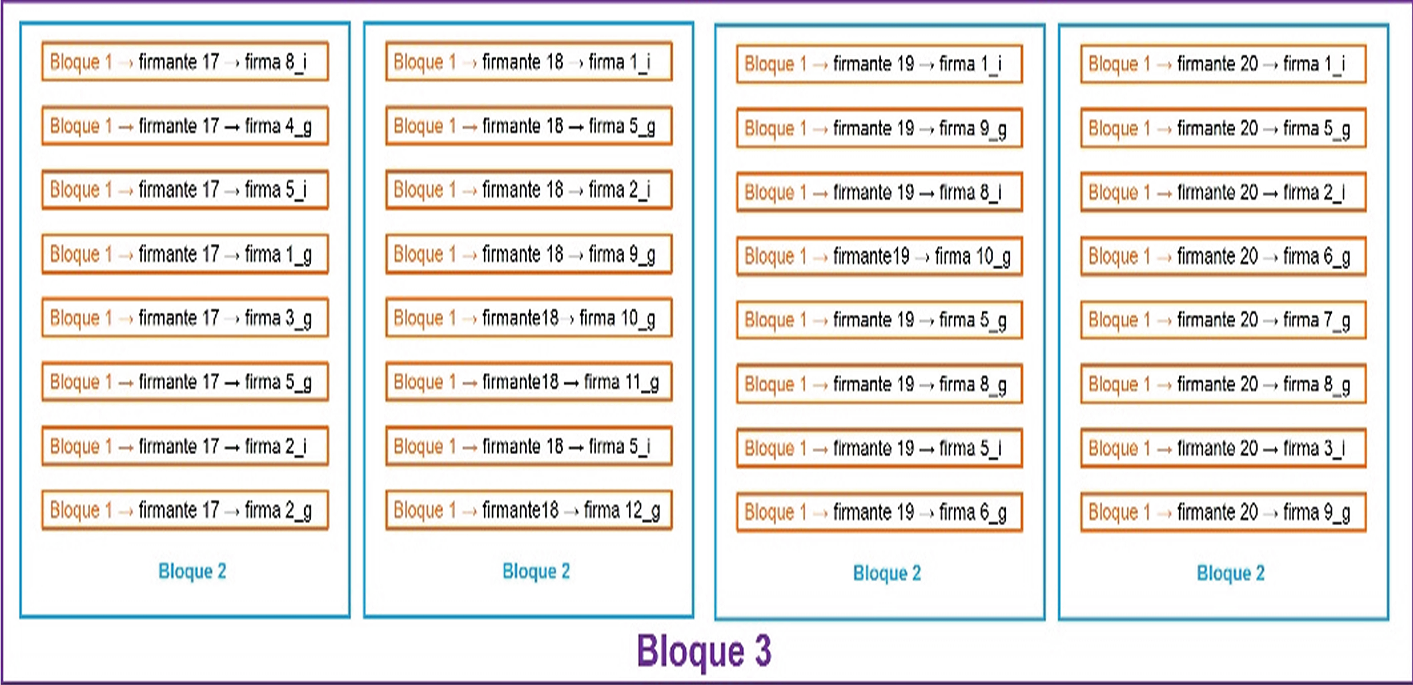 Figure 1: The HIT (Human Intelligence Task) interface showing training signatures and the test specimen.
Experimental Results & Performance Analysis
The most striking finding was the power of aggregation. While a single human is mediocre at signature verification, combining the inputs of ~100 workers yields professional-grade results.
| Method | FRR (%) | FAR (%) |
|---|---|---|
| Automatic Combined | 3% | 5% |
| Manual Crowdsourcing (Single) | 32% | 38% |
| Manual Combined (Crowd) | 7% | 24% |
Key Insight: The Manual Combined system achieved a significantly lower FRR (7%) than the Automatic Probabilistic system (27%). This means humans are much less likely to annoy a genuine customer by rejecting their real signature. However, humans are still "too kind" to impostors, with a much higher FAR (24%) compared to the machine's 5%.
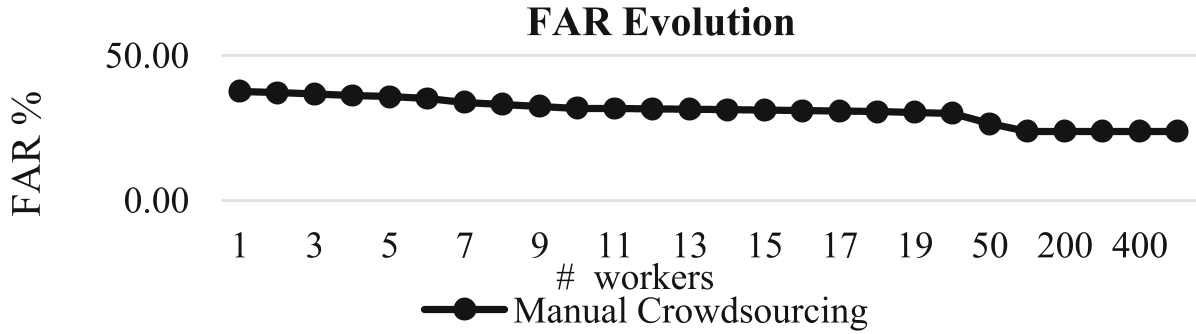 Figure 2: Evolution of FAR/FRR as more worker responses are combined, showing stabilization after 100 workers.
Feature Extraction: What do humans look at?
The study identified 7 Discriminative Features that workers consistently used to judge signatures:
- Letter Style: The most used feature (used by over 90% of workers).
- Dimension/Area: The spatial footprint.
- Initial/Final Points: Pressure and positioning of start/stop strokes.
- Legibility: Existence of defined characters.
- Perimeter: The contour of the signature.
- Connections: Rounded vs. sharp transitions between characters.
- Proportionality: Height-to-width ratios.
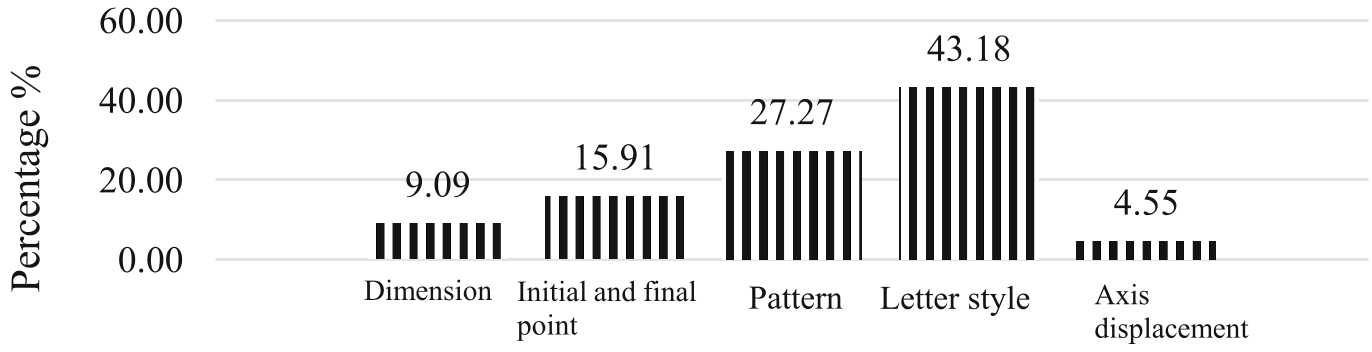 Figure 3: Distribution of features used by MTurk workers in their decision-making process.
Critical Insight & Conclusion
This paper proves that while humans are not "secure" individually (high FAR), their collective perception of "Letter Style" and "Proportionality" provides a high level of sensitivity to genuine signatures that machines currently lack.
Future Outlook: The path forward is not replacing humans with AI, but rather Semiautomatic Systems. By using an AI to filter out obvious forgeries (low FAR) and using human-inspired features or crowdsourced verification for high-uncertainty samples, we can create a system that is both secure and user-friendly.
Limitations
- Static vs Dynamic: The study primarily used static images. Dynamic data (speed, tilt, pressure over time) would likely give the automatic system an even larger edge over humans.
- Permissiveness: The high human FAR suggests that without expert training, humans are easily fooled by high-quality traces or mimicry.