
SIMBA: Decoding Social Influence Through the Lens of Semantics
SIMBA: A Semantic-Influence Measurement Based Algorithm for Detecting Influential Diffusion in Social Networks
This paper introduces SIMBA (Semantic-Influence Measurement Based Algorithm), a novel framework for detecting influential nodes and providing location recommendations in social networks. By integrating geospatial coordinates with semantic annotations via a dedicated ontological model, SIMBA identifies "influential spreaders" more accurately than traditional structural-only methods.
TL;DR
SIMBA is a breakthrough algorithm that shifts the focus of influence detection from "who you know" to "what your interactions mean." By combining geospatial data with a semantic ontological model, it improves location recommendation accuracy by up to 40% compared to traditional structural-based algorithms.
Context: Beyond the Graph Topology
For a long time, the scientific community defined "influence" in social networks through graph theory. If you had the most connections (Degree Centrality) or sat at the intersection of many paths (Betweenness Centrality), you were deemed the "influential spreader."
However, this structural view is blind to context. A user might have thousands of followers but zero influence on where those followers choose to eat or travel. The authors of SIMBA argue that true influence is born at the intersection of Social Trust and Semantic Alignment.
Methodology: The SIMBA Framework
The core innovation of SIMBA lies in its ability to transform raw latitude/longitude points into meaningful semantic entities (e.g., "Italian Restaurant" or "Park") and then use these to measure the strength of a relationship.
1. The Trust Engine
Before looking at semantics, SIMBA establishes a baseline of trust. It uses the Pearson Correlation Coefficient (PCC) to calculate the weight of a relationship based on shared user attributes. This leads to two critical metrics:
- EdgeTrust: How much user A trusts user B relative to others.
- NodeTrust: The aggregate trust a user gains from the entire network.
2. The Semantic Geolocation Finding Module
Raw coordinates are noise without context. SIMBA uses a SOAP-based geolocation function to query geoservers, translating coordinates into structured data (places, categories, countries).
3. The Ontological Bridge
The researchers developed a dedicated ontology using Description Logics (DL). This provides a formal schema that allows the system to understand that a "Check-in" isn't just a data point, but an interaction between a "Friend" and a "Point of Interest (POI)" with specific "Semantic Info."
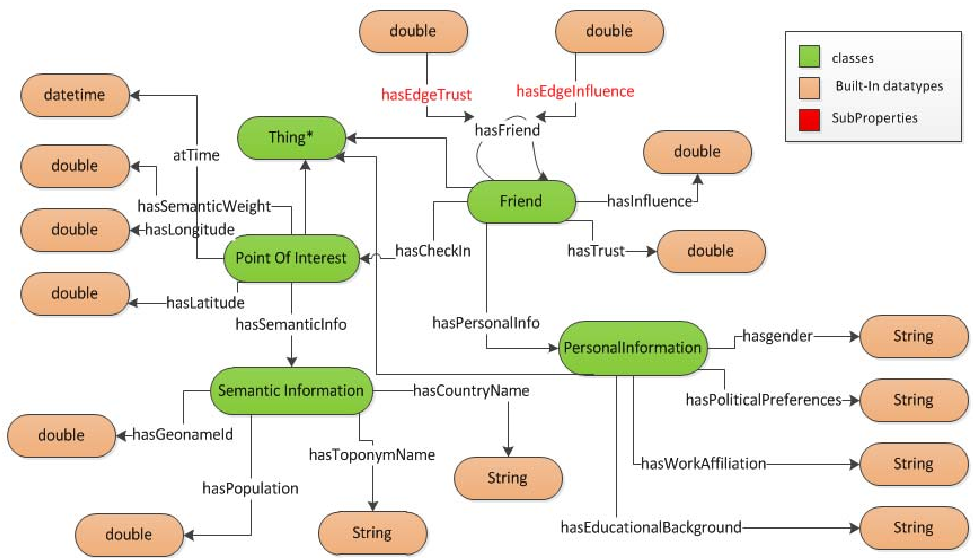 Fig 1: The proposed ontological model representing the integration of semantic information.
4. Semantic Influence Calculation
Finally, the algorithm calculates the Semantic Recommendation Rate (SRecRate). This measures how often two friends visit semantically similar places. If User A and User B both frequent "Tech Hubs," their mutual influence score is boosted significantly.
Experimental Results: Semantics Matter
The authors tested SIMBA on two legendary LBSN datasets: Brightkite and Weeplaces.
Key Findings:
- Accuracy Boost: SIMBA outperformed structural-only algorithms by 30-40% in predicting where a user might go next.
- Topology vs. Context: Interestingly, nodes with the highest global influence (the "celebrities" of the graph) were often less effective at directing specific recommendations than direct friends with high semantic similarity.
- Density Advantage: The algorithm performed better on Weeplaces (70% accuracy) than Brightkite (60%), suggesting that as social networks become more "dense," semantic filtering becomes even more vital to cut through the noise.
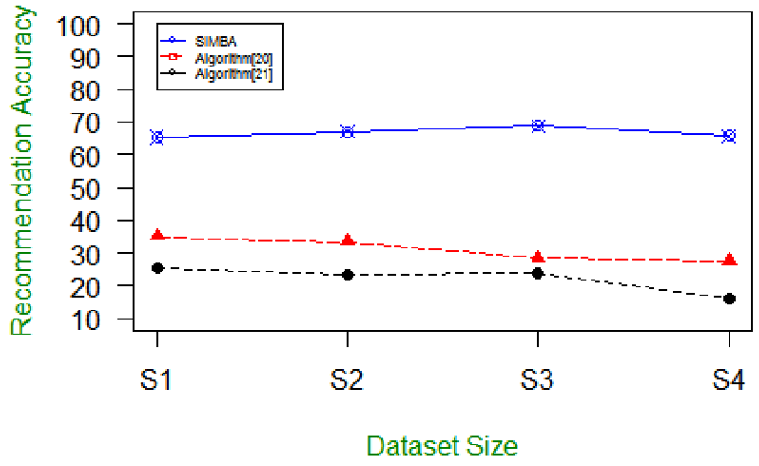 Fig 2: Recommendation accuracy comparison highlighting SIMBA's superiority over structural methods.
Critical Insight & Conclusion
SIMBA proves that the "semantics underlying the data" are not just secondary features—they are the primary drivers of human behavior in social networks.
Takeaway for the Industry: In the era of LLMs and vector databases, SIMBA’s approach of using ontologies to ground geospatial data is a precursor to modern "Context-Aware" AI. If you want to predict an individual's next move, don't just look at their "Friend List"—look at the semantic DNA of their check-ins.
Future Directions: While SIMBA is powerful, it currently focuses on direct connections. The next frontier is extending this semantic influence to "Friend of a Friend" (indirect) networks and implementing a distributed version to handle the petabytes of data generated by modern social platforms.