
SimON-Feedback: Mastering the Complexity of Social Simulation through Iterative Ensembles
SimON-Feedback: An Iterative Algorithm for Performance Tuning in Online Social Simulation
The paper introduces SimON-Feedback, an iterative ensemble algorithm designed to simulate online social networks (OSNs) like Reddit. By combining multiple independent social behavioral models and optimizing their integration via a feedback loop of 21 social performance metrics, it achieves a 16% improvement in simulation accuracy for cryptocurrency communities.
TL;DR
Simulating how millions of users interact on platforms like Reddit is a daunting task because no single mathematical model can capture the full spectrum of human behavior. SimON-Feedback introduces an iterative ensemble framework that "interrogates" multiple social models, assigns them weights based on their strengths in specific social aspects (like post frequency or community structure), and refines the overall simulation through a rigorous feedback loop. Tested on Reddit data, it shows significant performance gains in active communities like Cryptocurrency.
The Problem: The "No Free Lunch" of Social Modeling
In the digital age, understanding information flow—from cyber threats to market-moving crypto news—is critical. However, social researchers face a paradox: individual models are often specialized "black boxes." A model great at predicting when someone posts might be terrible at predicting who joins a conversation.
The No Free Lunch (NFL) theorem reminds us that there is no universal algorithm. Most social simulations fail because they cannot gracefully combine these specialized "experts" into a cohesive whole, often leading to biased or incomplete representations of social dynamics.
Methodology: The SimON-Feedback Loop
SimON-Feedback operates on a simple but powerful intuition: Let the errors guide the integration. Instead of forcing models to compete, it uses an iterative process to find the optimal "blend."
1. The Four Simulation Aspects
The algorithm focuses on four "Ground Truth" dimensions:
- Event Count (EC): How many posts/comments occur.
- User Participation (UP): Who is active.
- Event Type (ET): Is it a new post or just a comment?
- Time Distribution (TD): The 24-hour rhythm of the community.
2. The Feedback Mechanism
The core innovation is the Relative Strength Index (RSI) derived through a "leave-one-out" strategy. By removing one model and seeing how much the simulation error (calculated via 21 distinct metrics) increases, the system quantifies the "importance" of that model.
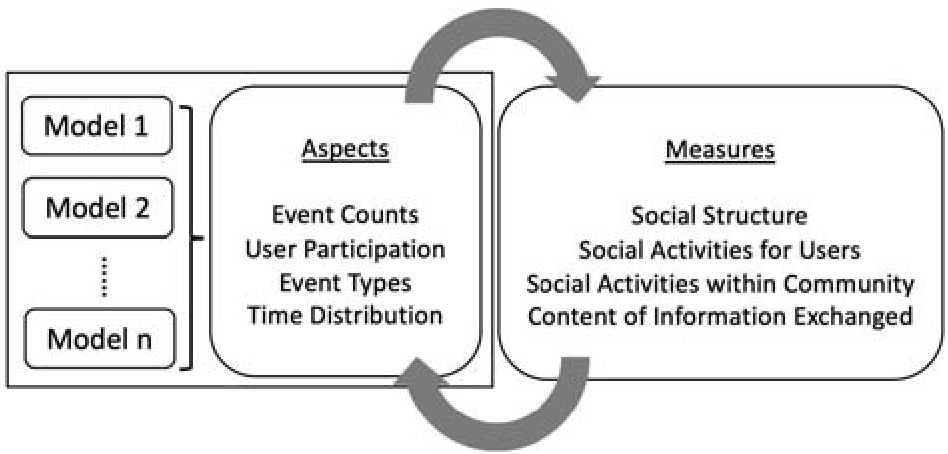
Fig 1: The SimON-Feedback workflow showing the iterative cycle between ensemble generation and error-based re-calibration.
Experiments & Real-World Results
The authors validated the framework using 32 months of Reddit data across three distinct domains: Cryptocurrency, Cyber Threats, and Software Vulnerabilities (CVE).
Key Performance Wins
- Cryptocurrency: This was the most successful domain. The overall error dropped by 16%, with a massive 31% improvement in content-level activity modeling.
- Cyber Threats: Showed a steady improvement of 6%, proving that even in complex security discussions, the ensemble approach outperforms static models.
The "CVE" Challenge: Lessons from Sparse Data
Interestingly, the performance deteriorated in the CVE domain. The authors noted that CVE discussions on Reddit are sparse and experienced a sudden behavioral shift between the training and testing periods (more posts, fewer comments). This highlights a critical limitation: Ensemble models still rely on the consistency of the underlying social "physics."

Fig 2: Improvement percentages across different domains. Note the contrast between Crypto's success and CVE's deterioration.
Critical Insight & Conclusion
The true value of SimON-Feedback isn't just the 16% accuracy boost; it's the transparency it provides. By mapping 21 social metrics (like Gini coefficients and modularity) back to specific simulation aspects, it allows researchers to see which models are helping and where they fail.
Takeaway: For high-velocity social networks, iterative ensembles are the path forward. However, for "quiet" or evolving communities (like CVE), researchers must account for behavioral shifts that no amount of ensemble weight-tuning can fix alone. Future work likely lies in making these weights adaptive to real-time data drifts.