
Collective Intelligence in the Classroom: Optimizing Team Formation via Bayesian Learning
Simulating a Collective Intelligence Approach to Student Team Formation
The paper introduces a computer-aided policy for the automatic formation of student teams using a combination of Collective Intelligence, Bayesian Learning, and Coalition Structure Generation (CSG). By leveraging Belbin's role taxonomy and peer evaluations, the system iteratively evolves to create near-optimal, heterogeneous teams that enhance cooperative learning.
TL;DR
Forming the "perfect" student team is a combinatorial nightmare—a class of 30 students can produce over 760,000 potential team combinations. This paper proposes an automated system that uses Collective Intelligence (peer feedback) and Bayesian Learning to solve the Coalition Structure Generation problem, successfully converging on optimal team compositions in as few as 2 to 5 iterations.
Problem & Motivation: The Teamwork Paradox
In modern education, teamwork is essential, yet "bad" teams can ruin learning outcomes. Teachers often struggle with:
- Complexity: The search space for optimal teams is NP-hard.
- Data Reliability: Students' self-evaluations (e.g., claiming to be a "Leader") often don't match their actual behavior in a group.
- Static Assignments: Teams are usually formed once and never optimized based on actual performance.
The authors' insight is simple yet powerful: The best judges of a student's role are their teammates. By using iterative peer feedback, the system moves from "blind" guessing to an evidence-based model of each student's strengths.
Methodology: The Core Engine
The policy follows a cyclical six-step workflow:
- Initial Split: Students are divided into teams with no prior data.
- Activity: Teams complete a task.
- Peer Evaluation: Students classify teammates into one of Belbin's 9 Roles (e.g., Shaper, Implementer, Coordinator).
- Bayesian Update: The system treats these evaluations as evidence to update the probability distribution of each student's true role.
- Optimization: The next set of teams is formed by maximizing the "Social Welfare" function—ensuring each team has a diverse mix of roles.
The Formalization
The problem is framed as a Coalition Structure Generation (CSG) problem. The goal is to maximize the expected value of the team structure: The expected value is calculated by aggregating the probabilities of role distributions weighted by an expert's evaluation of "Heterogeneity" (the more balanced the roles, the higher the score).
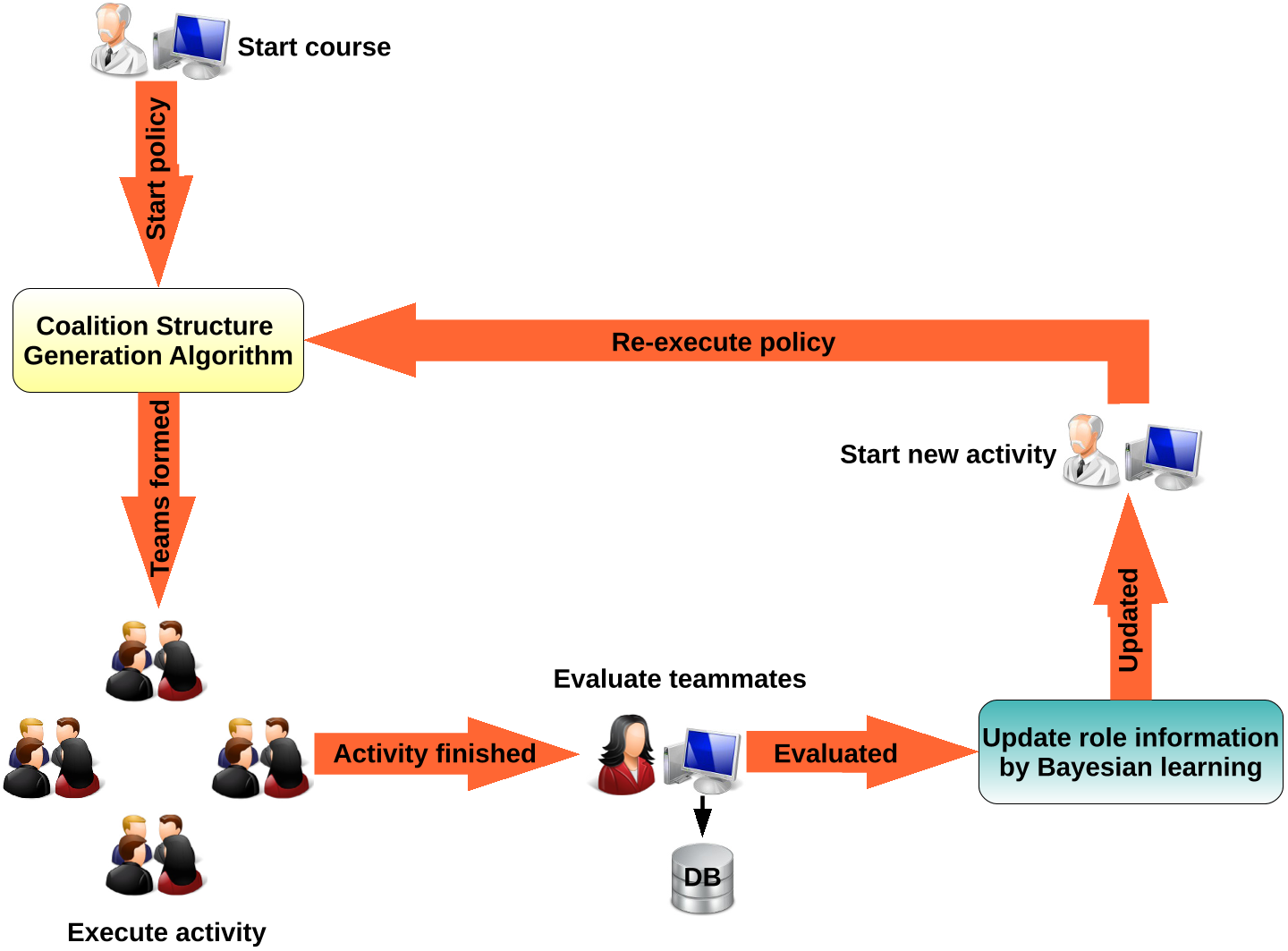 Figure 1: The iterative workflow combining Bayesian Learning and CSG.
Simulation & Results
The authors tested the system using a simulation of 20 students. They varied the Classifying Probability ()—the likelihood that a student accurately identifies a teammate's role.
- Quick Convergence: When (average difficulty), the system improved the team quality by 30% in just two iterations.
- Resilience: Even if students have difficulty classifying roles (), the policy shows a steady upward trend toward the optimal solution.
- Role Distribution: The system is naturally slower when roles are "non-uniform" (e.g., too many leaders, not enough finishers), but it still outperforms random or static assignments.
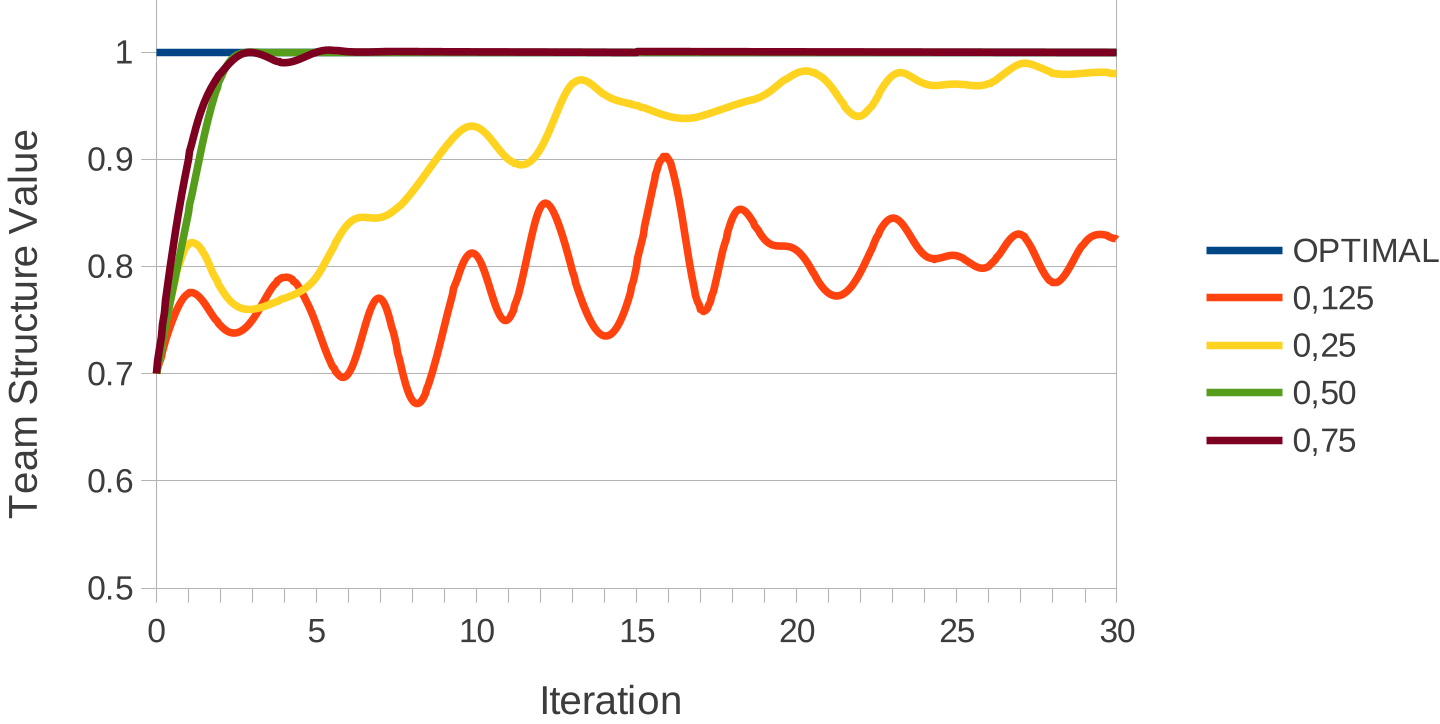 Figure 2: Evolution of team structure values over several activities. Note the rapid convergence in higher probability scenarios.
Critical Analysis & Conclusion
Takeaway
The core contribution is the feedback loop. By treating team formation as a dynamic learning task rather than a static optimization problem, the system "discovers" the social dynamics of the classroom. This is superior to traditional methods because it filters out individual biases through the "Wisdom of the Crowd."
Limitations & Future Work
- Cold Start: The first iteration is effectively random.
- Honesty: The model assumes students are honest. Malicious "grading" by students could theoretically derail the Bayesian updates.
- Future Directions: The authors suggest adding more attributes (like expertise and grades) and testing with larger populations to see if the ILOG CPLEX solver hits scaling bottlenecks.
In summary, this research provides a robust blueprint for AI-assisted classroom management, turning the "double-edged sword" of teamwork into a finely tuned instrument for learning.