
Simulating the Breach: How Cognitive Dynamics Fueled the 2007 Estonian Cyber Attacks
Simulating political and attack dynamics of the 2007 Estonian cyber attacks
This paper presents a computational simulation of a seminal hybrid warfare event: the 2007 cyber attacks on Estonia. Utilizing the DYMATICA framework—a hybrid cognitive-system dynamics tool—the authors model the interplay between political motivations, information operations, and DDoS attacks to quantify how social behavior and cyber defenses interact under stress.
TL;DR
In 2007, Estonia became the first nation to experience what we now call "Hybrid Warfare"—a coordinated cocktail of DDoS attacks, street riots, and state-sponsored disinformation. This paper by researchers from Sandia National Laboratories uses the DYMATICA framework to reconstruct these events, proving that the technical "hack" was merely a tool within a larger cognitive and social battleground.
Contextual Positioning
While most cybersecurity research focuses on the "What" (the malware, the exploit), this work dives into the "Why" and the "How." It positions the Estonian attacks not as a technical failure, but as a socio-political case study. It is a foundational effort in Cyber-Psychological Simulation, moving beyond simple network graphs into the realm of human behavior modeling.
Problem & Motivation: The Missing Link in Cyber Defense
The 2007 attacks were triggered by the relocation of the "Bronze Soldier," a Soviet-era monument in Tallinn. Why did a simple statue move lead to a nationwide digital blackout?
- The Gap: Traditional models couldn't explain how an atmospheric information campaign leads to physical rioting, which then creates the "cover" or "momentum" for cyber-service disruptions.
- The Insight: The authors realized that cyber-attacks are most effective when they create discordance—a gap between what a population expects (a functioning bank or government site) and the reality they perceive.
Methodology: The DYMATICA Architecture
The core of this research is the DYMATICA (DYnamic Multi-Scale Assessment Tool for Integrated Cognitive-behavioral Actions) framework. It treats human decision-making as a fluid system of feedback loops.
1. The Causal Loop
The researchers mapped the "Hypothesized Structure" of the crisis. Note the interaction between Information Campaigns and Hostility.
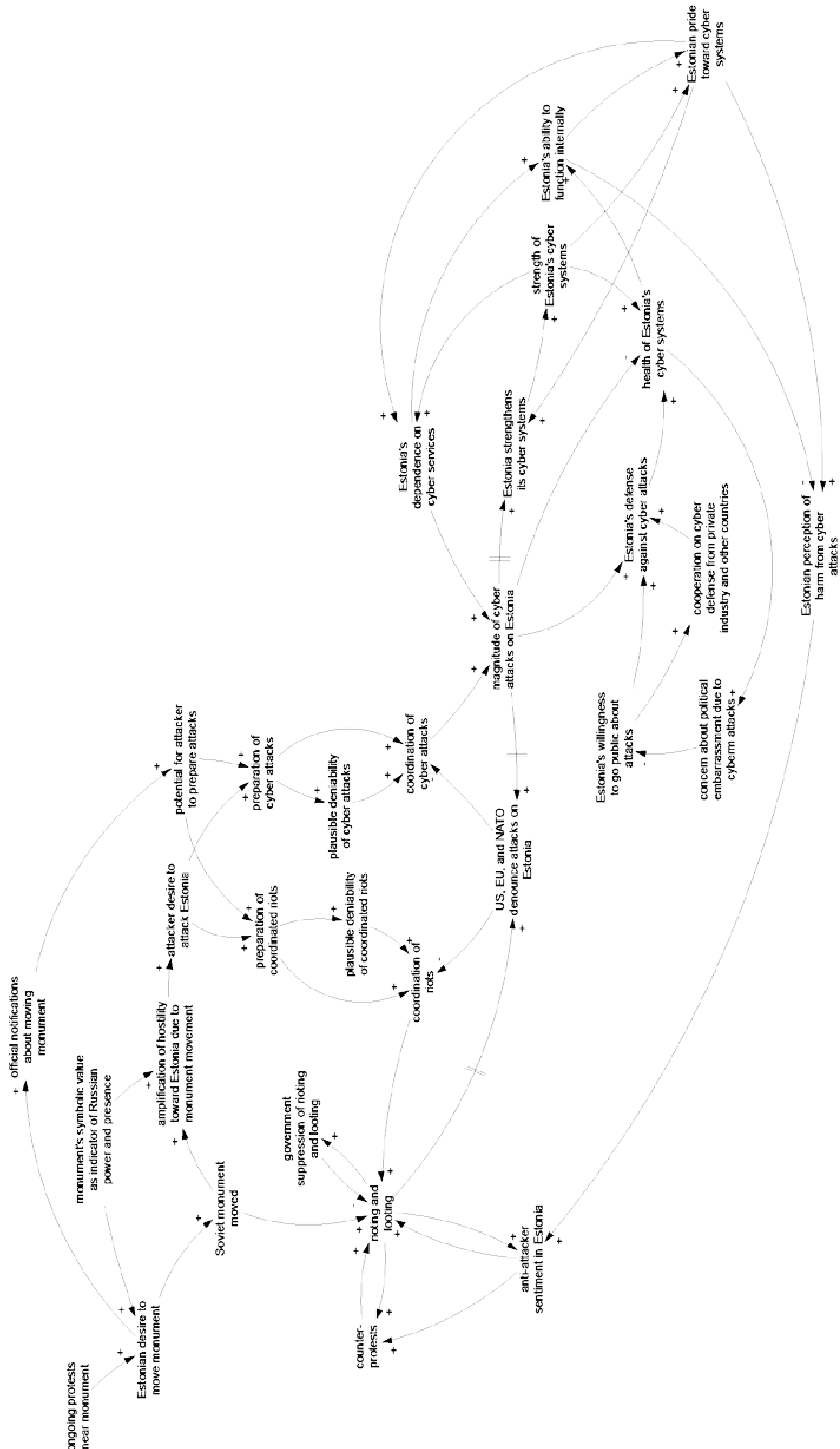 Figure 1: The engine of the crisis—how sentiment leads to action.
2. The Cognitive Engine
DYMATICA doesn't just "roll a die" for behavior. It processes Cues (news, riots) to form Perceptions, which generate Intentions via utility functions, finally resulting in Realized Actions.
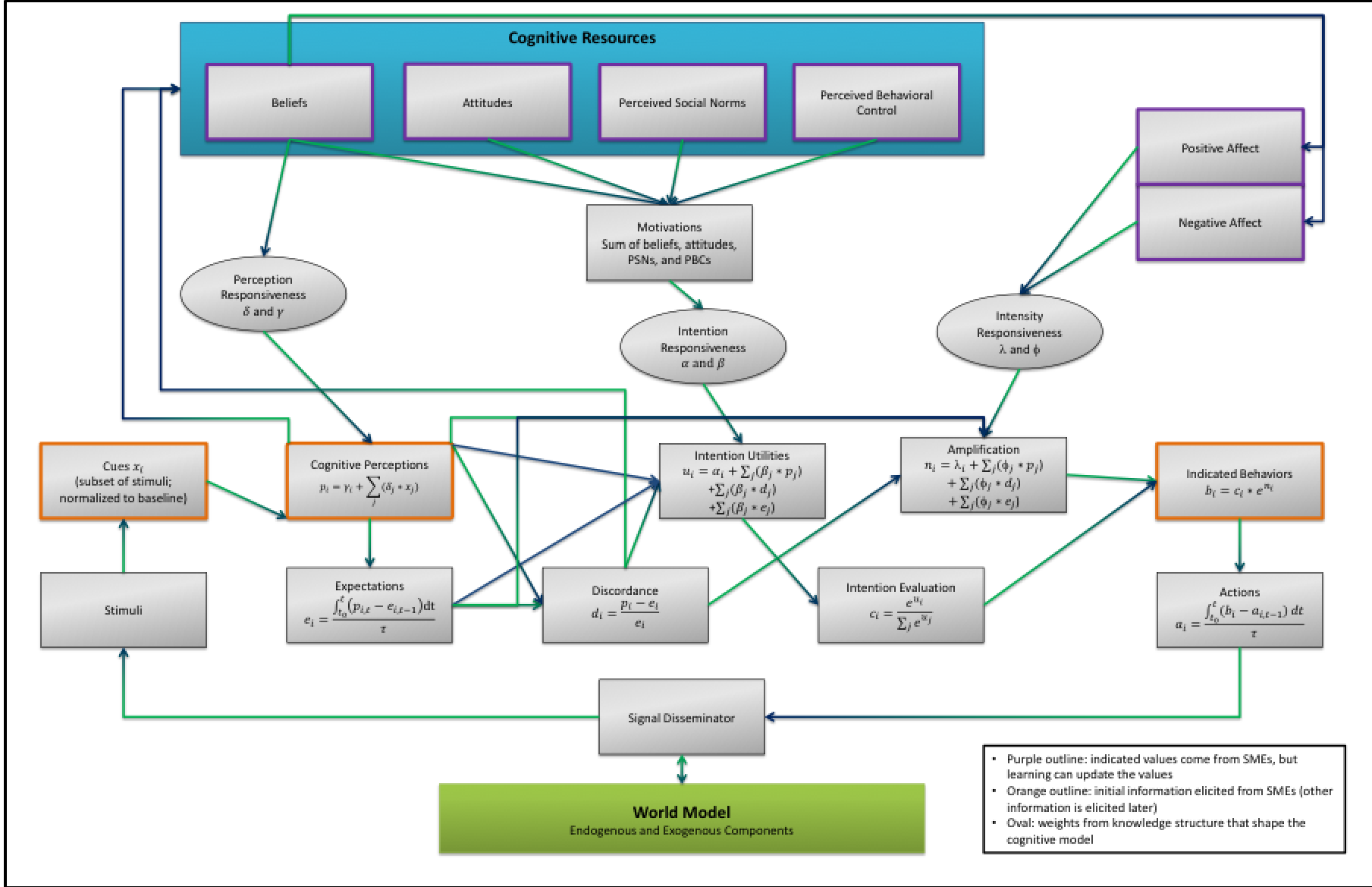 Figure 2: The hybrid architecture integrating cognitive models with physical system dynamics.
Experiments & Results: Replaying History
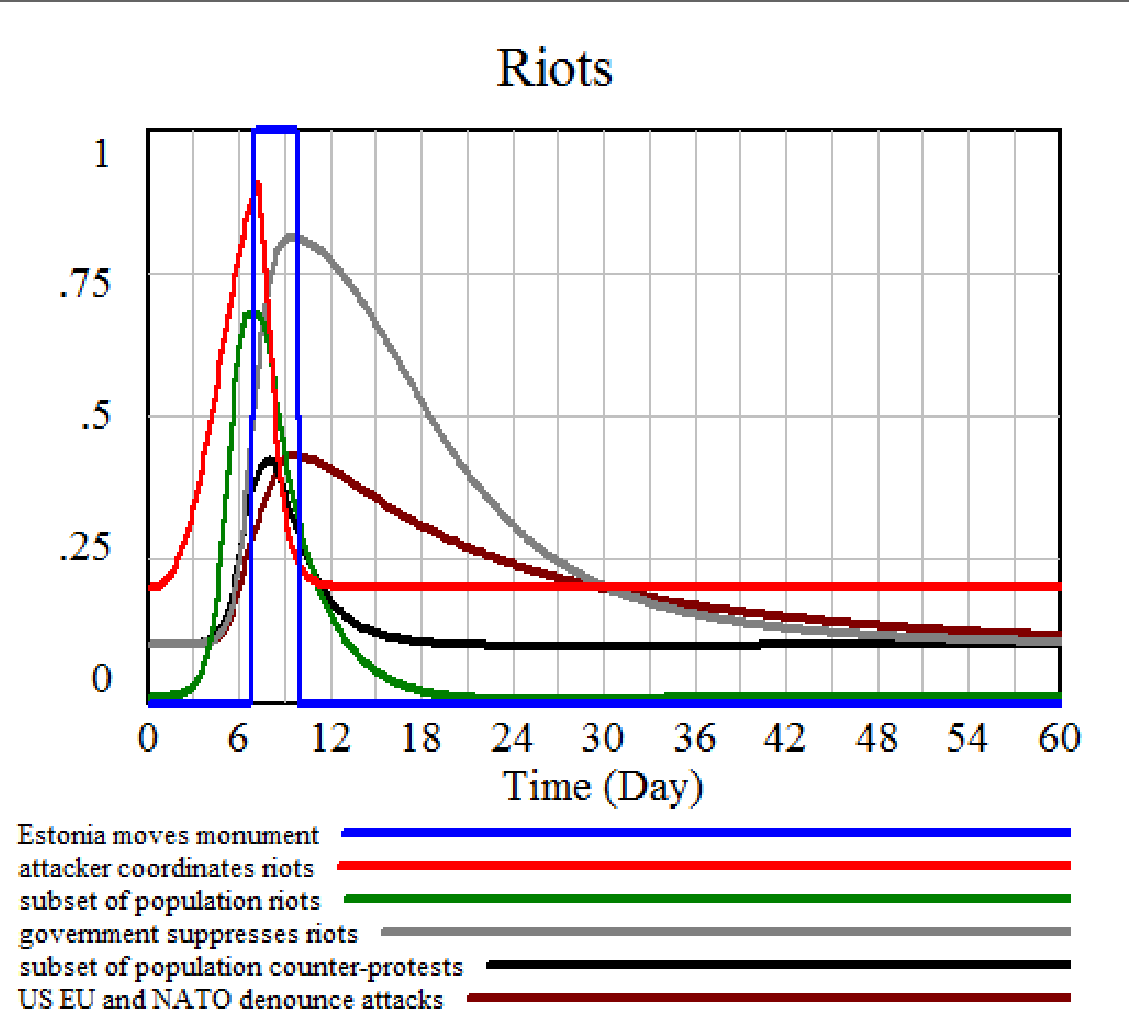
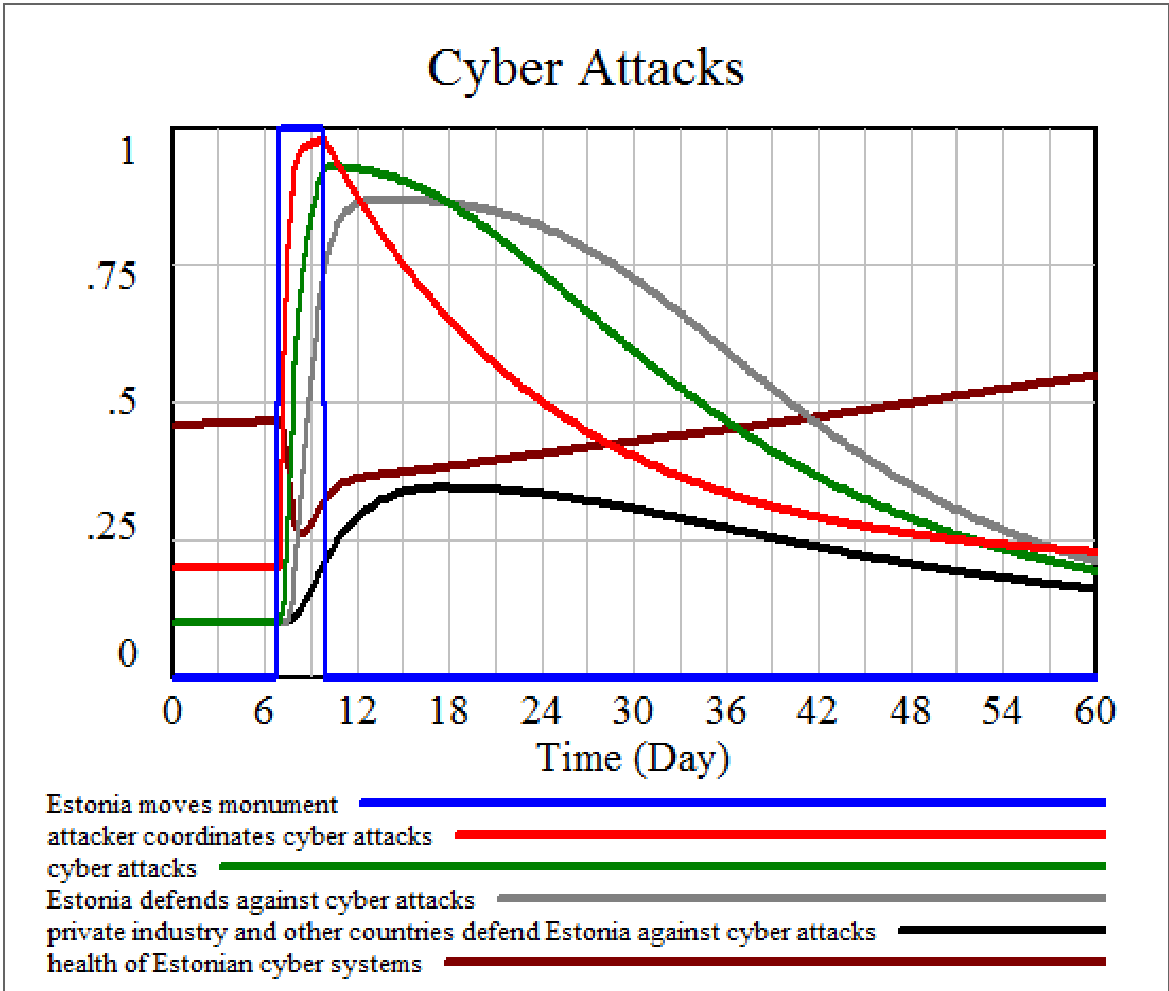
The model's output tracks the historical data with remarkable accuracy.
-
Social Dynamics: The simulation captures the "Green Line" (Rioting) peaking immediately after the statue move, tempered by law enforcement ("Gray Line") and international denouncements.
-
Cyber Dynamics: The DDoS attacks (Figure 4 in the paper) were modeled as a "health" depletion of the cyber system. The model shows that despite "system harm," the Estonian defense was robust enough to prevent a total collapse.
Critical Insight: The "Antifragile" Outcome
Perhaps the most significant finding isn't about the attack itself, but the recovery. The model illustrates that a high-tech society's "pride" in its systems acts as a feedback loop. Instead of the attacks causing a loss of confidence (which the attackers intended), they catalyzed a national mandate to over-invest in security.
Estonia didn't just survive; it evolved.
Conclusion & Future Outlook
This paper serves as a warning and a blueprint. As we enter an era of AI-driven disinformation, the technical barrier to entry for hybrid attacks is dropping.
- Takeaway: Defense is as much about managing public perception and information as it is about patching servers.
- Limitations: The model "smooths" the cyber attacks into a single wave, whereas in reality, they were distinct, iterative phases.
- Future Work: Integrating real-time social media sentiment analysis into the DYMATICA "Cue" phase could allow this model to predict cyber-escalation in modern conflicts (e.g., Ukraine).
Senior Editor's Note: This research underscores the shift from "Cyber Security" to "Cyber Resilience." In the digital age, your greatest defense isn't a firewall; it's a society that understands the narrative being used against it.