
SMSim: Decoding the Ripple Effect of Influencers in the Twitter Graph
A simulation-based approach to analyze the information diffusion in microblogging online social network
This paper introduces SMSim, a stochastic multi-agent-based simulation framework designed to analyze information diffusion within microblogging networks like Twitter. By utilizing a data-driven approach based on Markov Chain Monte Carlo (MCMC) methods, the authors modeled individual user behaviors from real-world datasets of Barack Obama's Twitter network during the 2012 US presidential election.
TL;DR
Researchers from IBM Research-Brazil have developed a data-driven, multi-agent simulation framework named SMSim to crack the code of how information spreads on microblogging platforms. By learning individual behaviors from a massive dataset centered on Barack Obama’s 2012 Twitter network, the study proves that we can accurately simulate "emergent behaviors" and quantify exactly how much a network’s "heartbeat" slows down when key influencers are removed.
Contextualizing Information Diffusion
In the landscape of social computing, predicting how a marketing campaign or a political message goes viral remains a "holy grail." We’ve moved past simple static graph analysis (looking at who follows whom) into the territory of Dynamic Models. However, the gap remains: most simulations use synthetic data. This paper bridges that gap by using observed historical data to train agents that act like real humans.
The Core Challenge: Realistic Human Modeling
Why is it so hard to simulate Twitter?
- Complexity: Thousands of agents interacting simultaneously create non-linear feedback loops.
- Temporal Bias: People post differently at 10 AM than they do at 3 AM.
- Topic Specificity: A user might be highly engaged with politics but silent on sports.
The authors tackled these by building an Egocentric Network (focusing on a seed and its immediate neighborhood) and categorizing users into four levels of activity: Identified, Consulted, Visited, and Extracted.
Methodology: The Markov Chain Engine
The "physics" behind SMSim is grounded in a Stochastic Multi-Agent System. Each agent’s behavior is a Markov Chain where the probability of posting depends on:
- Previous Action: What did the user read or write in the last 15 minutes ()?
- Temporal Weight: A weighting function that adjusts for the time of day.
Architecture & Dynamics
The model uses Maximum Likelihood Estimation (MLE) to fill transition tables that dictate whether an agent stays "Idle" or enters a "Posting" state.
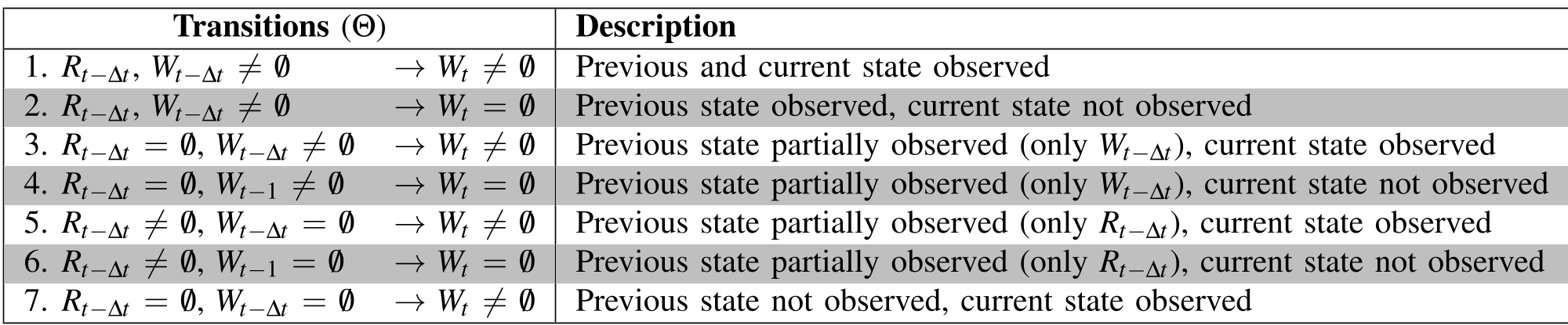 Table: The 7 key state transitions used to define agent behavior in the SMSim environment.
Experiments: What Happens if Obama Goes Silent?
The authors tested two primary hypotheses through Sensitivity Analysis. They measured the drop in message volume by "inactivating" specific high-value nodes.
Key Findings:
- Hypothesis 1 (Seed Inactivation): When the seed (Obama) was turned off, interest in the specific topic dropped by 22% on average.
- Hypothesis 2 (Influencer Impact): High-engagement users (those who retweet/reply more than they consume) are the true backbone of the network. Removing the Top 100 most engaged users had a more devastating impact on information flow than removing the seed itself.
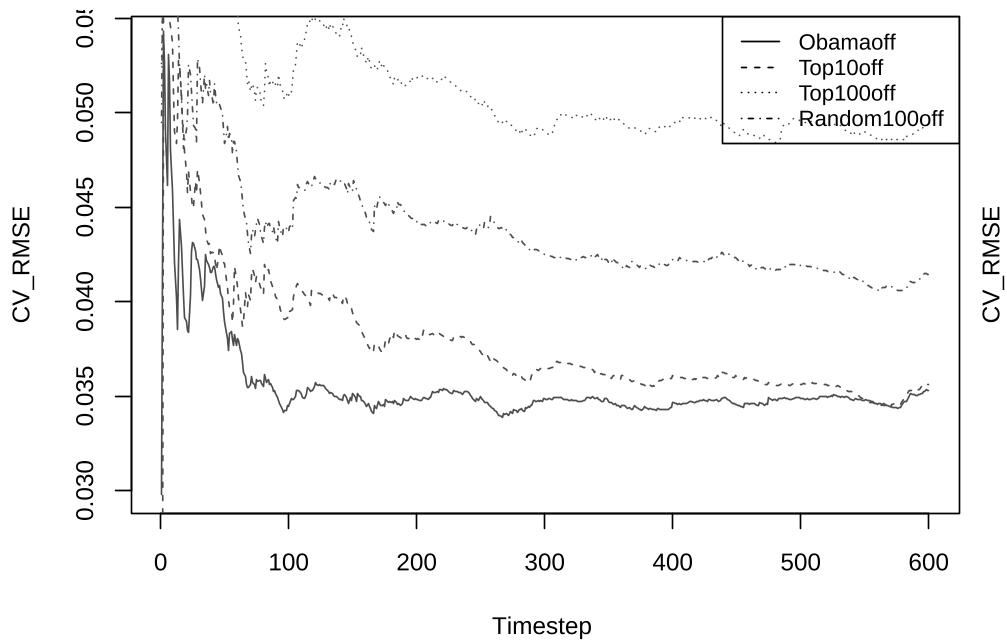 Figure: The simulation validation (a) shows how the model closely tracks real message volumes, while (b) demonstrates the specific drop-off when key actors are removed.
Critical Insight: Beyond Follower Count
This paper fundamentally shifts the focus from Reach (how many followers you have) to Engagement Degree (ED). The ED formula () identifies participants who are active catalysts. The experimental results show that a network is surprisingly resilient to the loss of its "celebrity" seed, but remarkably fragile to the loss of its "engaged bridge" users.
Conclusion & Future Outlook
SMSim proves that agent-based modeling isn't just a theoretical exercise—it can be a professional-grade predictive tool. While the current model primarily focuses on "Posting" actions, future iterations incorporating Sentiment Analysis and State-Space Models (SSM) could predict not just the volume of spread, but the emotional tone of the conversation.
For researchers in viral marketing and network security, the message is clear: if you want to stop or start a fire, don't just look at the biggest tree—look for the most active branches.