
Beyond Skill Sets: Leveraging Social Network Positions for Optimal Workforce Assignment
Simulation-based workforce assignment considering position in a social network
This paper proposes a simulation-based workforce assignment framework for globally distributed software projects, utilizing the novel concept of "position notion" within social networks. It integrates an agent-based evaluation module with a multi-objective optimization assignment module to balance short-term productivity and long-term organizational robustness.
TL;DR
Assigning the right person to the right project is more than just checking skills and availability. This paper introduces a sophisticated framework that views an organization as a dynamic social network. By calculating "social equivalence"—how similar two people are in their social roles—and utilizing agent-based simulations, the authors demonstrate that workforce assignment can significantly boost both immediate productivity and long-term organizational robustness (like how fast new ideas spread).
Motivation: The Social Gap in Project Management
In globally distributed software development, work doesn't just happen in a vacuum; it happens through a web of communication, trust, and reputation.
Prior work in workforce assignment often relies on load-balancing (who is free?) or capability-matching (who knows Java?). While logical, this ignores the "hidden" social architecture of the company. Even recent attempts to consider social networks often look only at embeddedness (who knows whom). The authors argue this is insufficient. They suggest that the positional status of an employee—defined by their reputation, influence, and trustworthiness—is a much stronger predictor of how well they will integrate into a team and contribute to the organization's long-term health.
Methodology: The Core Innovation
The proposed framework consists of two high-level modules:
1. The Evaluation Module
This module predicts the behavior of the social network. It uses two key algorithms:
- Decision Evolution Procedure (DEP): Based on cognitive science, it dynamically adjusts the weights of four key social attributes (Trust, Influence, Reputation, Proximity) based on the organization's current goals. For example, during a training phase, "Influence" might be weighted more heavily.
- Extended Regular Equivalence Evaluation (EREE): This is where the "Position Notion" lives. It calculates how two employees are "equivalent" not just by who they talk to, but by the types of people they interact with.
2. The Assignment Module
This is a multi-objective optimization problem that seeks to maximize:
- Short-term Productivity (): Modeled through different productivity curves (linear, exponential, or S-curves) depending on the organization's developmental stage (Early, Growth, or Maturity).
- Long-term Robustness (): Measured by Innovation Diffusion (how fast a new idea reaches everyone) and Opinion Formation (how consensus is built).
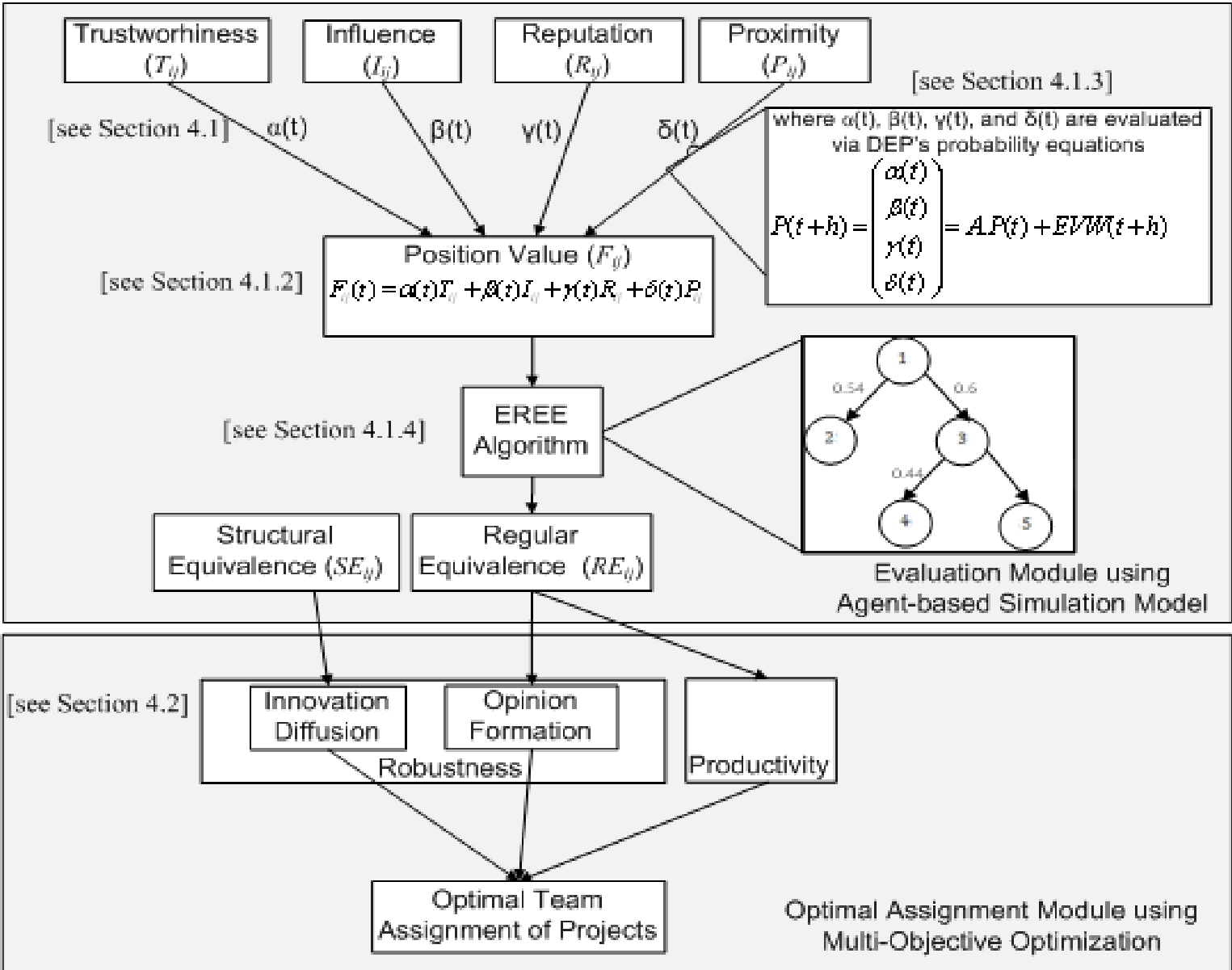 Figure 1: The sequence diagram showing the interplay between simulation and optimization.
Deep Dive: The Mathematics of Social Positioning
The paper defines a Position Value () for any link between two people: Where are Trust, Influence, Reputation, and Proximity. What makes this "Senior Academic" level is the DEP process, which treats these weights not as constants, but as a evolving state vector controlled by a linear system: This allows the model to mimic human-like deliberation and adaptive organizational priorities.
Experiments: Proving the Advantage
The authors tested their framework using data from the Kuali Foundation, a real-world open-source software project. They compared their method against:
- Workload-based Assignment (Traditional)
- Embeddedness-based Assignment (Prior SOTA)
Key Findings
- Innovation Speed: The proposed model reduced the time required for innovation diffusion by up to 47% compared to the embeddedness-based approach.
- Consensus Building: Opinion formation time saw a maximum improvement of 31%.
- Flexibility: Regardless of the importance placed on long-term goals (the value in the optimization objective), the position-based approach remained superior.
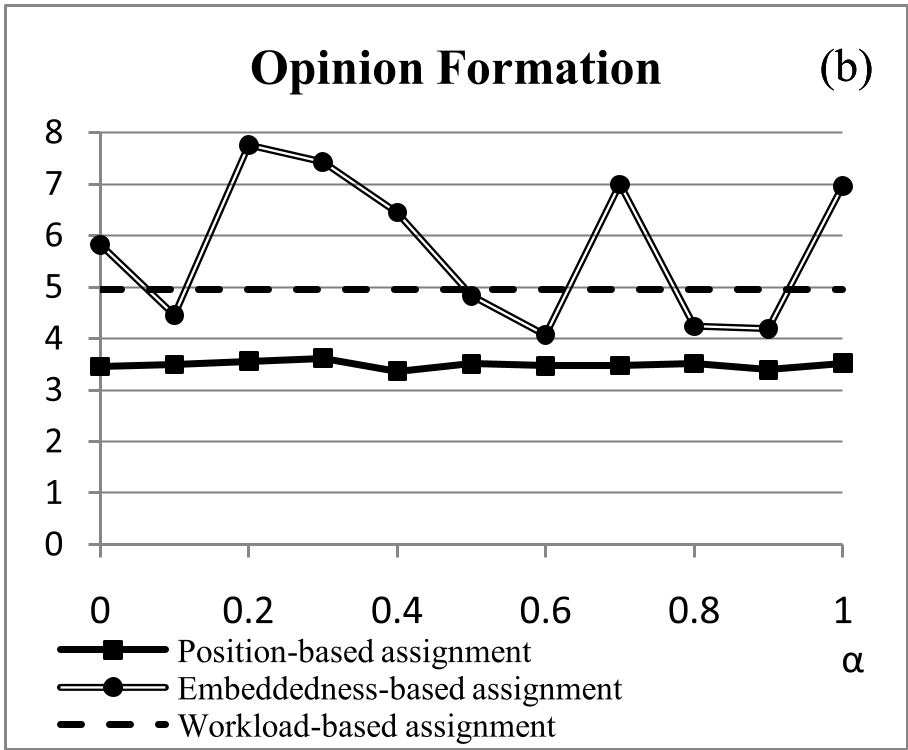 Figure 2: Performance comparison against varying alpha values, showing the clear superiority of the position-based method.
Critical Insights & Takeaways
The brilliance of this work lies in its recognition that teams are social units, not just resource clusters. By quantifying "Equivalence," the model can strategically place "influential" or "trustworthy" individuals where they can act as catalysts for the rest of the network.
Limitations: The current model relies heavily on survey data to pulse the social network. In a real-world enterprise, extracting these attributes (Trust, Reputation) automatically from Slack, GitHub, or Email logs would be the next logical step to make this framework scalable.
Final Word: For managers of distributed teams, this research suggests that "Who works with whom" should be a strategic decision designed to protect the organization's future, not just a tactical solve for today's ticket.