
Modeling the "Generative Dance": A CAS Perspective on Knowledge Sharing
A Simulation Perspective on Knowledge Management and Sharing, and Conltlict and Complexity in Social Systems Management
This paper proposes a <strong>Simulation Perspective</strong> based on <strong>Complex Adaptive Systems (CAS)</strong> to improve Enterprise Knowledge Management (KM). It integrates the SECI model of knowledge conversion with systems engineering frameworks to simulate how individual interactions lead to emergent organizational learning.
TL;DR
Knowledge Management (KM) is often mistakenly reduced to a database problem. This paper argues that KM is actually a Complex Adaptive System (CAS). By viewing employees as diverse "agents" and knowledge creation as an emergent social phenomenon, the authors propose a simulation-based framework to predict which management strategies actually foster a culture of sharing versus those that simply waste IT budget.
The Social Complexity Trap
Why do expensive Knowledge Management systems often fail? The authors point to a fundamental misunderstanding: the confusion between Information and Knowledge.
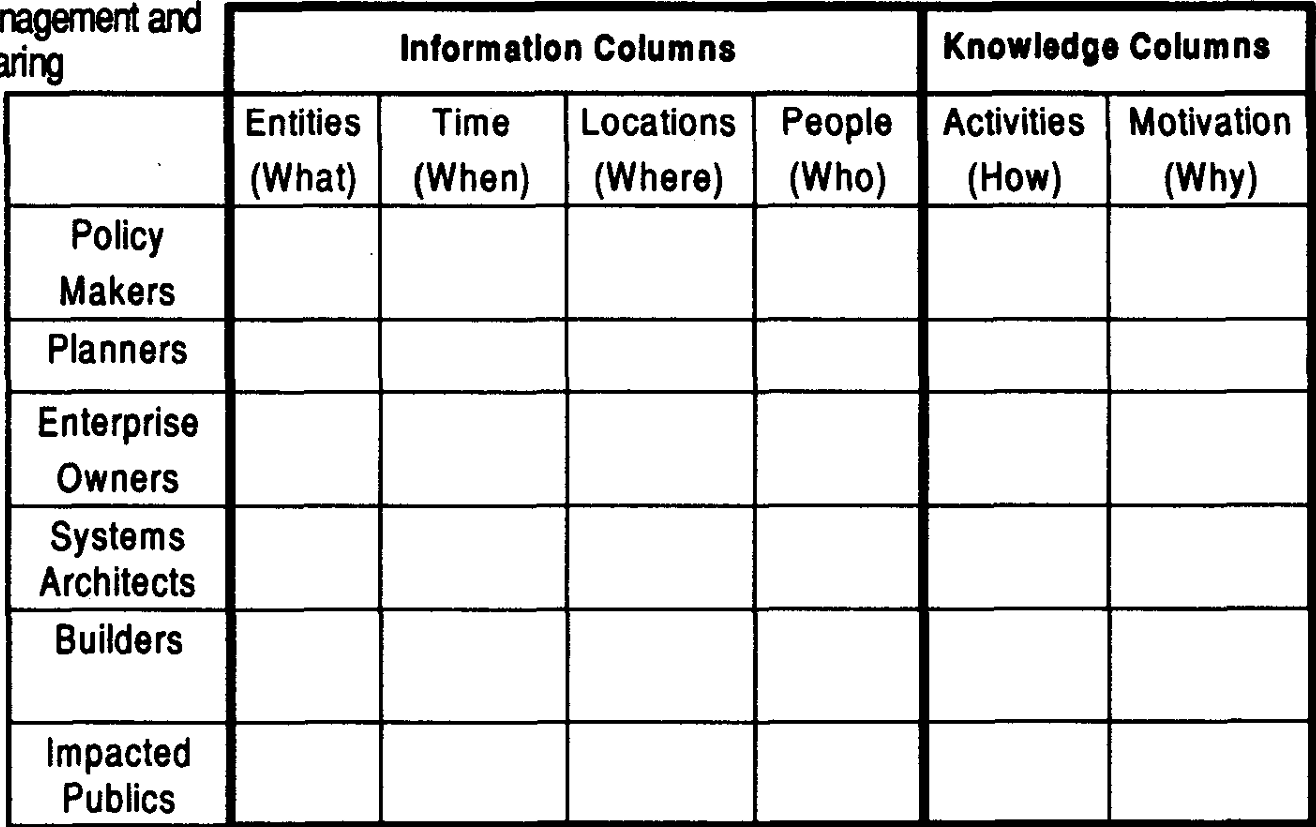
- Information is data in patterns (the "what," "where," "who").
- Knowledge is "justified true belief" embedded in a human context (the "how" and "why").
The pain point is that while information is easily detached and transferred, knowledge is "sticky." Most organizations try to solve a human, social conflict problem with a "technological fix," ignoring the Inductive Bias of individual workers who may be culturally resistant to sharing their "secret sauce."
Methodology: Social Life as a Simulation
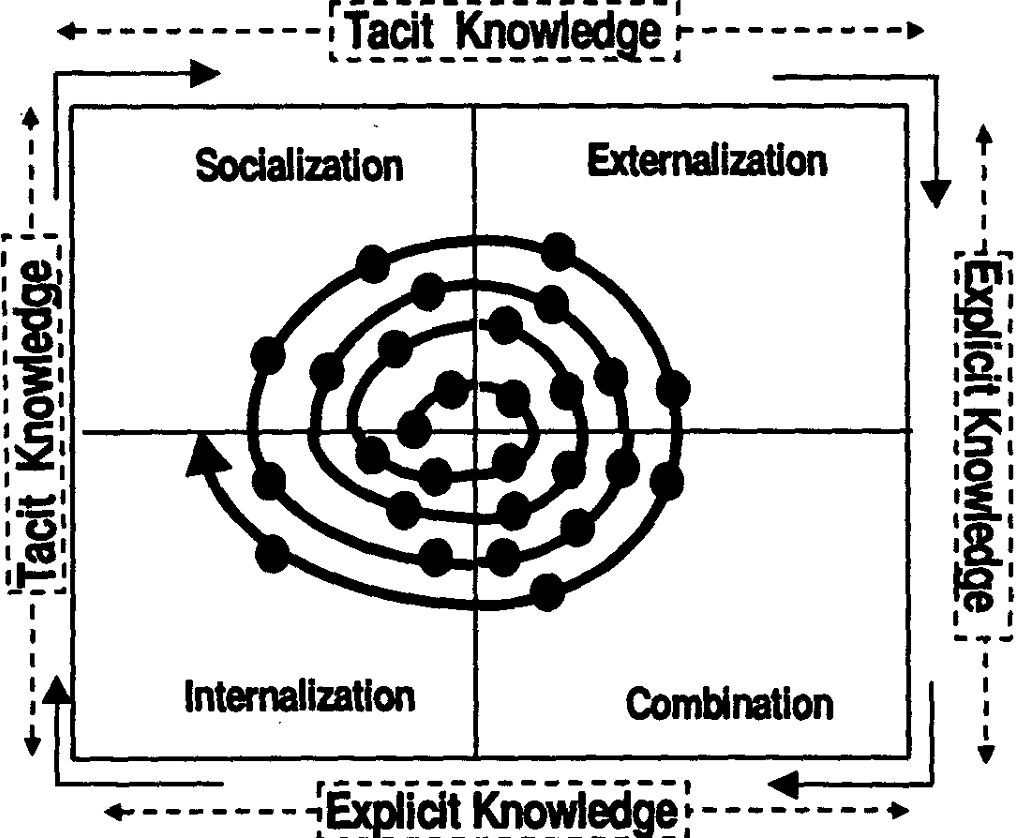
The core insight of this work is that organizations behave more like biological ecosystems than mechanical ones. The authors integrate the famous Nonaka and Takeuchi SECI Model into a systems engineering framework.
The SECI Conversion Path
The researchers visualize the movement of knowledge through four stages:
- Socialization (Tacit to Tacit)
- Externalization (Tacit to Explicit)
- Combination (Explicit to Explicit)
- Internalization (Explicit to Tacit)
Agents, Not Assets
By applying Complex Adaptive Systems (CAS) theory, the authors treat every employee as an Agent with:
- Tags: Defining their role (e.g., Senior Manager vs. Builder).
- Internal Models: Their personal "best practices."
- Evolutionary Behavior: Agents adapt their sharing habits based on feedback from their environment.
The methodology uses these agents to simulate how "Strategic Policy" at the top level filters down to "Knowledge Products" at the bottom level.
Why This Matters: From Data to Wisdom
The paper provides a structured matrix (derived from the Zachman framework) that maps different organizational perspectives against types of inquiry. This allows a company to see exactly where their "Knowledge Gap" lies:
- Are they failing at Activities (How)?
- Or are they failing at Motivation (Why)?
The simulation perspective allows managers to "stress test" a policy—like a new incentive for sharing—before rolling it out, by seeing if the emergent behavior of the agents leads to a "Learning Organization" or a "Complexity Catastrophe."
Critical Analysis & Conclusion
Takeaway: Knowledge is not a static object to be stored; it is an emergent property of social interaction. Effective KM requires managing the interaction between agents, not just the repository of their data.
Limitations: While the theoretical framework is robust, the paper functions primarily as a "proof-of-concept" and methodology design. The specific mathematical rules for the agent interactions (the "cellular automata" logic) require deep customization for different corporate cultures.
Future Outlook: As we move into an era of AI-driven enterprises, this CAS perspective is more relevant than ever. Future KM systems won't just be search engines; they will be digital twins simulating the social "flow" of an organization to optimize innovation.