
SIN: Beyond Friendship—Decoding the Social Interaction Network
SIN: A Platform to Make Interactions in Social Networks Accessible
This paper introduces SIN (Social Interaction Network), an extension to the Facebook Graph API that shifts focus from static friendship links to dynamic, content-based interactions. The platform enables the retrieval of weighted, directed graphs derived from user actions like 'likes', 'comments', and 'shares' within specific community contexts.
TL;DR
Most social networks define "connection" as a binary friendship. The Social Interaction Network (SIN) platform challenges this by arguing that true social value lies in actions—likes, comments, and shares—on specific content. By extending the Facebook Graph API, SIN allows developers to extract weighted, directed graphs that reflect real-world engagement, proving to be more effective for social search and friend recommendations.
The Context Gap: Why Friendships are Overrated
In the current era of Online Social Networks (OSNs), the "Social Graph" is the gold standard. However, researchers from UC Davis and Blekinge Institute of Technology point out a critical flaw: the social graph is segregated from content.
An API might tell you that User A is friends with User B, but it fails to capture the intensity or the context of their relationship. Are they interacting because of a political movement, a shared hobby, or just a forgotten high school connection? Existing APIs are static and fail to provide the "Social Interaction Network" (SIN) that forms around active discussions.
Methodology: Mining the SIN
The authors designed the SIN API to mimic the interface of the Facebook Graph API, making it plug-and-play for developers. The core innovation lies in its Interaction Weighting Schema:
- Re-shares: Highest weight (indicated strong endorsement/amplification).
- Comments: Medium weight (indicated active engagement).
- Likes: Lowest weight (indicated passive agreement).
Architecture and Data Acquisition
Retrieving this data is non-trivial due to Facebook's rate limiting and pagination. The SIN platform employs a two-phase crawling strategy:
- Phase 1 (Sequential): Identifying and listing all posts within a community (Page, Group, or User).
- Phase 2 (Parallelized): Distributing post details (comments/likes) across multiple threads to bypass latency.
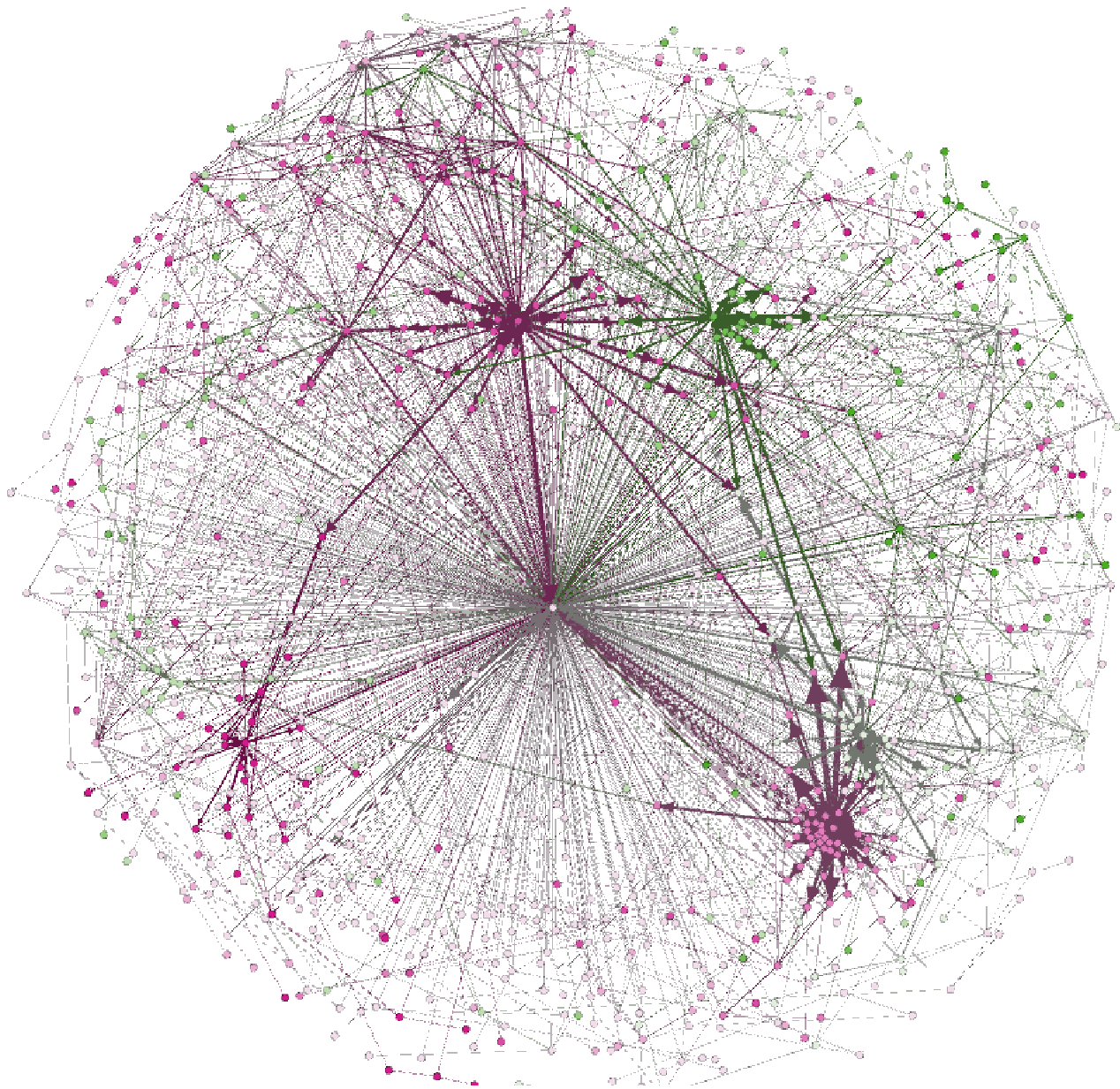 Fig. 1: A Social Interaction Network around a single post, showing directed and weighted edges between 1,097 nodes.
Experiments: Real-World Dynamics
The platform was tested on diverse Facebook communities, from news agencies to political movements like the "Occupy" protests. One of the most striking findings was the sensitivity of SIN to real-world events.
For example, the researchers analyzed the UC Davis Facebook page during the infamous "pepper spray incident."
- Pre-incident: The SIN was sparse, focused on generic campus updates.
- Post-incident: The graph exploded in density and complexity, reflecting a massive surge in user-to-user interaction through comments and likes.
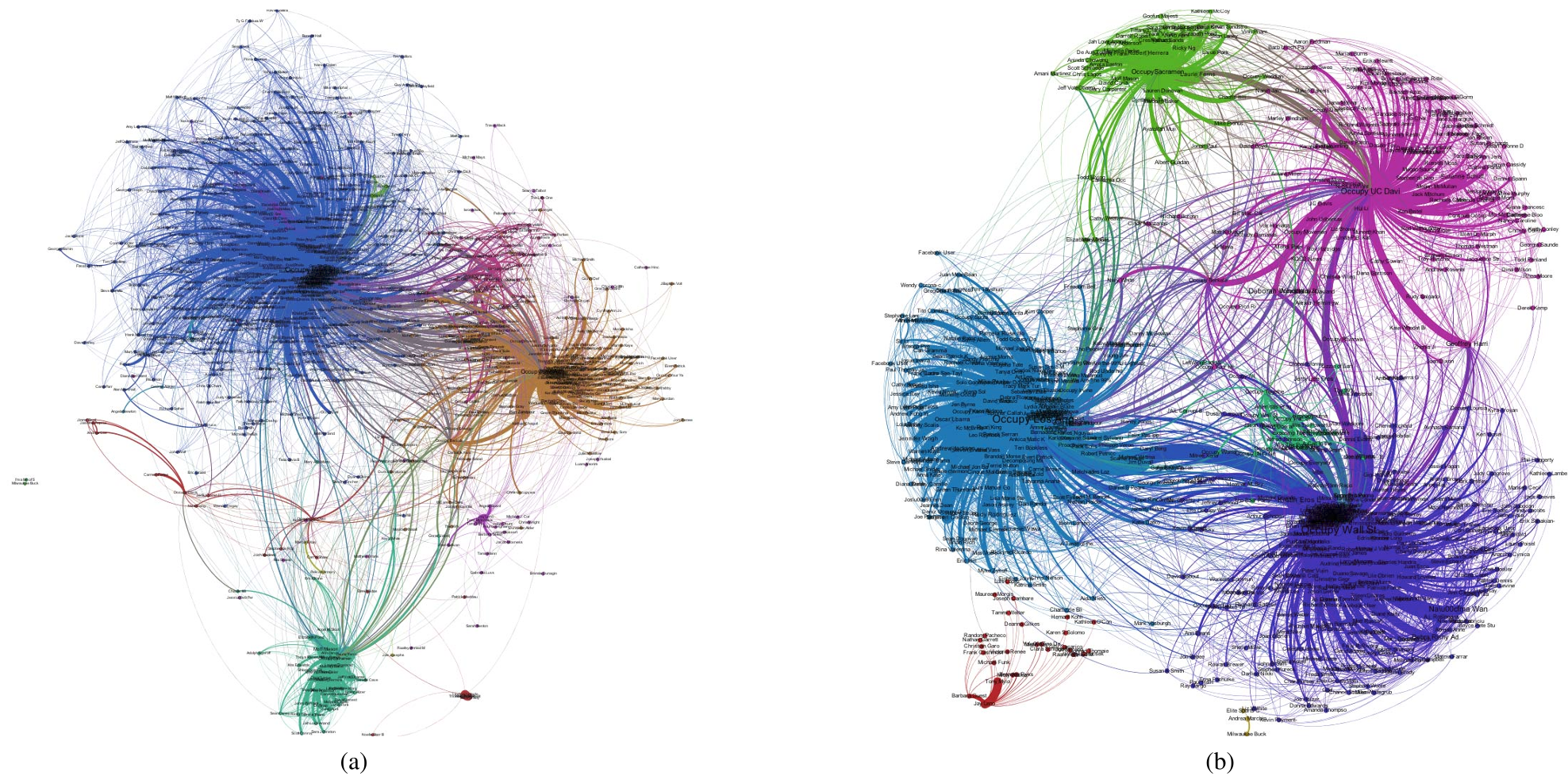 Fig. 2: Interaction density shift on the UC Davis page before (a) and after (b) the pepper spray incident.
Performance Benchmarks
By utilizing a parallel crawler on 10 threads, SIN achieved significant speedups:
- Jay Leno Page (41k posts): Crawl time dropped from 179,636 seconds (sequential) to 16,320 seconds (parallel).
- This efficiency is vital for third-party applications needing "fresh" interaction data for news feeds.
Critical Analysis: Privacy and Limitations
While SIN provides a wealth of data for "Social Search" and "Friend Suggestions," it faces two primary hurdles:
- API Volatility: The paper notes a Facebook bug regarding "re-share" counts. This highlights the dependency of SIN on the underlying platform's stability.
- Privacy: Even with public data, aggregating interactions can deanonymize users. The authors suggest future work in graph k-anonymization to protect user identities while preserving the graph's structural properties.
Conclusion
The SIN platform demonstrates that social networks are not just about "who you know," but "what you talk about." By transforming flat social graphs into weighted interaction networks, the researchers provide a blueprint for a more dynamic and contextualized web experience, ranging from smarter news feeds to hyper-relevant social search.