
Engineering Affordability: A System Dynamics Approach to Singapore's Healthcare Crisis
A system dynamics model of Singapore healthcare affordability
This paper presents a System Dynamics (SD) simulation model developed to evaluate healthcare affordability and accessibility in Singapore over a 30-year horizon. Using ISEE’s iThink platform, the authors simulate the complex interplay between demographic aging, resource acquisition, and hospital costing to test four strategic policy interventions.
TL;DR
As Singapore's population ages, the strain on healthcare resources threatens to make hospital visits prohibitively expensive. Researchers from the National University of Singapore have developed a System Dynamics (SD) model to simulate the next 30 years of healthcare economics. Their findings reveal that simply throwing money at the problem (increasing GDP allocation) isn't a silver bullet; instead, a combination of Means Testing and structural resource management is essential to keep the system afloat.
Background: The Complexity of Healthcare
Healthcare isn't just a service; it's a systemic web. When patient demand rises, hospitals hire more staff and buy more beds. This increases operating costs, which are either absorbed by a finite government budget or passed to the patient. To understand these "circular" relationships, the authors moved away from static forecasts and adopted System Dynamics, a methodology designed to study feedback loops and delays in complex systems.
The Problem: The Silver Tsunami
The primary driver of Singapore's healthcare challenge is its aging demographic. The population aged 65+ is project to reach 23% by 2030. This group contributes the most to hospital admissions and often presents with chronic conditions requiring lifelong care.
Current systems suffer from:
- Resource Pressure: Rapidly increasing demand leads to bed shortages.
- Cost Spirals: Acquiring more resources (doctors/nurses) leads to higher bills.
- Subsidy Inefficiency: High-income groups often utilize subsidized wards (Class B2/C), diluting the aid intended for the poor.
Methodology: Mapping the Vicious Cycle
The researchers broke the system down into four primary subsystems: Demand, Budget/Cost, Resources, and Billing.
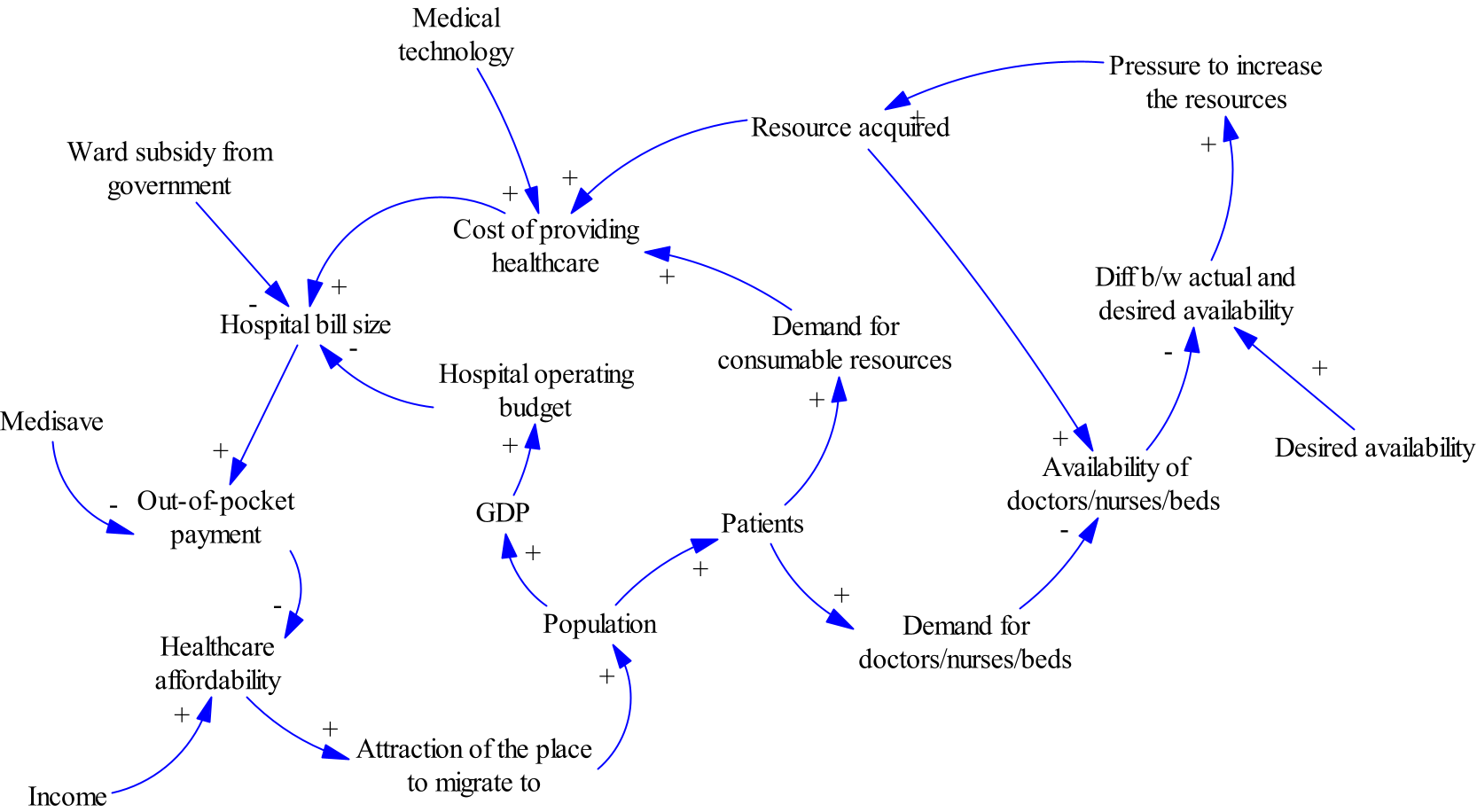
1. The Causal Logic
The "Causal Loop Diagram" reveals the central tension: while Medisave and subsidies lower out-of-pocket costs, the resulting high demand triggers resource acquisition that eventually drives costs back up.
2. The Resource Supply Line
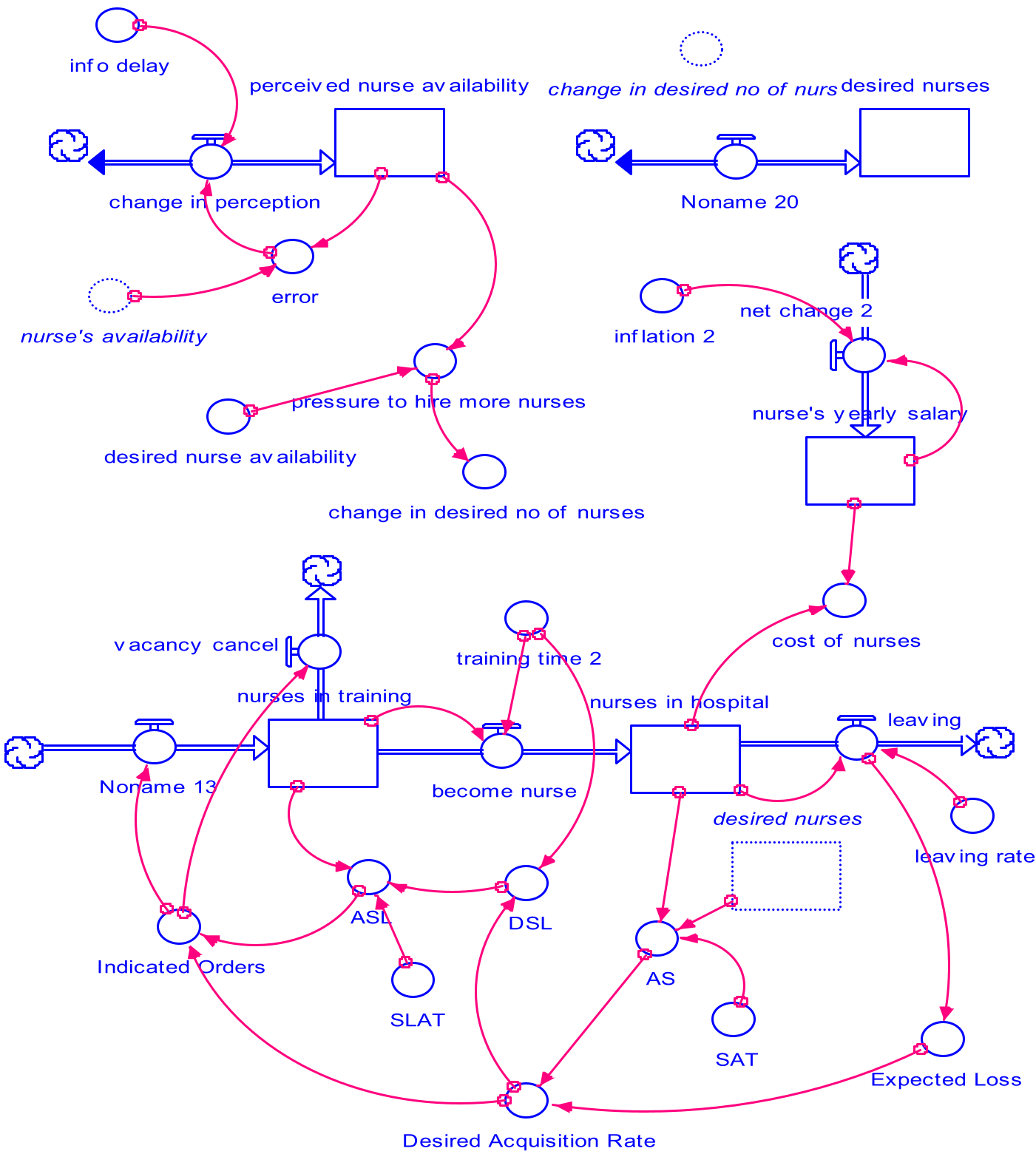
The model tracks "Stocks" (accumulations like the number of nurses) and "Flows" (rates of change like hiring/trainee inflow). This allows the simulation to account for the delay in training medical professionals.
Policy Stress-Testing: What Actually Works?
The study evaluated four major policy shifts:
- Increasing GDP Allocation: Raising the healthcare budget from 1.3% to 3% of GDP.
- Result: Effective for 20 years, but eventually "outstripped" by the rising costs of an elderly population.
- Changing Migrant Flow: Increasing the influx of working-age migrants.
- Result: Short-term gain for GDP and a youthful tax base, but eventually creates a "delayed" burden as these migrants also age.
- Means Testing (The Winner): Differentiating subsidies so that wealthier patients receive less aid for the same ward types.
- Result: Significant boost to affordability for the lower-income strata with minimal impact on higher earners.
- Shortening Length of Stay: Optimizing hospital through-put.
- Result: Critical for long-term sustainability and maintaining "Bed Availability."
Results and Insights
The simulation projections show a grim trend if no action is taken: affordability is set to decline across the board as the cost of hospital resources scales up.
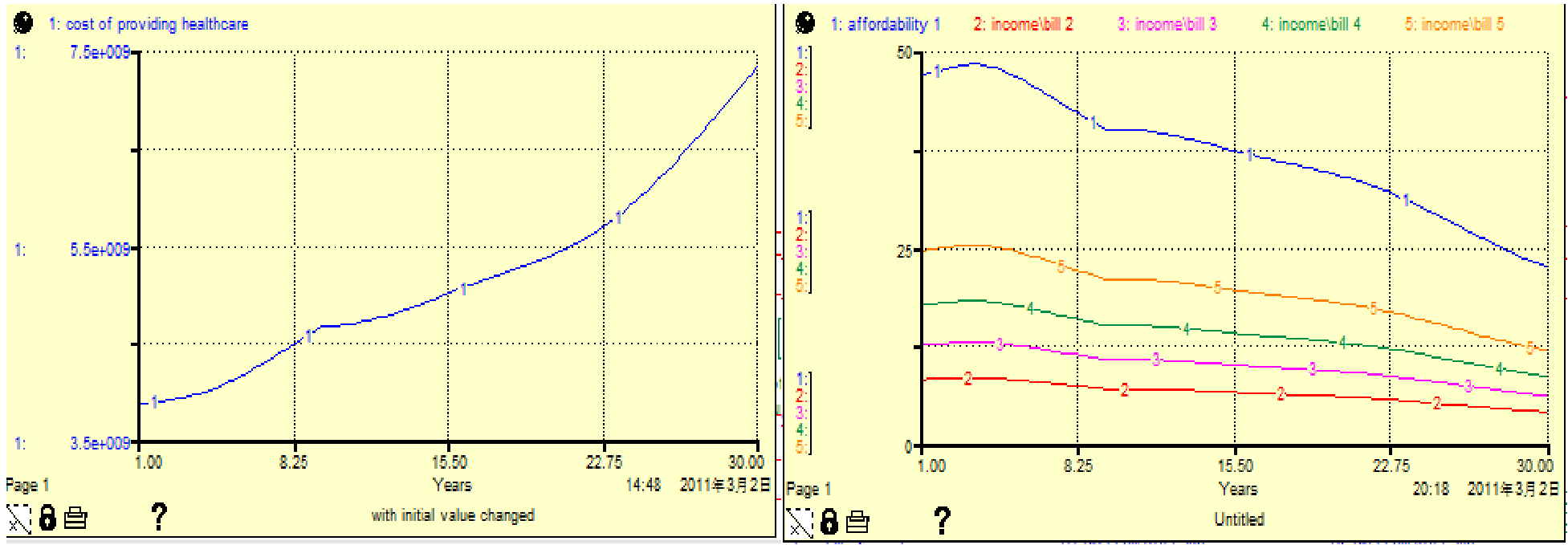
The primary insight is that accessibility and affordability are two sides of the same coin. If you improve accessibility by adding more beds, you increase costs, which hurts affordability. The only way to break the cycle is to target subsidies via Means Testing and improve operational efficiency (Shortening Stay).
Conclusion & Future Outlook
The study concludes that the "Silver Tsunami" is a structural challenge that cannot be solved by financial adjustments alone. While the current model captures the macrotrends, future work will need to integrate "higher resolution" models regarding household savings and specific disease-prevention policies.
Key Takeaway: For modern nations, the battle for healthcare affordability will be won through systemic optimization and targeted social policy rather than just budgetary expansion.