
Gait Analysis Goes Mobile: Marker-less Health Monitoring with Tele-Robots
A Single RGB Camera Based Gait Analysis With A Mobile Tele-Robot For Healthcare
This paper presents a marker-less gait analysis system using a single low-cost RGB camera mounted on a mobile tele-robot. By leveraging optimized versions of OpenPose and VNect, it classifies walking patterns into four categories: normal, supination, pronation, and limp.
TL;DR
Researchers from Oxford and SJTU have developed a mobile health system that uses a single, low-cost RGB camera mounted on a tele-robot to perform professional-grade gait analysis. By optimizing heavy pose-estimation models for mobile CPUs, they can identify gait abnormalities like limping or pronation in real-time without the need for expensive markers or multi-camera setups.
Problem & Motivation: The Clinical-to-Home Gap
Gait analysis is a vital tool for assessing neurological disorders, post-surgery recovery, and sports injuries. However, the gold standard—multi-camera motion capture (like Vicon or SMART-DX)—is prohibitively expensive and requires a controlled lab environment.
While pose estimation using a single RGB camera is a promising alternative, it suffers from two major hurdles:
- Technical Ambiguity: Mapping a 2D image to a 3D skeletal pose is mathematically "ill-posed" (one image can represent multiple poses).
- Computational Demand: High-accuracy models like OpenPose typically require powerful GPUs, making them impossible to run on a mobile robot's tablet or localized CPU.
Methodology: From Pixels to Clinical Parameters
The authors bridge this gap by integrating two state-of-the-art vision algorithms, OpenPose and VNect, and defining a set of "bespoke gait angular parameters."
1. Robust Pose Estimation
The system uses OpenPose for 2D skeleton tracking (17 feature points) and VNect for 3D global skeletal tracking. To handle the "toe point" problem—crucial for gait—they applied Gaussian mixture model-based segmentation to the OpenPose output to accurately find the feet.
2. Clinical Feature Extraction
The core of the methodology lies in converting skeletal coordinates into clinically relevant angles:
- Inversion/Eversion: The angle between the foot and the horizontal plane.
- Ankle Angle: The relationship between the foot and the shank.
- Foot Progression Angle: Evaluating the stance phase of walking relative to the line of progression.
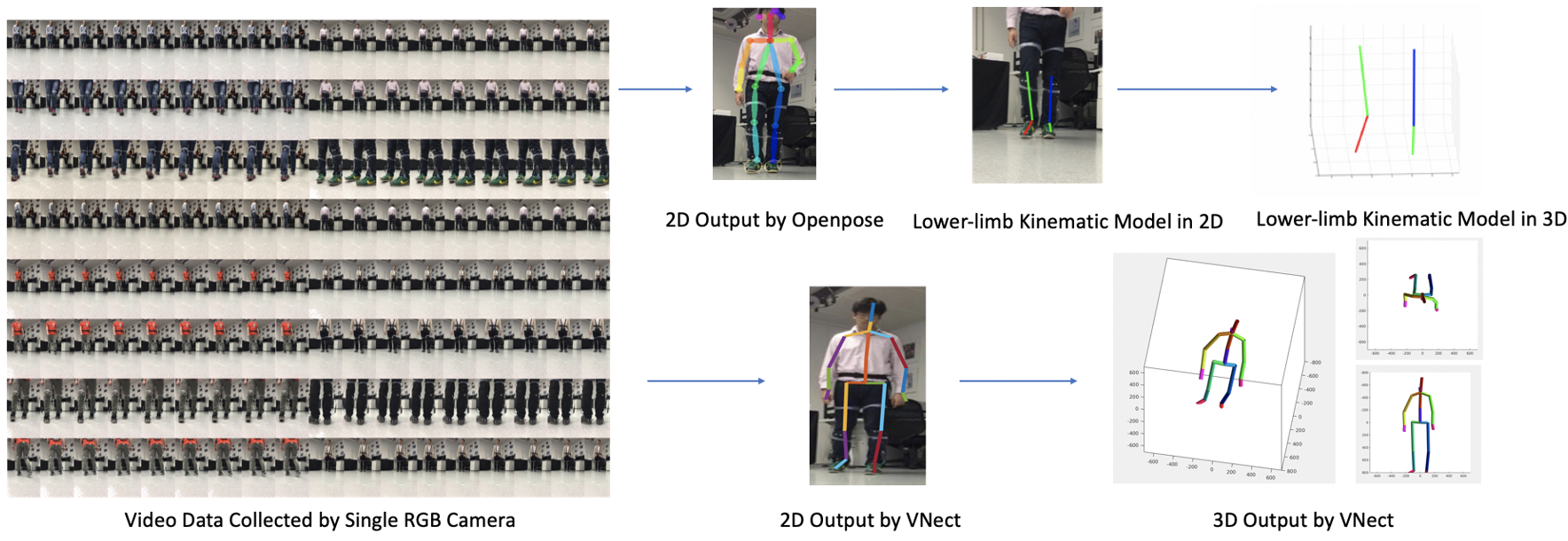 Fig 1: Output comparison of VNect and OpenPose for gait joint tracking.
3. Mobile Optimization
To move from a MacBook Pro (running at a sluggish 0.6 FPS) to a real-time iPad application (3.5 FPS), the team replaced the standard OpenPose backbone with MobileNet. They converted the result to CoreML, allowing the robot to process data locally via its built-in iPad.
Experiments & Results: Lab Precision on a Mobile Base
The validation took place in a 6x6m lab where volunteers imitated various gaits (normal, limp, pronation, supination). The "ground truth" was established using a high-end SMART-DX multi-camera system.
Key Findings:
- 2D Accuracy: VNect performed slightly better in 2D due to inherent toe-point estimation.
- 3D Challenges: VNect struggled when the subject was too close to the camera (self-occlusion), whereas the modified OpenPose remained more robust.
- Clinical Validity: The angular distributions captured by the single-camera robot were distinct enough to accurately classify the four walking patterns.
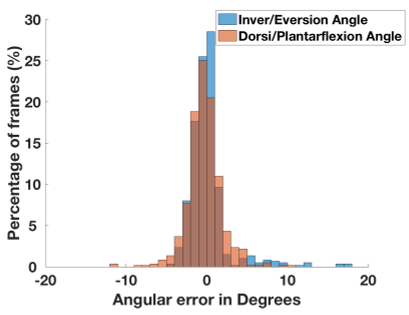 Fig 2: 2D and 3D validation workflows comparing the single-camera results against the multi-camera ground truth.
Critical Analysis & Conclusion
Takeaway
This work proves that specialized hardware isn't the only way to achieve clinical health monitoring. By choosing the right vision algorithms and optimizing them for edge computing, we can turn a simple iPad-on-wheels into a sophisticated medical diagnostic tool.
Limitations & Future Work
The system still faces frame-rate limitations (3.5 FPS is usable but not "smooth" for high-speed gait analysis). Additionally, accuracy drops when the subject's upper body is occluded or when the camera angle isn't optimal. Future research will likely focus on temporal consistency—using the history of movement to "fill in the blanks" when the camera's view is obstructed.
Final Thought: As tele-robots become more common in elderly care homes, software-based gait analysis provides a low-cost, non-invasive way to detect health declines before they lead to serious injuries.