
Single-Trial ERP Detection: Unlocking Real-Time Affective Computing
Single-trial ERP detecting for emotion recognition
This paper introduces a novel methodology for single-trial emotion recognition using Event-Related Potentials (ERPs). By leveraging a Spatiotemporal Iterative Model (SIM) for spatial filtering and a modified Hierarchical Discriminant Component Analysis (HDCA) for feature extraction, the authors achieved high-accuracy classification of emotional valence (extreme negative, moderate negative, and neutral) using Support Vector Machines (SVM).
TL;DR
Researchers have developed a new method to recognize emotions from brainwaves in a single "glimpse" (single-trial). By using a sophisticated Spatiotemporal Iterative Model (SIM) and Linear Discriminant Analysis, the team successfully classified different levels of negative emotions with up to 77.5% accuracy, significantly beating conventional methods that rely on simple signal peaks.
The Problem: Why Single-Trial Emotion Sensing is Hard
Emotion recognition is the "holy grail" of human-computer interaction. While EEG is more objective than facial expressions or heart rate, it is notoriously noisy. Historically, scientists had to average dozens of trials to see a clear Event-Related Potential (ERP)—the brain's specific electrical response to a stimulus.
However, a real BCI (Brain-Computer Interface) cannot wait for 20 repetitions to know if you are upset. Existing single-trial attempts usually just look at the amplitude (how high the wave is) or latency (when it happens). This is like trying to recognize a face by only looking at the tip of the nose; you lose the global context of the "spatiotemporal" facial structure.
Methodology: Capturing the Whole Picture
The authors propose that the entire wave—across both space (which part of the brain) and time (how the signal evolves)—holds the key.
1. Spatial Filtering (The SIM Algorithm)
They use the SIM algorithm to isolate ERP components from background brain noise. By applying Maximum Likelihood Estimation, they identify five specific components: P1, N1, P2, N2, and P3. Each of these represents a different stage of emotional processing, from initial attention to cognitive appraisal.
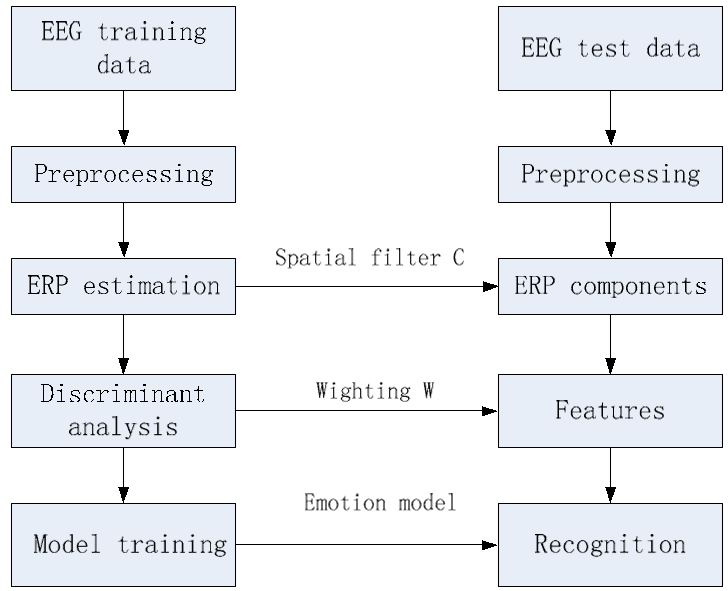 Fig 1: The proposed emotion recognition workflow, from acquisition to SVM classification.
2. Feature Extraction (Hierarchical Discriminant Analysis)
Instead of picking one point on the wave, they divide the estimated ERPs into windows and use a weighting vector to determine which parts are most "emotional." This ensures the model focuses on the most discriminative segments of the brain's response.
Experiments & Results
The study used an Oddball Paradigm where subjects were shown pictures with varying valence (Extremely Negative, Moderately Negative, and Neutral).
ERP Distribution
The spatial filters revealed that negative emotions trigger significant activity in the posterior and central sites of the brain. Specifically, the P2, N2, and P3 components showed statistically significant differences (P < 0.05) depending on how negative the image was.
Performance Gains
The results were clear: using the whole waveform is better than using snippets.
- Proposed Method: 77.5% Accuracy.
- Baseline (Amplitude/Latency): Significantly lower performance.
- Standard HDCA: Outperformed by the new refined spatiotemporal approach.
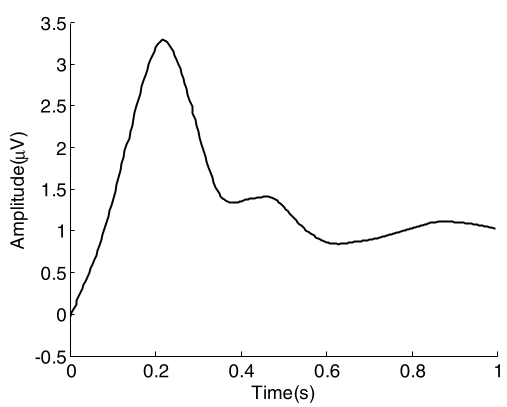 Fig 2: Visualization of estimated ERP components (P1-P3) and their corresponding spatial distributions across the scalp.
Critical Insight: The "Negativity Bias"
A fascinating takeaway from the results is that the system was much better at identifying Extremely Negative states (79.55%) compared to Neutral ones. This aligns with psychological theory: the human brain is evolutionarily hard-wired to prioritize "threat" or high-intensity negative stimuli, leaving a much stronger and more detectable electrical footprint in the EEG.
Conclusion & Future Work
This research moves us closer to BCIs that can "feel." By proving that single-trial ERPs are rich enough for classification if modeled correctly across space and time, the authors provide a blueprint for more responsive affective systems. The next challenge? Inter-subject models—creating a system that understands one person's emotions using data trained on another.
Takeaway: Stop looking for "peaks" and start looking at the "trajectory." The brain's emotional signature isn't a single point in time; it's a spatiotemporal dance.