
Singular Race Models: The Paradox of Accuracy and Bias in Recidivism Prediction
Singular race models: addressing bias and accuracy in predicting prisoner recidivism
The paper introduces Singular Race Models, an approach for recidivism prediction that segments datasets by race to train specialized Artificial Neural Networks (ANN). By isolating subpopulations, the method aims to improve predictive accuracy across different crime categories (Violent, Property, Drugs, Other), achieving higher precision than all-race baseline models.
TL;DR
Researchers from the University of Texas at Arlington propose Singular Race Models—training specialized AI models for different racial groups to predict recidivism. While this approach successfully boosts predictive accuracy, it uncovers a sobering reality: better models don't always mean fairer outcomes. In fact, increasing precision within racial silos can actually amplify the bias inherent in criminal justice data.
The "Fairness through Blindness" Fallacy
In the world of algorithmic justice, the standard practice has been to remove the "Race" feature from datasets to prevent discrimination. However, landmark studies on tools like COMPAS have shown that algorithms still manage to "see" race through proxy variables like zip codes, family history, and employment status.
The authors of this paper argue that by ignoring race, we might be losing important context that could make models more accurate. Their intuition: If we can't ignore race, why not model it explicitly to ensure every individual is compared only to peers with similar backgrounds?
Methodology: Segmentation via Neural Networks
The authors utilized a dataset of over 156,000 cases from the Florida Department of Corrections. They built a three-layered Artificial Neural Network (ANN) as it outperformed other classifiers like Random Forests and SVMs during their selection phase.
The Core Strategy:
- Segmentation: Instead of one "All-Race" model, they created dedicated models for Caucasian and African American offenders.
- Crime Categorization: Models were further specialized for Violent, Property, Drug, and "Other" crimes.
- Feature selection: They used features like admission age, time served, criminal history, and education level, but not race itself within the training vectors.
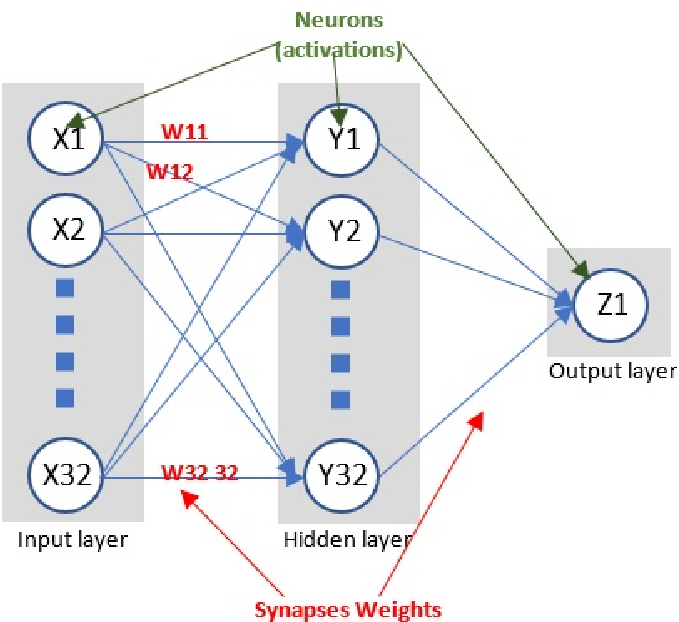 Figure 1: The Three-layer ANN architecture used for generating Singular Race Predictions.
The Results: A Double-Edged Sword
The experiments yielded a fascinating yet troubling set of results. Across almost every crime category, the Singular Race Models beat the "All-Race" baseline in accuracy.
- Accuracy Wins: For African American offenders in the "All Crimes" category, the model's ability to "learn" patterns was nearly double the improvement of the baseline.
- The Bias Trap: The performance metrics for "Fairness" (False Positives and False Negatives) showed a widening gap.
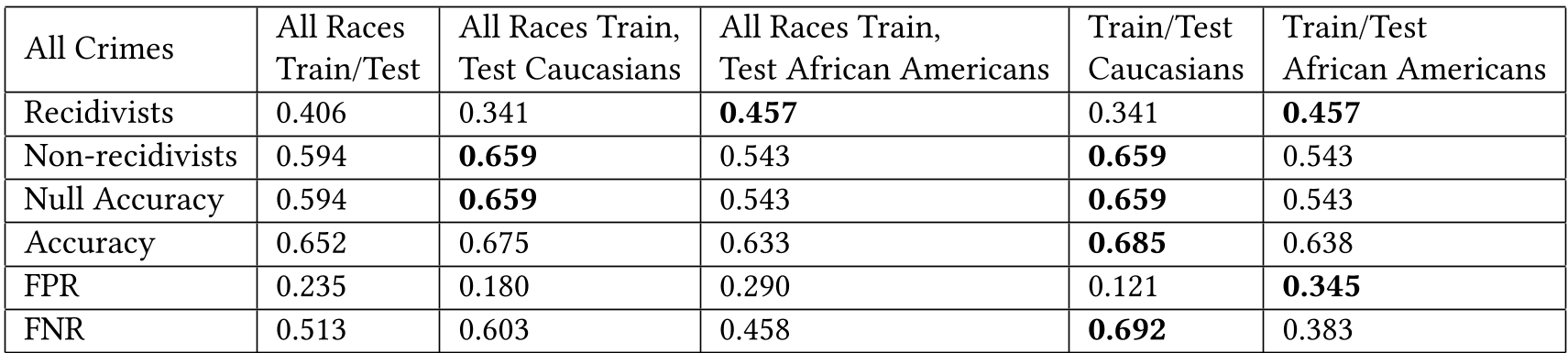 Table 1: Performance comparison showing that while Accuracy increases for Singular Race Models, the FPR and FNR often widen, indicating higher bias.
In Violent Crimes, the Caucasian model exhibited a staggering False Negative Rate (FNR) of 89.4%. This means the model would incorrectly label nearly 9 out of 10 white recidivists as "safe for release"—a clear sign of under-prediction for one group while over-predicting risk for others.
Critical Insight: Why Does Accuracy Increase Bias?
The paper’s most profound conclusion is that the bias observed in these models isn't just a coding error—it's a data reflection.
- Feature Correlation: The "neutral" features (like time served or criminal history) are so strongly correlated with race in the historical data that the ANN inevitably learns to discriminate.
- Missing Context: The dataset relies purely on demographic and historical stats. It lacks "human" variables—did the person take a vocational course? Did they join a drug treatment program? Without these "improvement" metrics, the AI only sees a cycle of history.
Conclusion & Future Outlook
This work serves as a warning for AI practitioners in sensitive domains. Specialized models can indeed squeeze more performance out of a dataset, but if the dataset is a reflection of a biased system, the AI will only become a more efficient engine for that bias.
The authors suggest that the path forward isn't just better math, but better data. To truly predict recidivism fairly, we must look beyond demographics and start quantifying human transformation—factors like education and rehabilitation progress—rather than just counting previous arrests.